
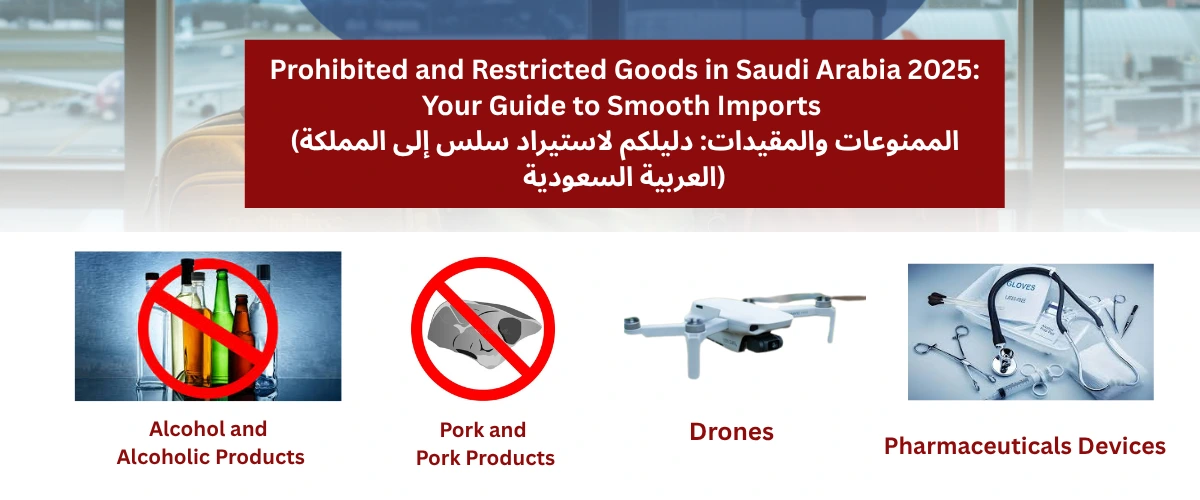
As a leading customs clearance service provider in Saudi Arabia, Radhi Custom Clearance Co. (شركة راضي للتخليص الجمركي) understands the complexities of Saudi trade. Navigating Saudi import regulations can be challenging, but with the right knowledge, you can ensure your shipments clear customs efficiently and without unexpected delays.
Navigating Saudi customs requires careful attention to the country’s import rules. This guide clarifies the critical distinctions between:
- Prohibited goods (السلع الممنوعة): Items strictly banned from entry.
- Restricted goods (السلع المقيدة): Products requiring special permits or compliance with specific regulations.
By understanding these categories, you can avoid delays, fines, or confiscation of your shipments.
Why Saudi Arabia Has Strict Import Regulations
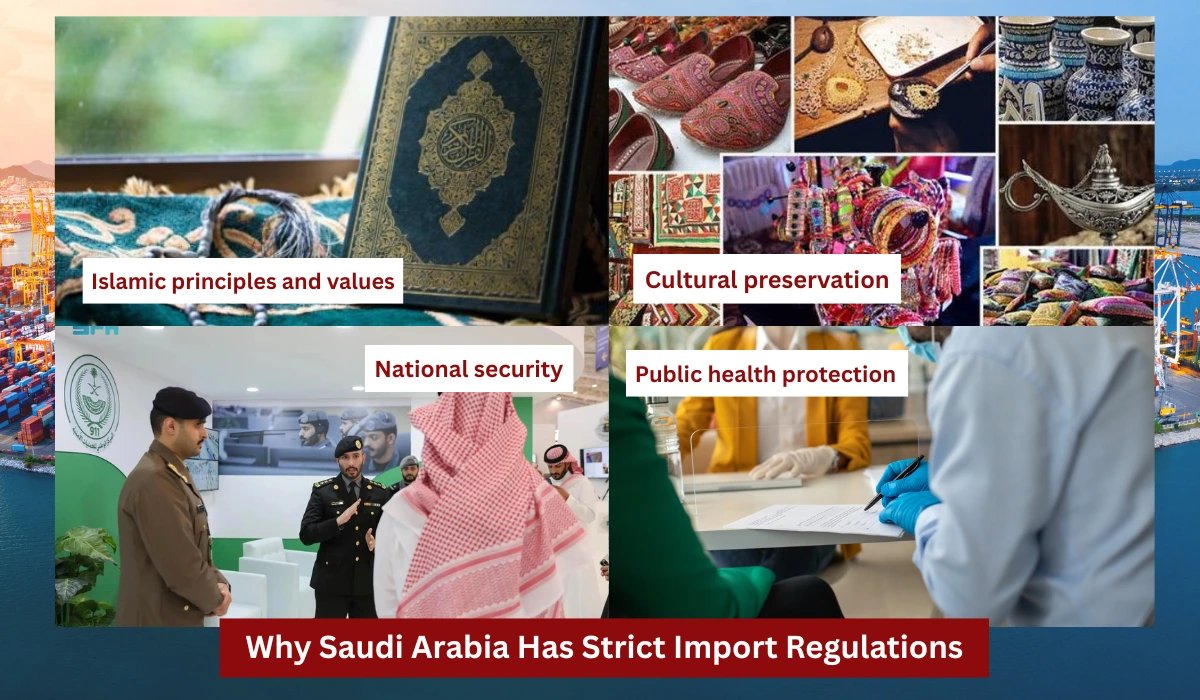
Saudi Arabia’s import regulations reflect the nation’s unwavering commitment to:
- Islamic principles and values
- Cultural preservation
- National security
- Public health protection
The Zakat, Tax and Customs Authority (هيئة الزكاة والضريبة والجمارك – ZATCA) rigorously enforces these policies to:
- Protect citizens from harmful or illicit materials
- Shield the economy from damaging goods
- Prevent culturally inappropriate items from entering the country
Recognizing these fundamental priorities helps importers understand the reason behind Saudi Arabia’s regulatory framework.
Prohibited Goods (السلع الممنوعة) for import to Saudi Arabia
The following items are completely banned from entering Saudi Arabia. Violations carry serious consequences, including:
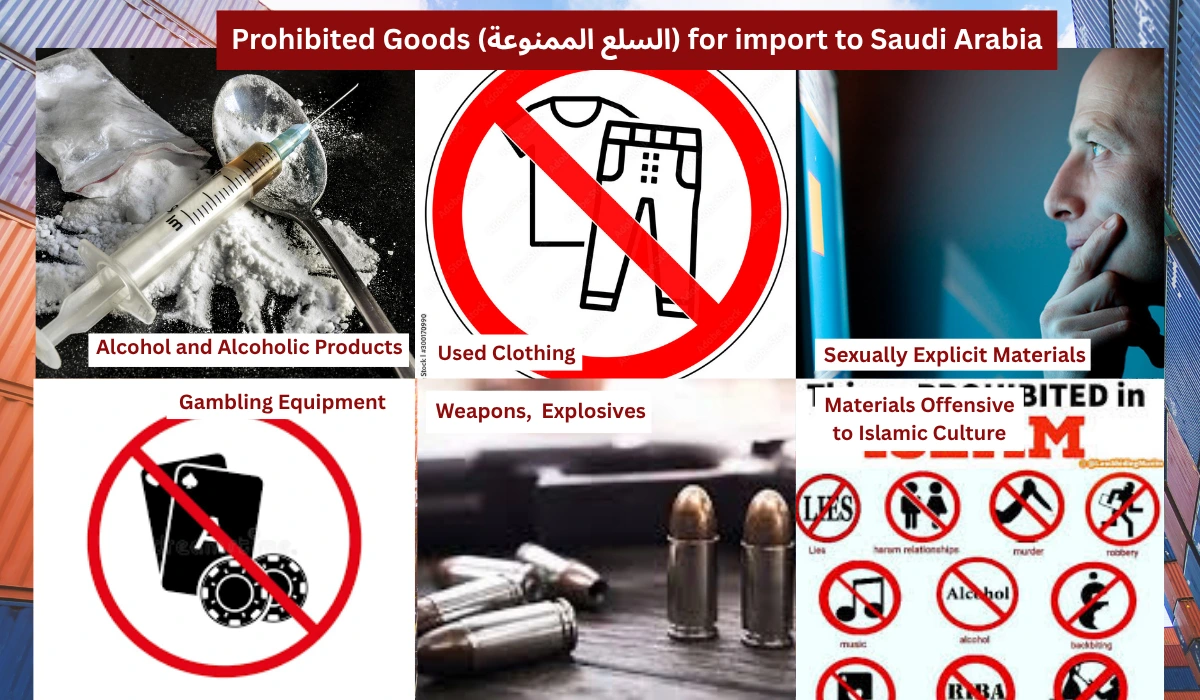
Alcohol and Alcoholic Products (الكحول والمنتجات الكحولية):
Saudi Arabia maintains complete ban on:
- All alcoholic beverages (including beer, wine, and spirits)
- Alcohol-containing products (such as cooking wines, vanilla extracts, and mouthwashes)
- Production equipment (brewery/distillery machinery, fermentation tools)
Pork and Pork Products (لحم الخنزير ومنتجاته):
In strict adherence to Islamic dietary laws (حلال), Saudi Arabia enforces a complete ban on:
- All pork meat and byproducts (including lard, gelatin, and pork derivatives)
- Food items containing pork ingredients
- Non-food items derived from pigs (such as certain brushes or cosmetics)
Narcotics and Illegal Drugs (المخدرات والمواد المخدرة غير المشروعة):
Saudi Arabia enforces strictest anti-drug policies, with a complete ban on:
➤ All narcotic substances (including cannabis, heroin, cocaine, and synthetic drugs)
➤ Prescription medications containing controlled substances without proper authorization
➤ Drug paraphernalia (pipes, bongs, vaporizers, or any associated equipment)
➤ Substances marketed as “legal highs” or synthetic alternatives
Pornographic or Sexually Explicit Materials (المواد الإباحية أو المخلة بالآداب):
This includes magazines, videos, images, and any items deemed offensive to public morality.
Weapons, Ammunition, and Explosives (الأسلحة والذخائر والمتفجرات):
Saudi Arabia maintains an absolute ban on the import of:
- All firearms (including handguns, rifles, and ammunition)
- Explosive materials (fireworks, flares, gunpowder, or any pyrotechnic devices)
- Certain weapons (even decorative or ceremonial items like swords, daggers, or replicas may be confiscated)
Gambling Equipment and Paraphernalia (أدوات ومستلزمات القمار):
Items associated with gambling, such as cards, dice, or roulette wheels, are forbidden.
Materials Offensive to Islamic Culture or Saudi Arabian Beliefs (مواد مسيئة للثقافة الإسلامية أو المعتقدات السعودية):
Saudi Arabia prohibits the import of materials that conflict with Islamic values or national stability, including:
Religious Materials
- Non-Islamic religious texts intended for propagation
- Items featuring symbols of other faiths for devotional use
- Religious idols or ritual objects
Cultural Items
- Figures or statues that could be perceived as idols
- Artwork depicting prohibited imagery
- Culturally insensitive merchandise
Political Content
- Materials critical of Saudi leadership or governance
- Publications challenging national policies
- Symbols associated with banned organizations
Used/Retreaded Tires (الإطارات المستعملة/المعاد تدويرها):
For safety and environmental reasons, these are prohibited.
Used Clothing (الملابس المستعملة):
Saudi Arabia prohibits the commercial import of used clothing due to:
- Health regulations – Preventing potential contamination
- Safety standards – Ensuring quality control
- Hygiene requirements – Maintaining public health protections
Restricted Goods (السلع المقيدة) for import to Saudi Arabia
The following items require prior approval from Saudi authorities before import:
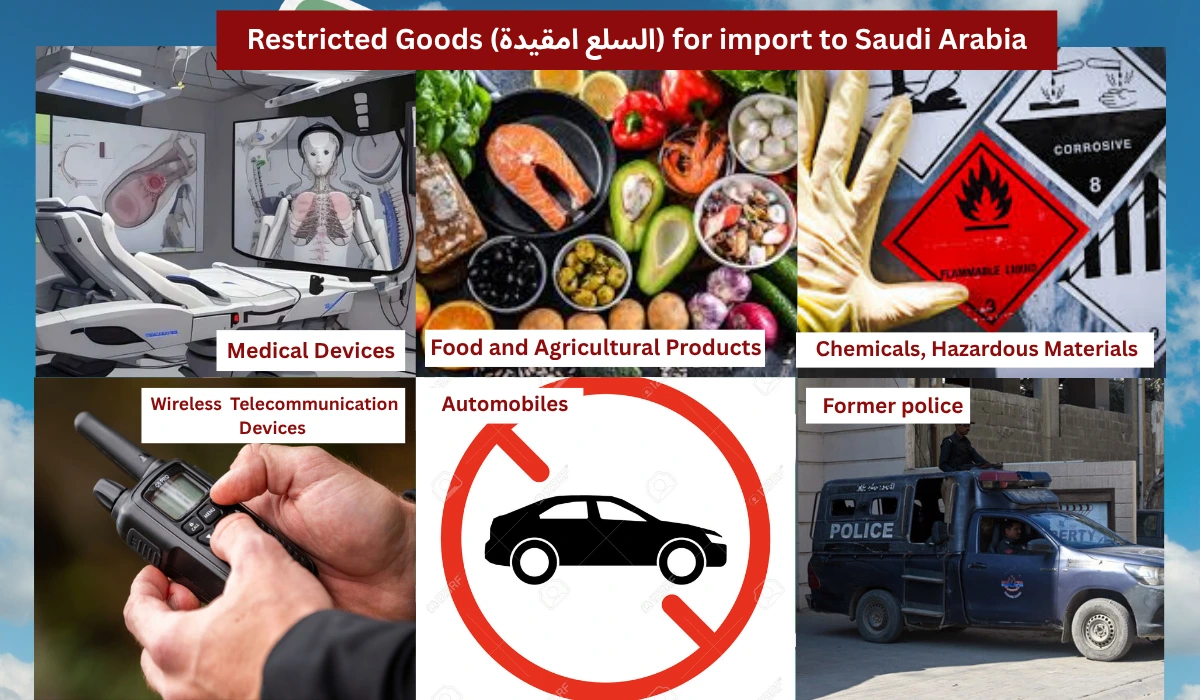
Pharmaceuticals and Medical Devices (الأدوية والأجهزة الطبية):
All medications and medical equipment entering Saudi Arabia must comply with regulations set by the Saudi Food and Drug Authority (الهيئة العامة للغذاء والدواء – SFDA). This includes:
- Prescription drugs (require verified documentation)
- Over-the-counter medicines (subject to SFDA approval)
- Medical devices and equipment (must meet certification standards)
Key Requirements:
- SFDA authorization for commercial imports
- Valid prescription for personal medication supplies
- Original packaging with clear labeling
- Accompanying documentation in Arabic or English
Food and Agricultural Products (المنتجات الغذائية والزراعية):
Saudi Arabia enforces strict import import policy on food and agricultural goods to ensure compliance with:
- Health and safety standards
- Halal certification requirements
- Biosecurity regulations
Regulatory Authorities:
- Saudi Food and Drug Authority (SFDA – الهيئة العامة للغذاء والدواء)
- Ministry of Environment, Water and Agriculture (وزارة البيئة والمياه والزراعة)
Chemicals and Hazardous Materials (المواد الكيميائية والخطرة):
The import of chemical substances into Saudi Arabia is strictly regulated and requires approvals from government entities, including:
Regulatory Authorities:
- High Commission for Industrial Security (HCIS)
- Ministry of Commerce
- Saudi Food and Drug Authority (SFDA) – for food/medical-related chemicals
- General Authority of Meteorology and Environmental Protection (GAMEP) – for environmental compliance
Wireless Equipment and Telecommunication Devices (المعدات اللاسلكية وأجهزة الاتصالات):
All wireless devices entering Saudi Arabia must comply with regulations enforced by the Communications, Space & Technology Commission (CST).
Key Controlled Items:
- Drones (recreational/commercial)
- Satellite phones
- Radio transmitters
- Long-range wireless devices
- Specialized telecom equipment
Mandatory Requirements:
- CST Type Approval Certification
- Frequency band compliance (Saudi-specified ranges)
- Technical documentation (Arabic/English)
- Pre-import authorization for restricted devices
Automobiles (السيارات):
Saudi Arabia enforces strict controls on automobile imports to ensure:
- Road safety standards
- Environmental compliance
- Consumer protection
Key Restrictions:
1. Age Limitations:
- Maximum 5 years old from manufacturing date
- Exception: Classic/vintage cars (special approval required)
2. Prohibited Vehicle Types:
- Salvaged/rebuilt title vehicles
- Former police, taxi, or rental cars
- Modified vehicles non-compliant with Saudi standards
- Right-hand drive vehicles
3. Technical Requirements:
- GCC Specifications (Gulf-standard modifications)
- Emissions compliance (Saudi environmental standards)
- Safety features (region-specific requirements)
Required Documentation:
- Original title and registration
- Certificate of Conformity (SASO-approved)
- Commercial Invoice (detailed specifications)
- Import license (for dealers)
Navigating the Import Process in Saudi Arabia
For any restricted goods, the process typically involves:
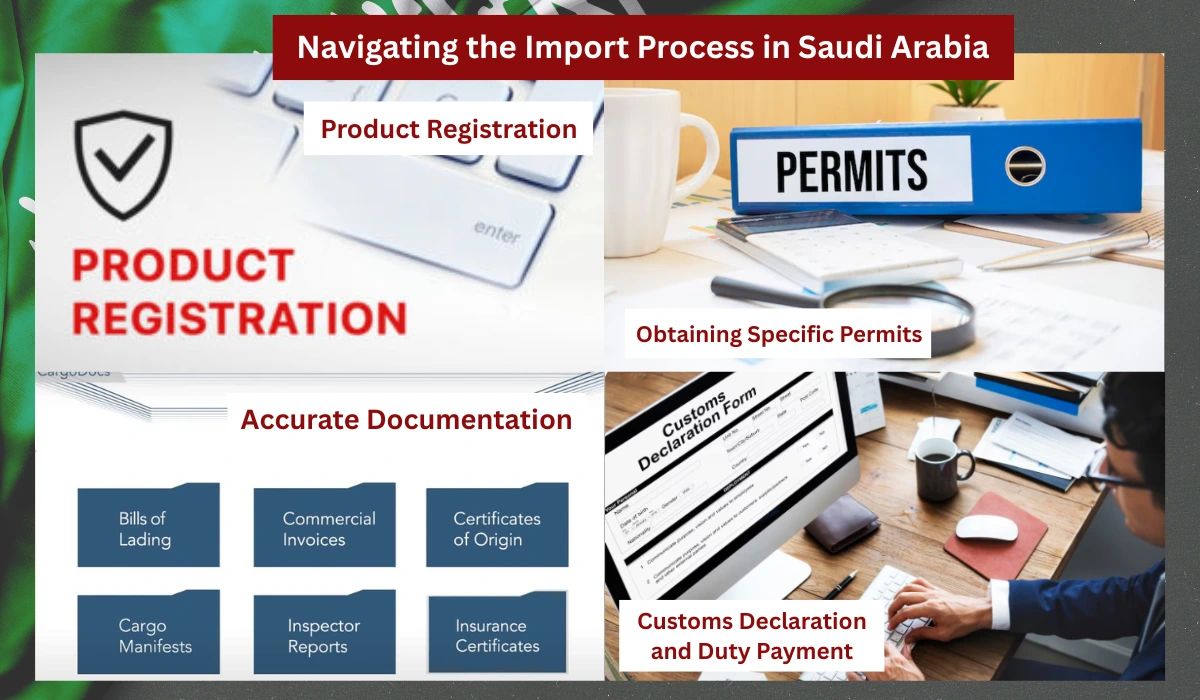
Product Registration:
Many products, especially consumer goods, electronics, and food items, must be registered on platforms like SABER (منصة سابر), managed by SASO (Saudi Standards, Metrology and Quality Organization).
This ensures compliance with Saudi technical regulations and standards and is crucial for obtaining the Product Certificate of Conformity (PCoC) and Shipment Certificate of Conformity (SCoC).
Obtaining Specific Permits:
Depending on the item, you’ll need to apply for permits from the relevant ministries or authorities (e.g., SFDA, CST, Ministry of Interior).
Accurate Documentation (الوثائق المطلوبة):
Essential documents typically include:
- Commercial Invoice (الفاتورة التجارية)
- Certificate of Origin (شهادة المنشأ)
- Bill of Lading / Air Waybill (بوليصة الشحن / بوليصة الشحن الجوي)
- Packing List (قائمة التعبئة)
- Import License / Permit (ترخيص الاستيراد / التصريح)
- Certificate of Conformity (شهادة المطابقة) (especially from SABER)
- Halal Certificate (for meat products) (شهادة حلال) All foreign documents must be accurately translated into Arabic.
Customs Declaration and Duty Payment:
Utilizing the FASAH platform (منصة فسح), the official electronic portal for customs clearance, is essential for submitting declarations and paying customs duties (الرسوم الجمركية) and Value Added Tax (ضريبة القيمة المضافة – VAT).
Why Choose Radhi Custom Clearance Co. to Avoid Penalties?
At Radhi Custom Clearance Co. (شركة راضي للتخليص الجمركي), we specialize in simplifying the complex and preventing costly penalties. Our team of experienced customs brokers (مخلصين جمركيين) possesses in-depth knowledge of Saudi customs laws and regulations, including the ever-evolving penalty framework. We pride ourselves on:
- Expert Knowledge: Staying updated with the latest regulations and penalty structures from ZATCA, SFDA, SASO, and other authorities.
- Proactive Compliance Checks: Identifying potential issues related to prohibited or restricted goods and missing permits before your shipment arrives, helping you avoid costly surprises.
- Accurate Documentation and Declaration: Ensuring all your paperwork is meticulously prepared, correctly translated, and submitted accurately through platforms like FASAH and SABER.
- Efficient Permit Acquisition: Guiding you through the process of obtaining all necessary licenses and approvals for restricted goods.
- Problem Resolution: Acting as your reliable liaison with customs authorities to resolve any issues quickly and efficiently, minimizing delays and penalties.
Don’t let the intricacies of Saudi import regulations or the fear of penalties hinder your business. Partner with Radhi Custom Clearance Co. for efficient, compliant, and stress-free import and export (الاستيراد والتصدير) operations in Saudi Arabia.
Contact us today to discuss your import requirements and learn how we can facilitate your trade in the Kingdom, ensuring full compliance and avoiding unnecessary penalties.
Add a Comment