
Unraveling the Kingdom’s Trade Landscape (مقدمة: كشف أسرار المشهد التجاري للمملكة)
Picture this: your container has just docked at Jeddah Islamic Port. The cargo is worth SAR 750,000 and the buyer is waiting—yet customs officers flag one missing certificate. Twenty-four hours later, your shipment is still behind the red fence and demurrage is climbing at SAR 1,200 per day.
That single document gap is usually tied to SABER, SASO, SFDA, or FASAH. In 2025, the rules tightened again:
- From 1 January 2025, every product—regulated or not—must arrive with a PCoC and SCoC already uploaded to SABER.
- Undertaking letters are no longer accepted.
- The new Product Safety Law (in force since 14 November 2024) lets inspectors levy fines up to SAR 10 million or shut a facility outright.
Why this matters to you
Whether you’re importing dates from Al-Ahsa, medical devices from Seoul, or spare parts from Guangzhou, non-compliance equals delays, fines, or outright rejection. And with Vision 2030 driving record import volumes—SAR 1.02 trillion in non-oil imports last year alone—the margin for error keeps shrinking.
Your shortcut through the maze
At Radhi Customs Clearance Co., we’ve spent 30+ years guiding shipments across these four pillars. Our team speaks the language of Saudi Customs and the SABER platform—literally and figuratively—so you don’t have to. In the next few minutes, we’ll translate the acronyms into plain Arabic and English, show you exactly which certificate each product line needs, and hand you a checklist you can forward to your supplier today.
Ready to make sure your cargo never spends another night behind the fence?
Let’s start with the bedrock of every shipment in the Kingdom: SASO.
SASO: The Foundation of Quality and Standards (الهيئة السعودية للمواصفات والمقاييس والجودة: أساس الجودة والمعايير)
If Saudi trade were a majlis, SASO would be the elder quietly sipping Arabic coffee in the corner—polite, measured, but when he speaks, everyone listens. Technically, the Saudi Standards, Metrology and Quality Organization is the body that decides whether your product is “fit for the Kingdom.” In practice, it’s the difference between your goods gliding through Fasah or being hauled aside for a three-week inspection.
What SASO Actually Does
Think of SASO as the Kingdom’s quality-control conscience. They:
- Write the rules: From the exact thread count in children’s school uniforms to how much formaldehyde a wooden desk can off-gas.
- Spot-check reality: Inspectors can—and do—turn up at a Jeddah warehouse at 9 p.m. on a Thursday to pull random samples.
- Name the price of mistakes: Under the Product Safety Law that kicked in on 14 November 2024, a single violation can cost up to SAR 10 million or shut your premises until further notice.
Last year’s update isn’t just more paperwork; it’s a philosophical shift. Previously, if something went wrong, you might get a slap-on-the-wrist fine and a promise to “fix it next time.” Today, importers and their authorised representatives inside the Kingdom are personally liable when the overseas manufacturer can’t be reached.
How to Stay on SASO’s Good Side
- Check the Technical Regulation list first, not last. If your HS code is on it, you’re in regulated territory—simple as that.
- Don’t rely on last year’s test report. Regulations are updated quarterly; a certificate issued in March could be obsolete by August.
- Label like a local. Arabic is mandatory, and the new law insists on traceability data: importer name, CR number, and a scannable barcode that links back to the original batch.
SABER: Your Digital Gateway to Conformity (منصة سابر: بوابتك الرقمية للمطابقة)
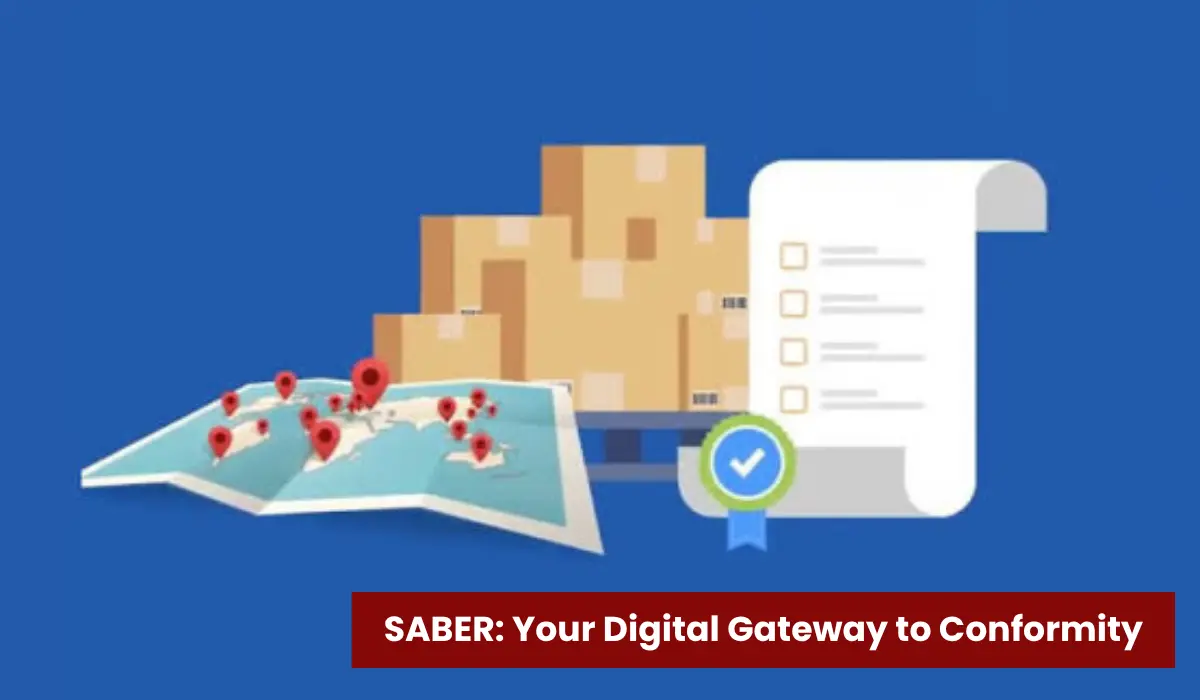
If SASO is the elder in the majlis, SABER is the polite but firm receptionist standing at the door, tablet in hand, asking for your papers—except the tablet never forgets and never sleeps. Since 1 January 2025, every carton, crate, and pallet that wants to enter Saudi Arabia must first be logged on SABER and issued two certificates:
- PCoC – Product Certificate of Conformity (valid for one year)
- SCoC – Shipment Certificate of Conformity (valid for that single batch)
No more “we’ll sort it on arrival.” No more undertaking letters. Miss either certificate and Fasah will bounce the declaration faster than you can say “demurrage.”
What SABER Looks Like in Real Life
Picture a coffee importer in Abha. Last December he shipped 1,200 tins of single-origin beans from Ethiopia. Pre-2025, he’d email a scanned lab report, cross his fingers, and usually clear the same day. On 3 January 2025 his cargo hit Jeddah without an SCoC—and stayed put for 11 days. Storage alone cost him SAR 9,600. The beans were still good, but the margin was gone.
Step-by-Step SABER Process

Register the importer account
– Takes ten minutes, needs a valid Commercial Registration (CR) (تسجيل المستورد) and a mobile number linked to Absher.
Register the product
– Drop in the HS code (رمز النظام المنسق), pick the matching Technical Regulations (تسجيل المنتج), and upload the test report or IECEE CB certificate if available.
Request the PCoC
– Pick an approved Conformity Assessment Body (CAB)—we keep a list of who answers emails fastest.
– CAB reviews docs, may ask for a factory audit or sample test. Once approved, the PCoC auto-appears in your dashboard.
Before each shipment, request the SCoC
– Upload the invoice, packing list, and bill of lading draft.
– The system pulls the PCoC (شهادة مطابقة الشحنة) data, the CAB gives a quick sanity check, and the SCoC is issued—usually within two hours if everything lines up.
SABER isn’t another hoop to jump through—it’s the Kingdom’s way of saying, “Show me once, trust you forever.” Master it now and your future self will send you a thank-you card written on the back of a cleared customs receipt.
SFDA: Protecting Health and Wellness (الهيئة العامة للغذاء والدواء: حماية الصحة والعافية)
Walk into any Tamimi, Al-Danube, or a tiny baqala on the outskirts of Hail and you’ll see rows of vitamins, protein bars, and cough syrups that arrived in the Kingdom under the watch of SFDA—the Saudi Food & Drug Authority. Locals call it “al-hay’a” (الهيئة) the way you’d refer to a meticulous aunt who checks every label before letting the kids touch the snacks. That reputation is well-earned.
What SFDA Really Controls
It’s not just “food and drugs.” SFDA’s remit includes:

- Anything edible: fresh, frozen, canned, or delivered by Talabat.
- Supplements & herbals: that collagen powder your cousin swears by—yes, it needed SFDA approval.
- Medical devices: from tongue depressors to MRI scanners.
- Cosmetics & pesticides: even the lavender air freshener in the prayer-room corner.
In short, if it goes on, in, or around a Saudi body, SFDA has a say.
July 2025: New Rules You Can Taste
Effective 1 July 2025, every restaurant, café, and cloud kitchen must print full nutritional disclosure on menus—physical and online. Walk past a Riyadh juice bar this week and you’ll spot:
- A red “salt-shaker” icon next to any drink above 400 mg sodium.
- Caffeine count stamped on iced lattes.
- A tiny footnote: “You’ll need a 45-minute brisk walk to burn this off.”
The goal? Nudge consumers without preaching. Early feedback shows a 12 % drop in upsized combo orders since the labels appeared—proof that transparency works.
How SFDA Approvals Actually Move
- eCosma portal for cosmetics, eSDI for devices, SFDA Food for, well, food.
- Local or regional lab test (Gulf or ILAC-accredited).
- Product registration—each SKU gets a SFDA registration number that must be printed on the outer case.
- Customs pre-clearance: the SFDA number is cross-checked in Fasah before the container doors open.
One More Thing: SFDA + SABER Overlap
Some products—think powdered infant formula—need both an SFDA registration number and a SABER PCoC. The trick is to start with SFDA; once the registration letter is issued, upload it to SABER under the “additional documents” tab. That single PDF cuts CAB query time by half.
FASAH: The Unified Customs Window (منصة فسح: النافذة الجمركية الموحدة)
Picture King Abdulaziz Port at 2:13 a.m. Flood-lights wash over thousands of containers stacked like Lego bricks. Inside the control tower, a lone customs officer doesn’t shuffle paper—he swipes left. One green check-mark later, your consignment rolls out. That quiet swipe is FASAH, the Saudi Customs Unified Platform, and it is open 24 hours a day, 365 days a year—even on Eid.
What Is FASAH

It is the one digital counter where SABER certificates, SFDA approvals, invoices, packing lists, bills of lading, and duty payments all meet, greet, and either hug or headlock each other.
Five Things You Can Finish on FASAH Before Your Morning Coffee
- File an import declaration in under seven minutes if your documents are pre-loaded.
- Track a container—down to the exact gantry crane—so you can tell your client, “It’s bay C-19, row 4, slot 2.”
- Pay customs duties and VAT via SADAD without leaving the screen.
- Grant or revoke power of attorney to your customs broker (no more stamped paper trips).
- Receive alerts: if the system flags a mismatch, you get an SMS and WhatsApp nudge in Arabic and English.
Two Common Hiccups (and the Human Fix)
- Mismatched HS code between SABER and Fasah: The system screams “risk.” We keep a shared Google Sheet updated in real time; one copy-paste fixes it.
- Double VAT payment: Fasah auto-refunds within 24 hours, but the trader still panics. A 30-second screen-share calms nerves faster than a dozen emails.
Understanding the Interconnections of SASO, SABER, SFDA, and FASAH: How They Work Together (فهم الروابط: كيف تعمل معًا)
Imagine you’re sending a gift to a friend in Riyadh.
- You wrap it (SASO sets the rules on how safe the wrapping must be).
- You stick on an address label (SABER prints the official sticker).
- If the gift is chocolate, you add an ingredient list (SFDA checks that list).
- Finally, the courier scans everything at the door and lets the box leave (FASAH gives the green light).
That’s the whole story in one minute. Now let’s slow it down to real speed—because in trade, the devil lives in the milliseconds between clicks.
Your Simple Cheat-Sheet
Before you click “submit” anywhere, run this 10-second checklist:
- HS code identical in SABER and FASAH?
- PCoC expiry date later than shipment date?
- SFDA number (if needed) copied exactly?
- Invoice value matches the SADAD payment receipt?
Tick all four and the gate swings open; miss one and the elder, the receptionist, the aunt, and the courier all stop talking until you fix it.
Why Compliance is Non-Negotiable (لماذا الامتثال غير قابل للتفاوض)
Back when the old rules were more like “guidelines,” some importers played roulette—ship first, patch later. Those days ended on 14 November 2024. Since then, Saudi Customs publishes weekly lists of violators: company name, product, fine amount. Last month’s sheet had 47 entries; the smallest fine was SAR 28,000, the largest SAR 2.4 million for a mis-labelled pesticide. Each entry is a free advert for your competitor.
What “Getting Caught” Looks Like in 2025
- Immediate detention at the port or bonded warehouse.
- Storage fees start the same hour (SAR 120–180 per tonne daily).
- Public notice on the MCIT website and the Tawakkalna business app—your clients see it before you do.
- Repeat offenders face a six-month import suspension. One Riyadh electronics trader missed the entire Ramadan sales spike because of a two-year-old SCoC typo.
What Compliance Actually Buys You
- Fast-lane release: green-coded shipments clear in under 60 minutes.
- Priority berthing: shipping lines now give preference to containers pre-cleared on FASAH.
- Better financing: local banks offer 0.5 % lower LC fees for traders with zero violations in the past 12 months.
- Brand trust: Saudi consumers scan barcodes; seeing the SFDA and SASO marks boosts purchase intent by 18 % (Nielsen April 2025 survey).
How Radhi Customs Clearance Co. Makes It Easy (كيف تسهل شركة الراضي للتخليص الجمركي الأمر عليك)
One WhatsApp Thread, Zero Sleepless Nights
Send us the invoice and packing list, then watch the checklist turn green in real time. We reply in Arabic or English—whichever lets you sleep faster.
SABER in a Lunch Break
We pre-classify your HS codes, pick the fastest CAB, and chase the PCoC while you finish your kabsa. Average turnaround: 36 hours for repeat products, 4 days for first-timers.
SFDA Labels Without the Google Translate Meltdown
Our in-house designer drops Arabic nutritional tables into your artwork so it passes on the first review. We’ve never had a label rejected twice—because we test it on the portal before you pay the printer.
FASAH Fast-Lane Slots
We book the “yellow lane” (express) appointment before your vessel drops anchor. Your container is literally in the first 30 of the day.
End-to-End Visibility
Track the truck from port to your warehouse on the same map you use to follow your Careem order. Driver’s name, OTP code, ETA—no mysteries.
After-Hours Hotline
Ports don’t close, and neither do we. If an inspector asks for a revised invoice at 11 p.m., we’re already uploading it.
Conclusion: Your Partner for Success in Saudi Arabia (الخاتمة: شريكك للنجاح في المملكة العربية السعودية)
The rules are stricter, the fines are bigger, but the door to the Saudi market is wider than ever. SASO, SABER, SFDA, and FASAH aren’t obstacles; they’re the new language of trust. Learn it—or let someone speak it for you.
Ready to clear your next shipment before your coffee gets cold?
Tap here to get quote! Because at Radhi Customs Clearance Co. we believe paperwork should never be the hardest part of your business.
Add a Comment