
The Saudi construction sector is entering its most consequential phase since Vision 2030 (رؤية 2030) was announced. With $86.1 billion in projected contractor awards for 2026 — and the buildings sector commanding a dominant 49% share — the Kingdom is no longer just planning megaprojects. It is executing them.
But here is the critical shift most international suppliers miss: 2026 is the year of regulatory enforcement, not regulatory introduction.
The Saudi Standards, Metrology and Quality Organization (الهيئة السعودية للمواصفات والمقاييس والجودة — SASO) and the Zakat, Tax and Customs Authority (الهيئة العامة للزكاة والدخل والجمارك — ZATCA) have spent years building digital compliance infrastructure. Now, that infrastructure is operational, interconnected, and unforgiving. A single incorrect HS Code (رمز النظام المنسق), an expired Product Certificate of Conformity (شهادة مطابقة المنتج — PCoC), or a missing Arabic label (ملصق عربي) can trigger immediate shipment rejection at Jeddah Islamic Port (ميناء جدة الإسلامي) or King Abdulaziz Port in Dammam (ميناء الملك عبدالعزيز بالدمام) — with customs holds increasing by 40% in 2026 for non-compliant construction material shipments.
This guide is not a general overview. It is a tactical manual for construction material exporters, procurement managers, and logistics professionals who need to move steel (الصلب), glass (الزجاج), sustainable insulation (عزل مستدام), and specialized building products into Saudi Arabia’s active Giga Projects (المشاريع العملاقة) without delays, penalties, or reputational damage.
The 2026 Reality: From Spectacle to Execution
If you are still sourcing materials for “The Line (ذا لاين)” or the “Mukaab (المكعب)” as active construction sites, your market intelligence is outdated.
The Saudi Giga Project (مشروع عملاق) landscape underwent a strategic recalibration (إعادة معايرة استراتيجية) in late 2025 and early 2026:
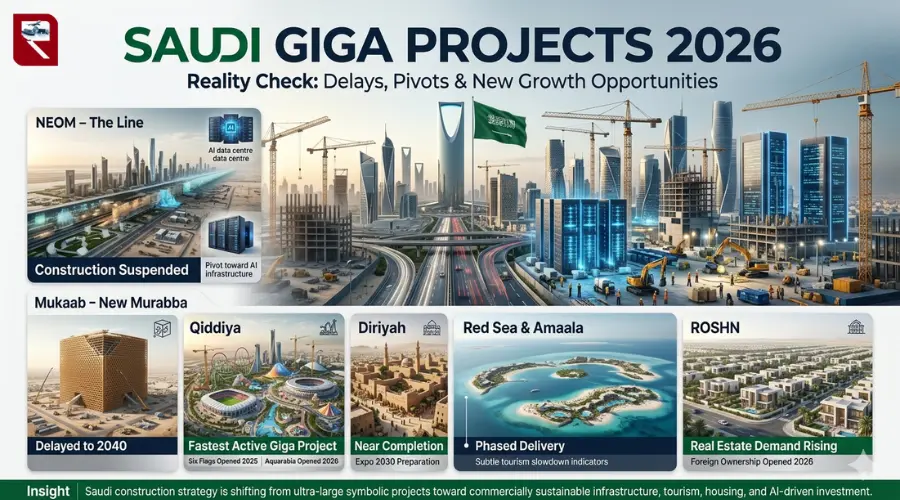
- NEOM’s The Line: Construction suspended indefinitely. The project pivoted toward AI data centre infrastructure (بنية تحتية لمراكز البيانات) and smaller-scale developments.
- Mukaab (New Murabba — مربع الجديد): Opening delayed to 2040. Active construction is minimal.
- Qiddiya (القدية): The most commercially viable operational Giga Project. Six Flags Qiddiya opened December 2025; Aquarabia water theme park opened April 2026. Active construction continues across entertainment, sports, and hospitality zones.
- Diriyah (الدرعية): Near completion with 50,000 workers on site. Phased opening ahead of Expo 2030 Riyadh (إكسبو 2030 الرياض).
- The Red Sea (البحر الأحمر) & Amaala (أمالا): Moved to phased delivery. Construction halted after initial 27 resorts; operating costs are being weighed against tourism revenue.
- ROSHN (روشن): Sedra Phase 5 launched; Alarous is 91% infrastructure complete. Foreign property ownership (ملكية العقارات للأجانب) opened January 2026, creating new demand surges.
What this means for material importers: The speculative “future city” narrative has given way to operational, phased construction (إنشاء تشغيلي مرحلي) with strict deadlines and tighter budgets. Project developers are no longer buying futuristic concepts — they are buying materials that arrive on time, meet exact specifications, and clear customs immediately.
Your competitive advantage in 2026 is not price. It is compliance velocity (سرعة الامتثال).
The SABER Gateway: 2026 Updates You Cannot Ignore
SABER (سابر) — the Saudi Product Safety Program (برنامج سلامة المنتجات السعودي) — is no longer a standalone platform. In 2026, it operates as the central nervous system of Saudi import compliance, integrated with customs, business registration, and port clearance systems.
The Pre-Arrival Regulation Model (نموذج التنظيم قبل الوصول)
Saudi Arabia has shifted from post-arrival inspection (الفحص بعد الوصول) to pre-arrival digital verification (التحقق الرقمي قبل الوصول). Before your container leaves Shanghai, Jebel Ali, or Genoa, its compliance status must be digitally locked in SABER.
Key 2026 integration points:
- Saudi Business Center (SBC — المركز السعودي للأعمال) Link: Your Saudi importer-of-record (المستورد المسجل) must have an active, verified Commercial Registration (السجل التجاري — CR) in the SBC database before any SABER product registration can proceed.
- ZATCA Customs Synchronization (مزامنة الجمارك): SCoC (Shipment Certificate of Conformity — شهادة مطابقة الشحنة) data flows directly to customs systems. If the SCoC is invalid or mismatched with the Bill of Lading (بوليصة الشحن), the container is flagged before it reaches the berth.
- 2.5+ million certificates issued in 2026 with a reported 99.2% market compliance rate (معدل امتثال سوقي) — meaning non-compliant shipments stand out immediately and are rarely granted exceptions.
PCoC vs. SCoC: The Two-Key System Explained
Understanding the distinction between these certificates is fundamental. One is your product’s passport (جواز سفر). The other is its visa (تأشيرة) for a specific journey.
| Feature | PCoC (Product Certificate of Conformity — شهادة مطابقة المنتج) | SCoC (Shipment Certificate of Conformity — شهادة مطابقة الشحنة) |
| Scope (النطاق) | Product-type approval | Specific shipment validation |
| Validity (الصلاحية) | 1 year from issue | Single shipment only |
| Purpose (الغرض) | Confirms product meets SASO technical regulations (اللوائح الفنية) | Links approved product to commercial invoice (الفاتورة التجارية) and shipping docs |
| Cost (التكلفة) | Higher (includes testing, factory audit if required) | Administrative fee (~500 SAR — ريال سعودي) |
| Processing Time (مدة المعالجة) | 2-3 weeks (allow 4 weeks for complex materials) | Less than 10 minutes if PCoC is valid |
| When to Apply (متى تقدم) | Before production or shipment booking | Minimum 3 days before Estimated Time of Departure (ETD — الوقت المتوقع للمغادرة) |
| Renewal (التجديد) | Must be renewed before expiry; 30-day buffer recommended | New SCoC required for every shipment |
Critical 2026 Update: SCoC issuance speed is now under 10 minutes for valid PCoCs. However, if your PCoC expires during ocean transit (النقل البحري), the SCoC becomes invalid, and customs will reject the shipment upon arrival. Track PCoC expiry dates against shipping timelines religiously.
The Local Representative Mandate: No Direct Foreign Registration
Here is a compliance barrier that surprises many first-time exporters: You cannot register products on SABER as a foreign entity.
Since 2026 enforcement tightening, SABER requires every non-Saudi manufacturer to bind with a legally established Saudi entity (كيان سعودي مرخص) — typically the importer, distributor, or a licensed customs clearance agent (وكيل جمركي) — who acts as the importer-of-record.
This representative must provide:
- Valid Commercial Registration (السجل التجاري — CR) number
- Active SASO authorization status (حالة التفويض)
- Legal liability for product compliance in KSA
Your Saudi partner is not just a customer. They are your regulatory proxy (وكيلك التنظيمي). Choose partners with active SABER credentials and a track record in construction materials.
HS Code Accuracy: The #1 Cause of Port Rejection
On January 1, 2026, ZATCA implemented revised customs tariff codes (رموز التعريفة الجمركية) for building materials, specifically affecting:
- Steel and iron products (منتجات الحديد والصلب) — Chapter 72
- Ceramic tiles and sanitaryware (السيراميك والأدوات الصحية) — Chapter 69
- Glass and glassware (الزجاج والأدوات الزجاجية) — Chapter 70
- Plastic pipes and fittings (المواسير والتجهيزات البلاستيكية) — Chapter 39
- Insulation materials (مواد العزل) — Chapter 68
Existing PCoCs registered under pre-2026 HS codes remain valid until their expiry date. However, all new product registrations must use the updated 2026 codes.
A mismatch between your commercial invoice HS code and your SABER registration triggers an automatic flag. In 2026, this is not resolved with a “correction letter.” It is resolved with a return-to-origin order (أمر الإعادة إلى بلد المنشأ) at your expense.
Before registering any new product variant in 2026, cross-reference your HS code against the ZATCA 2026 tariff list (قائمة التعريفة الجمركية 2026). If you are unsure, request a binding tariff classification ruling (قرار تصنيف ملزم) from ZATCA — it costs nothing and prevents catastrophic misclassification.
Standards for Core Construction Materials
A. Steel & Rebar: The Structural Backbone (العمود الفقري الهيكلي)
Steel remains the most imported construction material by volume in Saudi Arabia, and it is also the most regulated. In 2026, steel imports face a three-layer compliance gate (بوابة امتثال ثلاثية الطبقات):
Layer 1: SABER Registration (Universal — شامل) All steel products must have a valid PCoC under the relevant SASO technical regulation (اللائحة الفنية) (typically TR for building materials — اللائحة الفنية لمواد البناء). This applies to rebar (حديد التسليح), structural sections (الأقسام الهيكلية), sheet metal (الصفائح المعدنية), and wire rod (سلك الفولاذ).
Layer 2: Saudi Quality Mark (SQM — علامة الجودة السعودية)— Mandatory for Critical Categories The SQM is not required for all steel. It is mandatory for specific product categories identified by SASO as high-risk (عالي الخطورة) or high-volume (عالي الحجم):
- Cement (الأسمنت)
- Steel and steel products (الصلب ومنتجاته) — specifically rebar and structural sections
- Thermal insulation materials (مواد العزل الحراري)
- Ceramic tiles (البلاط السيراميك)
For steel, the SQM confirms that the manufacturing facility meets Saudi quality management standards (معايير إدارة الجودة) and that product samples pass SASO testing. Without SQM, these specific steel categories cannot enter the Kingdom — regardless of SABER status.
Layer 3: Technical Standards (المعايير الفنية)
- SASO ISO 6935-2: Steel for the reinforcement of concrete — mechanical properties (الخصائص الميكانيكية) and chemical composition (التركيب الكيميائي).
- ISO/IEC 17025 Lab Requirement: All test reports must originate from laboratories accredited to ISO/IEC 17025. As of 2026, 17 CNAS-recognized laboratories in China are approved by SASO for steel testing.
Using a non-accredited lab — even a reputable one — results in automatic PCoC rejection.
Timeline Planning for Steel Exporters:
- Factory audit (تدقيق المصنع) (if required): 2-3 weeks
- Sample testing (اختبار العينات) at accredited lab: 1-2 weeks
- SABER PCoC processing (معالجة شهادة سابر): 1 week
- SQM application (طلب علامة الجودة السعودية) (if applicable): 4-6 weeks
- Total lead time: 8-12 weeks before first shipment
B. Glass & Glazing: Performance Under Extreme Conditions (الأداء في الظروف القصوى)
Saudi Arabia’s Giga Projects — particularly the operational developments at Qiddiya and Diriyah — demand glazing systems (أنظمة التزجيج) that perform under extreme thermal stress (الإجهاد الحراري الشديد), sand abrasion (تآكل الرمال), and seismic requirements (متطلبات الزلازل).
Thermal Performance Standards (معايير الأداء الحراري): Saudi Arabia’s building codes enforce strict U-value (معامل التوصيل الحراري — U-value) requirements for glazing. In Riyadh and Jeddah climates, standard single-pane glass is effectively banned for commercial construction. Exporters must provide:
- Certified U-value test reports (تقارير اختبار معامل التوصيل الحراري) (typically ≤ 2.0 W/m²K for curtain walls)
- Solar Heat Gain Coefficient (SHGC — معامل الربح الحراري الشمسي) data
- Air leakage test reports (تقارير اختبار تسرب الهواء) under positive and negative pressure
Safety Glass Requirements (متطلبات الزجاج الآمن): For high-rise applications (hotels, residential towers, commercial facades), SASO mandates:
- Tempered glass (الزجاج المقسى): SASO 1498 compliance for mechanical strength (القوة الميكانيكية) and fragmentation patterns (أنماط التفتت)
- Laminated glass (الزجاج الرقائقي): SASO 1499 for interlayer adhesion (التصاق الطبقات الداخلية) and post-breakage integrity (سلامة ما بعد الكسر)
- Fire-rated glass (الزجاج المقاوم للحريق): Where specified, must carry SASO fire resistance test reports (تقارير اختبار مقاومة الحريق)
C. Sustainable & “Green” Materials: SAAF® vs. Mostadam
Sustainability compliance in Saudi Arabia is bifurcated between two systems. Exporters who conflate them risk tender disqualification (الاستبعاد من المناقصات).
SAAF® Certification (Saudi Assessment Framework for Built Environment — الإطار السعودي لتقييم البيئة المبنية)
- Administered by the Saudi Green Building Forum (المنتدى السعودي للبناء الأخضر — SGBF)
- 76.31 regional performance score as of 2026
- 1.03 million square meters of certified projects
- 7,300+ registered experts (خبراء مسجلون) in the system
- SAAF® is a certification system (نظام اعتماد) that evaluates building performance across energy (الطاقة), water (المياه), materials (المواد), and indoor environmental quality (جودة البيئة الداخلية).
Mostadam (مستدام)
- The official national green building rating system (النظام الوطني الرسمي لتقييم المباني الخضراء) of Saudi Arabia
- Developed by the Ministry of Municipal and Rural Affairs (وزارة الشؤون البلدية والقروية — MOMRA)
- Mandatory for government and Giga Project developments
- Mostadam-compliant materials must meet specific benchmarks for:
- Recycled content percentage (نسبة المحتوى المعاد تدويره)
- Local sourcing radius (نطاق التوريد المحلي) (where applicable)
- Embodied carbon thresholds (عتبات الكربون المدمج)
- Low-VOC emissions (انبعاثات المركبات العضوية المتطايرة المنخفضة) (paints, adhesives, sealants)
If you are supplying to The Red Sea Project or ROSHN sustainable communities, your materials may need both SAAF® recognition and Mostadam alignment. The Red Sea’s “regenerative tourism (السياحة التجددية)” mandate requires 30% land conservation (حماية 30% من الأراضي) and strict environmental compliance — materials that exceed baseline SASO requirements gain competitive preference.
Green Material Categories in Demand (2026):
- Low-VOC paints and coatings (دهانات وطلاءات منخفضة المركبات العضوية المتطايرة): SASO ISO 16000 compliance
- Recycled steel and aggregates (الصلب والركام المعاد تدويره): minimum 25% recycled content for Mostadam points
- Energy-efficient insulation (عزل موفر للطاقة): XPS, EPS, mineral wool with certified thermal values
- FSC-certified timber (الأخشاب المعتمدة من FSC): (where permitted)
Giga Project-Specific Compliance Pathways (2026 Active Projects)
Qiddiya City (مدينة القدية): The Operational Priority
Qiddiya is no longer a vision board. It is a construction site with active theme parks (مدن ملاهي نشطة), sports facilities (منشآت رياضية), and hospitality zones (مناطق ضيافة).
Material Compliance Nuances:
- Entertainment venue safety standards (معايير السلامة) override standard building codes in specific zones
- High-traffic flooring (الأرضيات) and facade materials (مواد الواجهات) require additional slip-resistance (مقاومة الانزلاق) and impact-test certifications (شهادات اختبار التصادم)
- Electrical and mechanical materials must comply with Saudi Electricity Company (SEC — الشركة السعودية للكهرباء) standards in addition to SASO
Diriyah (الدرعية): Heritage Meets High Specification
With 50,000 workers on site and phased opening deadlines tied to Expo 2030 Riyadh (إكسبو 2030 الرياض), Diriyah cannot afford material delays.
Special Considerations:
- Aesthetic compliance (الامتثال الجمالي): Materials must match heritage design guidelines (إرشادات التصميم التراثي) (mud-brick appearance, traditional patterns)
- Imported stone (الحجر), tile (البلاط), and decorative metals (المعادن الزخرفية) may require Ministry of Culture (وزارة الثقافة) approval in addition to SASO certification
- Logistics (اللوجستيات): Diriyah’s location near Riyadh means Dammam port clearance + inland trucking; plan for 3-5 additional transit days
The Red Sea (البحر الأحمر) & Amaala (أمالا): Phased Sustainability
Construction is paused after initial resort phases, but procurement for Phase 2 (التوريد للمرحلة الثانية) continues for 2027-2028 delivery.
Regulatory Premium:
- Materials must demonstrate carbon footprint data (بيانات البصمة الكربونية) — not just compliance, but quantified environmental impact
- Packaging requirements (متطلبات التغليف): The Red Sea Development Company (TRSDC) mandates recyclable or biodegradable packaging (تغليف قابل لإعادة التدوير أو التحلل البيولوجي) for all material shipments
- Sustainability mismatches (عدم تطابق الاستدامة) are the #1 cause of supplier disqualification for this project
ROSHN (روشن): Residential Scale & Speed
ROSHN is Saudi Arabia’s largest residential developer, with 10 active projects (10 مشاريع نشطة) and foreign ownership now permitted.
Volume Compliance:
- Standardized material lists (قوائم مواد موحدة) reduce certification variety but increase volume requirements
- Repeat shipments of identical products benefit from streamlined SCoC processing (معالجة مبسطة لشهادات مطابقة الشحنات)
- Cost pressure (ضغط التكلفة): ROSHN procurement is price-sensitive; compliance efficiency (avoiding delays) is your margin protection (حماية الهامش)
The 2026 Compliance Checklist: Step-by-Step Execution
| Steps | Action (الإجراء) | Responsible Party (الجهة المسؤولة) | Timeline (الجدول الزمني) |
| 1 | Appoint Saudi local representative (ممثل محلي سعودي) (importer-of-record) with valid CR (السجل التجاري) and SABER authorization | Exporter / Saudi Partner | 2-4 weeks |
| 2 | Verify updated 2026 HS codes (رموز النظام المنسق) on ZATCA tariff database | Customs Broker / Compliance Team | Immediate |
| 3 | Register product on SABER platform (منصة سابر) under correct technical regulation (اللائحة الفنية) | Saudi Representative | 1-2 weeks |
| 4 | Submit samples to ISO/IEC 17025 accredited lab (مختبر معتمد) for testing | Exporter | 1-2 weeks |
| 5 | Obtain PCoC (شهادة مطابقة المنتج) after lab reports and factory audit (if triggered) | Certification Body | 2-3 weeks |
| 6 | Prepare Arabic labeling (الملصقات العربية) and technical documentation | Exporter | Parallel to PCoC |
| 7 | Issue SCoC (شهادة مطابقة الشحنة) minimum 3 days before ETD (الوقت المتوقع للمغادرة), linking to commercial invoice (الفاتورة التجارية) | Saudi Representative | <10 minutes |
| 8 | Submit customs declaration (إقرار جمركي) with SCoC reference | Customs Broker | Upon arrival |
| 9 | Port clearance (تخليص الميناء) and inland delivery | Logistics Provider | 3-7 days (Jeddah/Dammam) |
Total Lead Time from First Contact to Delivery: 10-14 weeks for new products; 2-3 weeks for repeat shipments with valid PCoCs.
Common Pitfalls to Avoid in 2026
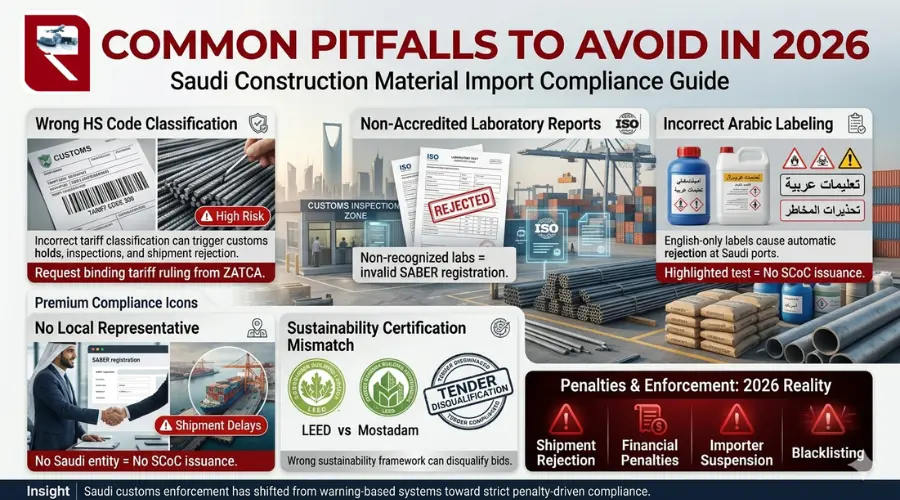
1. Wrong HS Code Classification (التصنيف الخاطئ لرمز النظام المنسق)
With ZATCA’s January 2026 tariff updates, even experienced exporters are misclassifying. A common error: classifying galvanized steel rebar (حديد تسليح مجلفن) under general steel sections rather than the specific reinforced concrete steel code (رمز حديد الخرسانة المسلحة). Result: customs hold, manual inspection, and potential rejection.
Prevention: Request a binding tariff ruling (قرار تصنيف ملزم) from ZATCA before first shipment. Cost: zero. Value: immeasurable.
2. Non-Accredited Laboratory Reports (تقارير من مختبرات غير معتمدة)
SASO maintains a strict list of recognized laboratories. A test report from a “reputable” lab that lacks ISO/IEC 17025 accreditation (اعتماد) — or lacks SASO-specific recognition — is worthless for SABER registration.
Prevention: Verify your lab’s SASO recognition status (حالة الاعتراف من ساسو) on the SABER portal before conducting any testing.
3. Missing or Incorrect Arabic Labeling (الملصقات العربية المفقودة أو غير الصحيحة)
All building chemicals (المواد الكيميائية للبناء), adhesives (المواد اللاصقة), sealants (المواد المسددة), and safety materials (مواد السلامة) must carry Arabic instructions (تعليمات عربية), hazard warnings (تحذيرات المخاطر), and manufacturer identification (تحديد الشركة المصنعة). English-only labels are automatic rejection triggers at port.
Prevention: Integrate Arabic labeling into your production line (خط الإنتاج). Do not rely on stick-on labels that can peel or be misapplied during transit.
4. No Local Representative Appointment (عدم تعيين ممثل محلي)
Attempting to register on SABER without a Saudi entity is now impossible. Exporters who try to “figure it out later” find their shipments stuck at origin ports because no SCoC can be issued.
Prevention: Finalize your Saudi partnership before quoting or producing for the market.
5. Sustainability Certification Mismatch (عدم تطابق شهادة الاستدامة)
Submitting LEED documentation when the tender requires Mostadam alignment, or providing generic “eco-friendly” claims without SAAF® verification, results in tender disqualification (الاستبعاد من المناقصة) — not just delay.
Prevention: Ask the project developer or main contractor explicitly: “Which sustainability certification system is mandated for this procurement package?”
Penalties & Enforcement: The 2026 Reality
Saudi customs enforcement has shifted from warning-based (التحذير) to penalty-based (العقوبة) in 2026:
- Shipment rejection at port (رفض الشحنة في الميناء): Container returned to origin at exporter’s expense
- Financial penalties (العقوبات المالية): Levied by ZATCA for false declarations or non-compliance
- Importer suspension (تعليق المستورد): Repeated violations result in SABER account suspension for the Saudi importer-of-record, halting all their imports
- Blacklisting (القائمة السوداء): Severe or fraudulent cases result in manufacturer blacklisting across Saudi government procurement
The 40% increase in customs holds (زيادة بنسبة 40% في الاحتجازات الجمركية) for construction materials in 2026 is not random enforcement. It is targeted, data-driven, and unforgiving (مستهدفة، قائمة على البيانات، وغير قابلة للتسامح).
Compliance as Competitive Advantage
The Saudi construction market in 2026 is defined by a single word: execution (التنفيذ). The speculative mega project announcements of 2018-2022 have matured into phased, budget-conscious, deadline-driven developments. Qiddiya is welcoming visitors. Diriyah is preparing for Expo 2030. ROSHN is selling homes to first-time foreign buyers. The Red Sea is proving its tourism model.
For construction material exporters, this execution phase represents both the largest opportunity and the highest compliance bar in the Kingdom’s modern history. The projects that are actually delivering demand materials that are:
✅ SABER-registered before production (مسجلة في سابر قبل الإنتاج)
✅ SQM-certified where mandated (معتمدة بعلامة الجودة السعودية حيثما يُشترط)
✅ Tested by SASO-recognized laboratories (مختبرة في مختبرات معترف بها من ساسو)
✅ Labeled in Arabic with technical accuracy (ملصقة بالعربية بدقة فنية)
✅ Sustainability-aligned with Mostadam or SAAF® (متناغمة مع الاستدامة وفق مستدام أو ساف)
✅ Logistically planned for Jeddah/Dammam clearance realities (مخططة لوجستياً لتخليص جدة/الدمام)
In 2026, your compliance speed (سرعة الامتثال) is your competitive moat. While competitors struggle with port holds and rejected shipments, compliant suppliers are building long-term relationships with Saudi developers who cannot afford construction delays.
The market has shifted from “who can supply” to “who can supply without friction.” Be the supplier without friction.
Navigating SABER, SASO, and Giga Project Compliance: The Radhi Custom Clearance Advantage
The regulatory landscape outlined above is not theoretical. It is the daily operational reality for every container of steel (الصلب), glass (الزجاج), insulation (العزل), and sustainable materials (المواد المستدامة) entering Saudi Arabia in 2026.
At Radhi Custom Clearance (تخليص جمركي راضي), we specialize in the technical compliance architecture (البنية التحتية للامتثال التقني) that moves construction materials from factory floor (أرضية المصنع) to Giga Project site (موقع المشروع العملاق) without delay:
- SABER Registration Management (إدارة التسجيل في سابر): From HS code verification to PCoC acquisition and SCoC issuance
- SQM Facilitation (تسهيل علامة الجودة السعودية): Navigating the Saudi Quality Mark application for steel, cement, and insulation categories
- Laboratory Coordination (تنسيق المختبرات): Ensuring your test reports originate from SASO-recognized (معترف بها من ساسو), ISO/IEC 17025 accredited (معتمدة) facilities
- Sustainability Certification Guidance (إرشادات شهادات الاستدامة): SAAF® and Mostadam alignment for green building procurement
- Port-Specific Clearance (التخليص الخاص بالميناء): Jeddah, Dammam, and King Abdullah Port (ميناء الملك عبدالله) logistics optimization
- Penalty Prevention (منع العقوبات): Proactive compliance audits that identify rejection risks before shipment
Construction schedules do not wait for customs delays. Neither should you.
👉 Contact Radhi Custom Clearance today for a specialized compliance audit of your construction materials. Let us handle the regulatory complexity while you build the future of Saudi Arabia.
Add a Comment