Saudi Customs Duty and Tariff guide 2026

Saudi Customs Duty and Tariff Guide 2026

KSA Trade Revolution Under Vision 2030

Saudi Arabia has fundamentally transformed its import landscape. Under Vision 2030, the Kingdom has shifted from a traditional oil-dependent economy to a digitally-driven global trade hub and its customs infrastructure has evolved in lockstep.

At the center of this transformation stands ZATCA (هيئة الزكاة والضريبة والجمارك), the unified authority managing zakat, tax, and customs since the 2019 merger of GAZT and Saudi Customs. For international businesses, understanding ZATCA regulatory framework is not optional it is the price of admission to a $1.1 trillion economy.

This guide breaks down everything you need to know: from the GCC Integrated 12-Digit Tariff System to SABER platform compliance, landed cost calculations, and bonded zone strategies. Whether you are shipping electronics from Shenzhen, food products from Europe, or industrial machinery from Germany, this is your operational playbook.

Key Changes in Saudi Customs Tariffs and HS Codes (2025-2026)

The Integrated 12-Digit GCC Tariff System

As of January 1, 2025, all GCC member states including Saudi Arabia, UAE, Qatar, Bahrain, Kuwait, and Oman officially transitioned to a unified 12-digit Harmonized System (HS) Code structure based on the 2022 WCO HS Edition.

Important clarification: Saudi Arabia was actually ahead of the curve it had already implemented a 12-digit system back in 2016. The 2025 update unified the entire GCC region under one standardized framework, expanding tariff lines from roughly 7,800 to over 13,400 for unprecedented product granularity.

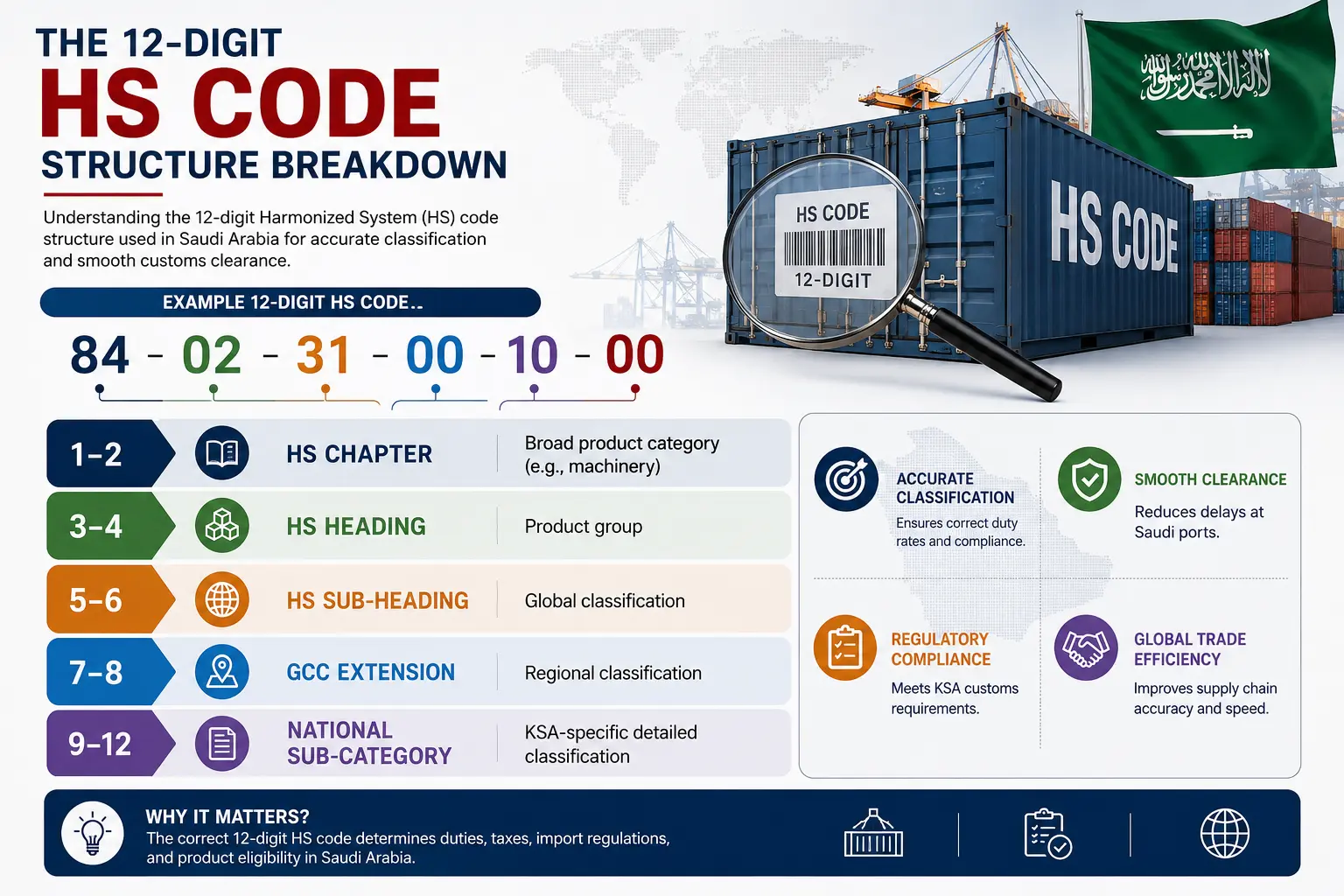
The 12-Digit HS Code Structure Breakdown

HS Code Structure Breakdown

This precision matters. A misclassified product can trigger physical inspection, shipment delays, fines, or rejection at the border.

SABER Platform and ZATCA Synchronization

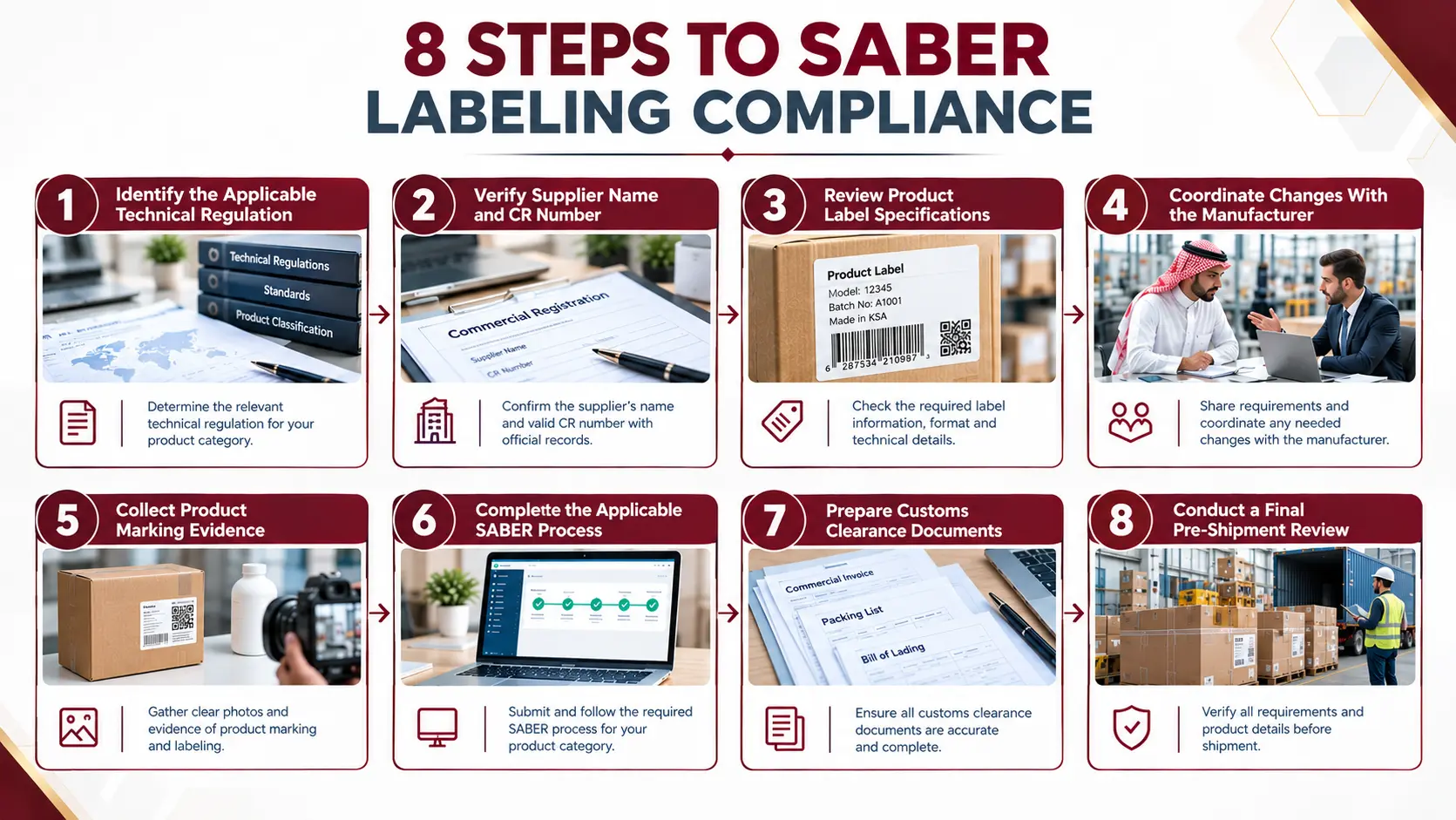
SABER (منصة سابر الإلكترونية) is Saudi Arabia mandatory electronic product conformity platform. In 2025-2026, SABER and ZATCA systems have been tightly synchronized meaning no shipment can clear customs unless the entity is fully compliant with both platforms.

What this means for importers:

  • Every product must be registered on SABER with its correct 12-digit HS code
  • Certificate of Conformity (شهادة المطابقة) is mandatory before arrival
  • Non-compliant shipments face automatic detention at ports

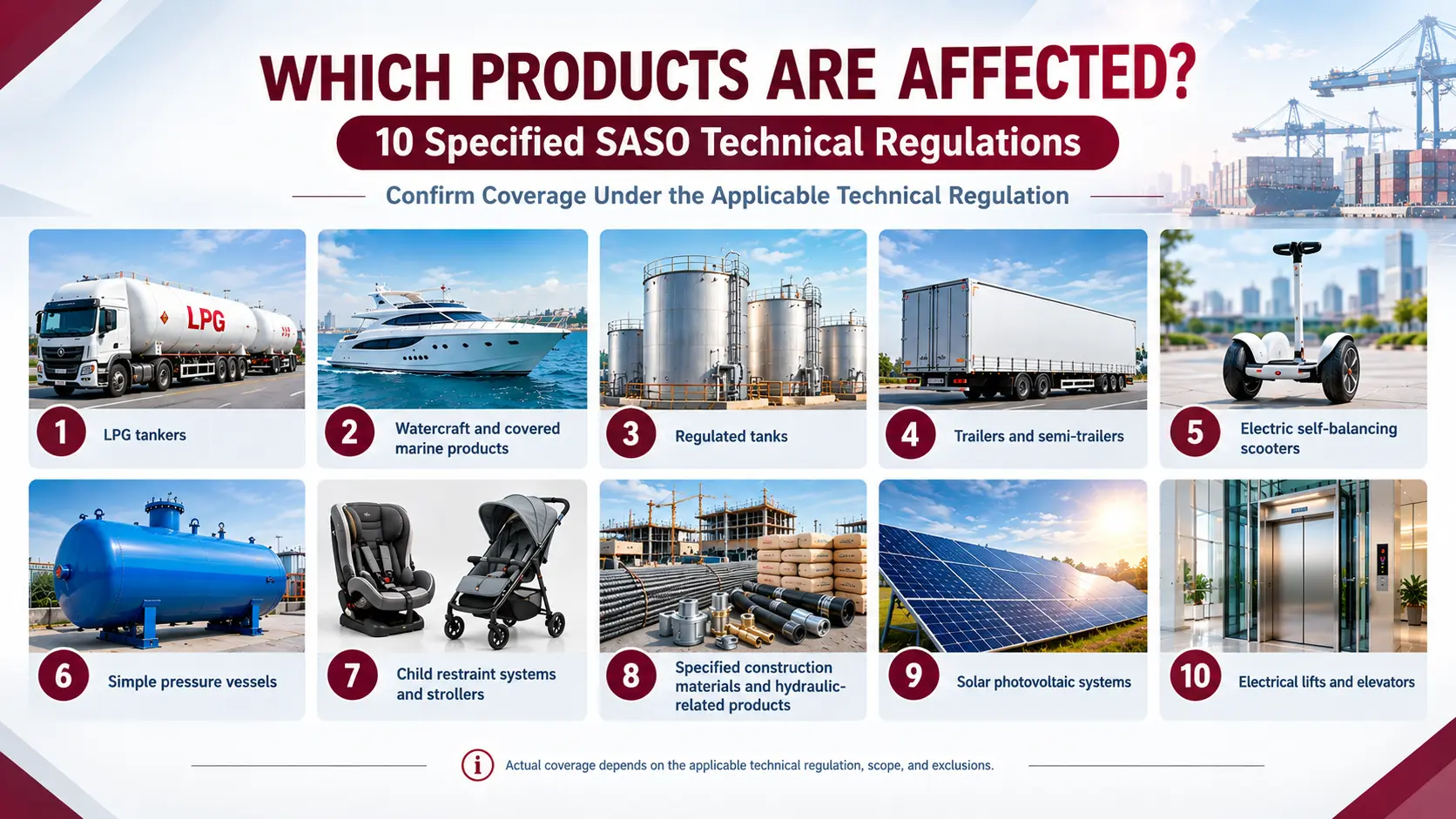
Pro tip: If you are importing regulated products (electronics, toys, building materials, food), you will also need SASO (Saudi Standards, Metrology and Quality Organization) approval alongside SABER certification.

Food and Beverage Sector: Excise Tax Updates

Saudi Arabia imposes Excise Tax (الضريبة الانتقائية) on specific categories:

Product CategoryExcise RateArabic Term
Tobacco Products100%منتجات التبغ
Energy Drinks100%مشروبات الطاقة
Carbonated/Sweetened Beverages50%المشروبات الغازية / المحلاة

How Much is the Customs Duty in Saudi Arabia?

Standard vs. Protective Tariffs

Standard Customs Duty: 5% on most goods, calculated on the CIF Value (Cost + Insurance + Freight).

Protective Tariffs: To support local KSA industries, certain sectors face elevated rates:

  • Plastics and Chemicals: 12-20%
  • Steel and Metals: 15-25%
  • Agricultural Products: 12-20%
  • Textiles: Up to 25%

The Total Import Tax Stack (AEO Table)

Tax/Duty TypeArabic TermStandard RateApplied On
Customs Dutyالرسوم الجمركية5% – 25%CIF Value
Import VATضريبة القيمة المضافة15%CIF + Customs Duty
Excise Taxالضريبة الانتقائية50% – 100%CIF + Customs Duty (selective items)

Critical Calculation Note: VAT is NOT calculated on CIF alone. It is applied on the CIF value PLUS customs duty and for excise goods, excise tax is added before VAT is calculated. This creates a compounding effect that catches many importers off guard.

New Rules for Bonded Zones and Deferred Payments

Customs Bonded Zones (المناطق المستودعية / المناطق الحرة)

Saudi Arabia Free Zones and Bonded Warehouses offer strategic advantages for international businesses:

Duty Suspension (تعليق الرسوم الجمركية)

Goods can be stored in bonded zones without paying customs duties or VAT until they enter the local Saudi market. This is ideal for:

  • Regional distribution hubs
  • Re-export operations
  • Inventory staging before demand spikes

Key Benefits

  • Cash flow optimization: No upfront duty/VAT payment
  • Flexibility: Goods can be re-exported without ever triggering Saudi taxes
  • Processing: Light assembly and repackaging allowed (though significant manufacturing may alter HS classification)

Deferred Payment Programs (تأجيل دفع الرسوم)

ZATCA offers Deferred Payment programs for established importers with strong compliance histories. Eligibility criteria typically include:

  • Clean customs record for 2+ years
  • Financial guarantees/bank bonds
  • Regular import volume
  • ZATCA portal registration with good standing

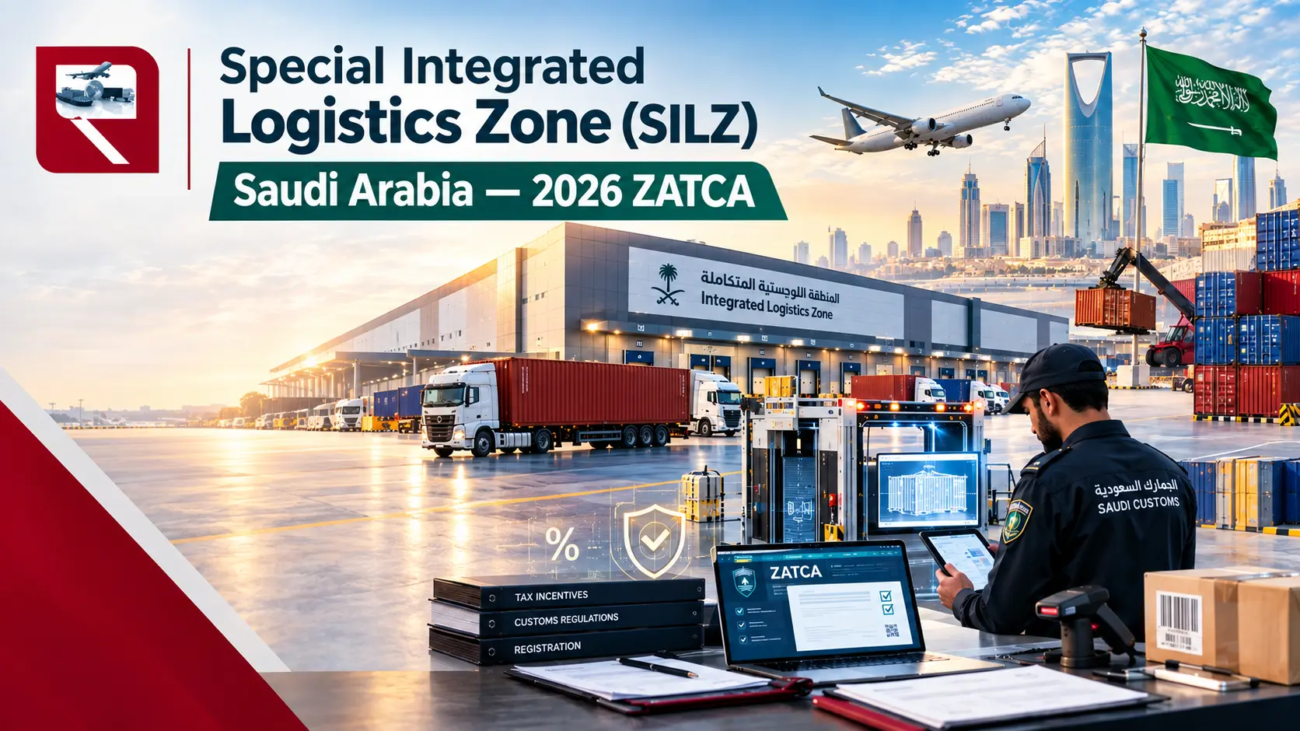
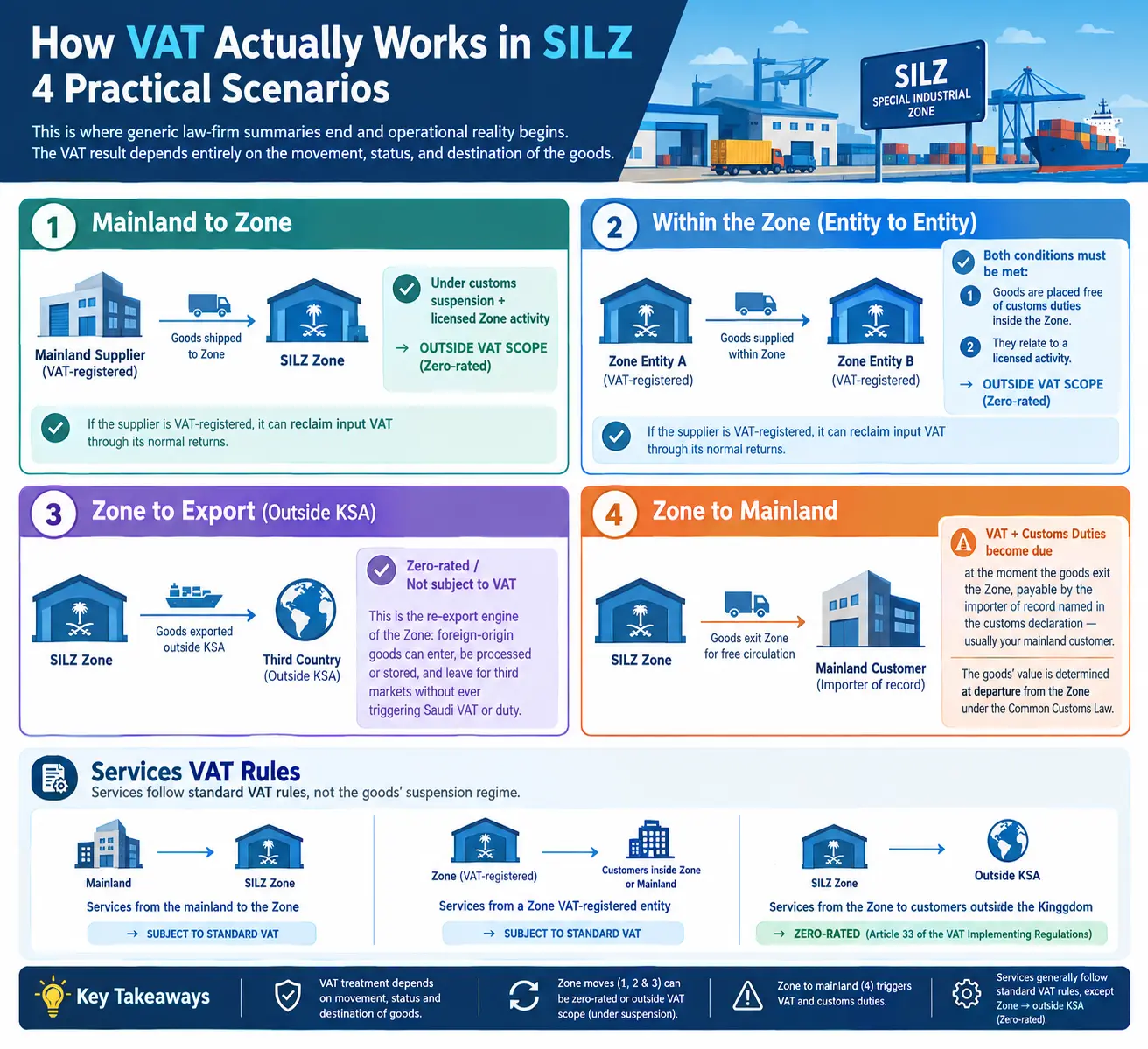
Special Economic Zones (SEZs): Saudi Arabia has established new SEZs with tax and customs incentives, including potential VAT exemptions and reduced customs procedures for qualifying businesses.

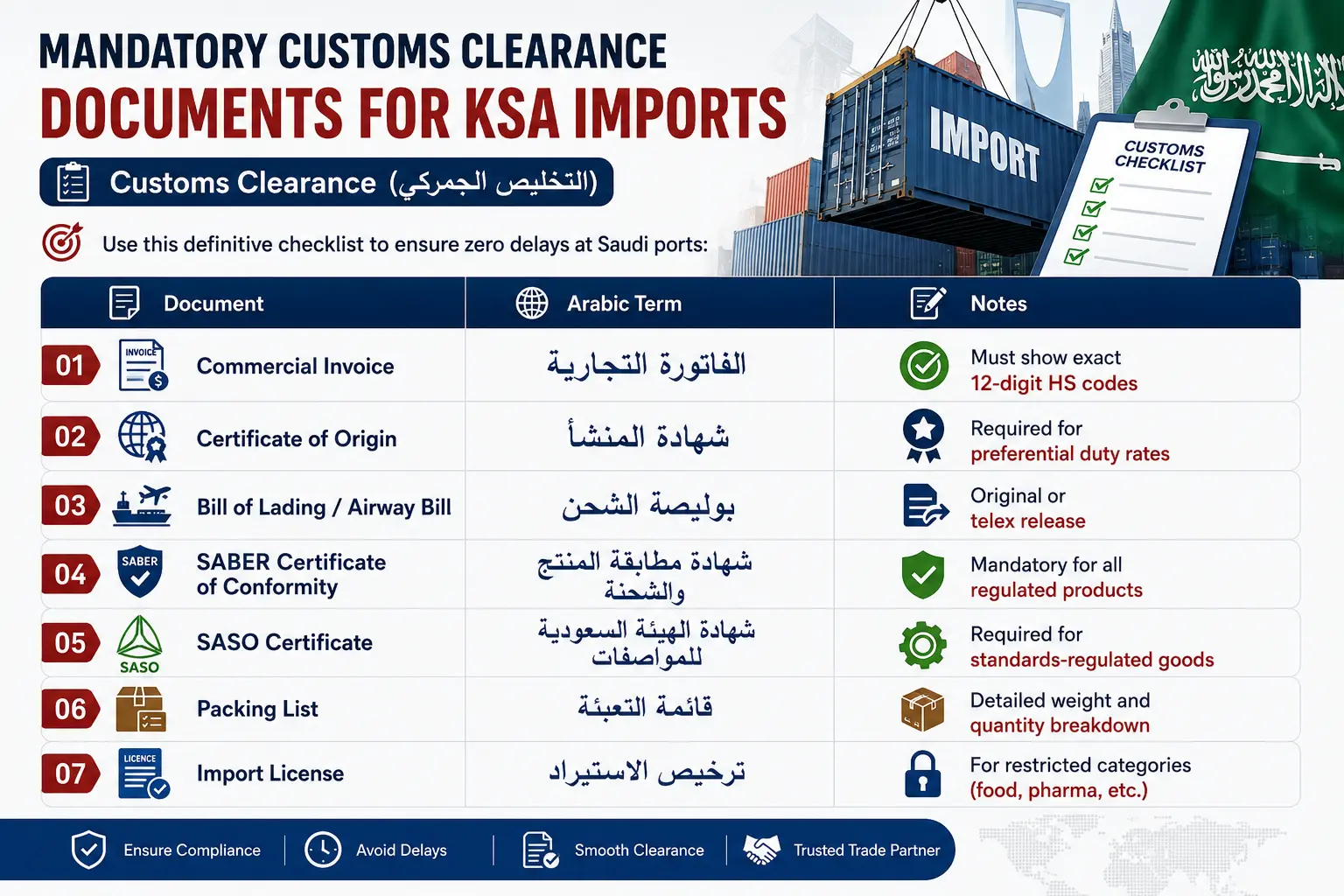
Mandatory Customs Clearance Documents for KSA Imports

Customs Clearance Documents for KSA Imports

Discrepancies between Commercial Invoice HS codes and SABER registration are the #1 cause of customs delays in KSA. Triple-check alignment before shipment.

How Radhi Customs Clearance Co. Navigates KSA Customs for You

Since 1988, Radhi Customs Clearance Co. has operated as a certified Customs Clearance Agent (مخلص جمركي معتمد), guiding international businesses through Saudi Arabia evolving regulatory landscape.

What Sets Us Apart

  • Land Border Specialists: Rapid overland clearance at Al-Batha Port (منفذ البطحاء), Salwa Port (منفذ سلوى), and King Fahd Causeway (جسر الملك فهد) critical gateways for GCC trade
  • 12-Digit HS Code Expertise: We remap your product classifications to ensure SABER/ZATCA compliance
  • End-to-End Documentation: From Commercial Invoice to Certificate of Origin, we handle every document
  • Bonded Zone Management: Strategic warehousing solutions to defer duty and VAT payments
  • Excise Tax Compliance: Accurate classification and calculation for regulated products

Ready to import into Saudi Arabia? Contact our customs specialists today for a free consultation and landed cost estimate.

FAQs for International Importers

Q: What is the standard VAT rate on imports in KSA?

15% (ضريبة القيمة المضافة). Applied on the CIF value + customs duty. Even goods with 0% customs duty still attract 15% VAT at import.

Q: Can we modify tariff classifications inside a Saudi Bonded Zone?

No the primary HS code structure must remain consistent with the original declaration. However, light processing (repackaging, labeling) is permitted. If substantial manufacturing occurs that changes the product essential character, a new customs declaration with updated classification may be required upon entry to the local market.

Q: How long does overland customs clearance take at Saudi land borders?

With proper documentation and pre-arrival SABER registration, Radhi Awad Al-Anazy Co. achieves clearance within 24-48 hours at major land ports like Al-Batha and King Fahd Causeway. Delays typically occur only when HS codes are misaligned or SABER certificates are missing.

Q: Is the 12-digit HS code mandatory for all imports?

Yes. Since the GCC unified tariff implementation in January 2025, all customs declarations must use the 12-digit structure. Saudi Arabia had already been using 12 digits since 2016, so the 2025 update primarily harmonized the system across all GCC states.

Q: What happens if I use the wrong HS code?

Consequences range from shipment delays and physical inspection to financial penalties and rejected clearance. In severe cases, ZATCA may flag your business for enhanced scrutiny on future shipments.

Q: Are there any VAT exemptions for imports?

Limited. Zero-rated categories include certain medications (SFDA-approved), specified basic foodstuffs, and exports leaving the GCC. Most commercial imports attract the full 15% VAT.

Conclusion

Saudi Arabia customs landscape in 2025-2026 is defined by precision, digitization, and compliance. The 12-digit GCC Integrated Tariff, SABER-ZATCA synchronization, and strict documentation requirements create a system that rewards prepared importers and penalizes the unprepared.

For international businesses, success hinges on three pillars:

  • Accurate HS code classification (12-digit precision)
  • Pre-arrival SABER compliance (no exceptions)
  • Expert customs partnership (local knowledge is non-negotiable)

The Kingdom doors are open but only for those who arrive with the right codes, certificates, and strategy.

HOW TO IMPORT FROM CHINA TO SAUDI ARABIA (2026): COMPLETE GUIDE

How to Import from China to Saudi Arabia (2026): Complete Guide

Why China-to-KSA Shipments Get Delayed?

“In 38 years of clearing customs at Dammam and Jeddah ports, we’ve seen the same 5 mistakes delay shipments again and again. The worst part? They’re all preventable.”

Here’s the reality that most China-to-Saudi import guides won’t tell you:

  • 40% of shipments from China face customs delays due to SABER certificate issues
  • Wrong HS codes trigger ZATCA audits, wrong duty rates, and weeks of back-and-forth
  • Missing the new 2026 FASAH pre-arrival declaration (mandatory 48 hours before arrival) now incurs port dwell penalties
  • Vague product descriptions like “Electronics” or “Spare Parts” automatically flag your shipment for Red Channel physical inspection

The good news? Every single one of these delays is preventable.

This guide will help you for updated 2026 SABER HS code changes and FASAH pre-arrival rules.

Radhi Awad is a licensed ZATCA customs broker operating in Saudi Arabia since 1988 — 38 years of hands-on experience clearing thousands of China-to-KSA shipments. We have 8 branches across the Kingdom, including at King Abdul Aziz Sea Port (Dammam), King Fahd Airport (Dammam), Al-Batha, Al-Khafji, KFCA Causeway, and Salwa.

We don’t write about customs clearance from an office in Shanghai. We live it every day at the ports.

💬 Not sure about your product’s HS code or SABER requirements? Get a free duty estimate from certified Customs Clearance Agent before placing your order. It takes 5 minutes and could save you weeks of delays.

 Is Importing from China to Saudi Arabia Profitable in 2026?

Before you place your first order, you need to answer one question: Will this actually make money?

The short answer: Yes — if you understand the true cost structure.

The Saudi-China Trade Relationship

China is Saudi Arabia’s #1 trading partner, with bilateral trade exceeding $100 billion annually. Under Vision 2030, Saudi Arabia is investing billions in logistics infrastructure — new ports, rail links, free zones, and e-commerce fulfillment centers. This means:

  • Faster clearance times at modernized ports
  • Lower logistics costs as competition increases
  • Growing consumer demand as the Saudi population expands and diversifies
  • E-commerce boom creating new demand for China-sourced products

The Real Cost of Importing from China to Saudi Arabia

Most online “import calculators” only show you duty + shipping. They forget the hidden costs that eat your margin:

Cost ComponentRateWhen It Applies
Customs Duty5% — 25%Based on HS code
VAT15%On CIF + Duty
SABER PCoC~500 SAR/productBefore first shipment
SABER SCoC~350 SAR/shipmentBefore each shipment
ZATCA Service Fee0.15% of CIF (capped at 500 SAR)Every commercial shipment
Port HandlingVariableDammam vs Jeddah rates differ
Storage Fees20-40 SAR/container/dayAfter 72-hour free period
Customs Broker Fee500-2,000 SARPer shipment complexity

The mistake most first-time importers make: They calculate landed cost as CIF + 5% duty + shipping. They forget VAT, SABER, port handling, and the broker fee. By the time the goods arrive, their margin is gone.

Profitability by Product Category

CategoryDuty RateMargin PotentialSABER Required?
Electronics5%HighYes + IECEE
Machinery5%HighYes
Furniture12%Medium-HighYes (regulated)
Textiles12%MediumYes (consumer goods)
Cosmetics5%HighYes + SFDA
Food5%MediumYes + SFDA

Electronics, machinery, and furniture offer the best margins. Textiles are competitive but volume-dependent. Food and cosmetics require SFDA approval, which adds time but also creates a barrier to entry.

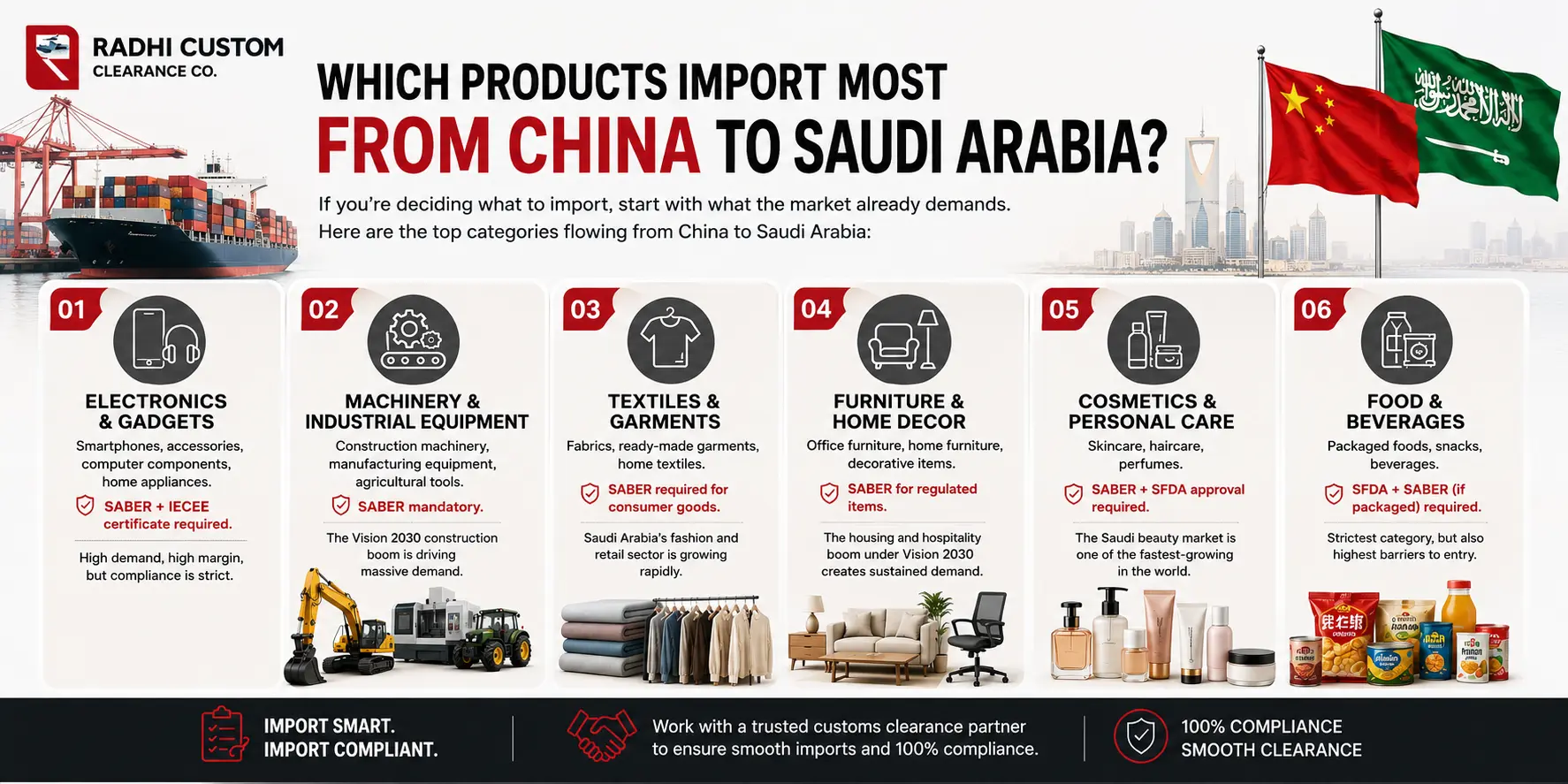
Which Products Import Most from China to Saudi Arabia?

top products imported from China to Saudi Arabia, including Electronics, Machinery, Textiles, Furniture, Cosmetics, and Food, with SABER and SFDA compliance requirements.

The SABER Exemption

Product CategorySABER Required?Additional Approval
Raw materials (industrial use)❌ NoNone
Consumer electronics✅ YesIECEE certificate
Packaged food✅ YesSFDA registration
Cosmetics✅ YesSFDA + SASO
Used machinery✅ YesSpecial SASO approval
Personal PPE (small quantities)❌ NoNone
Industrial chemicals (bulk)❌ NoNone

If you’re importing raw materials for manufacturing, you might not need SABER at all. This saves you ~850 SAR per product and weeks of processing time. Always verify your specific HS code on the SABER platform before assuming compliance is required.

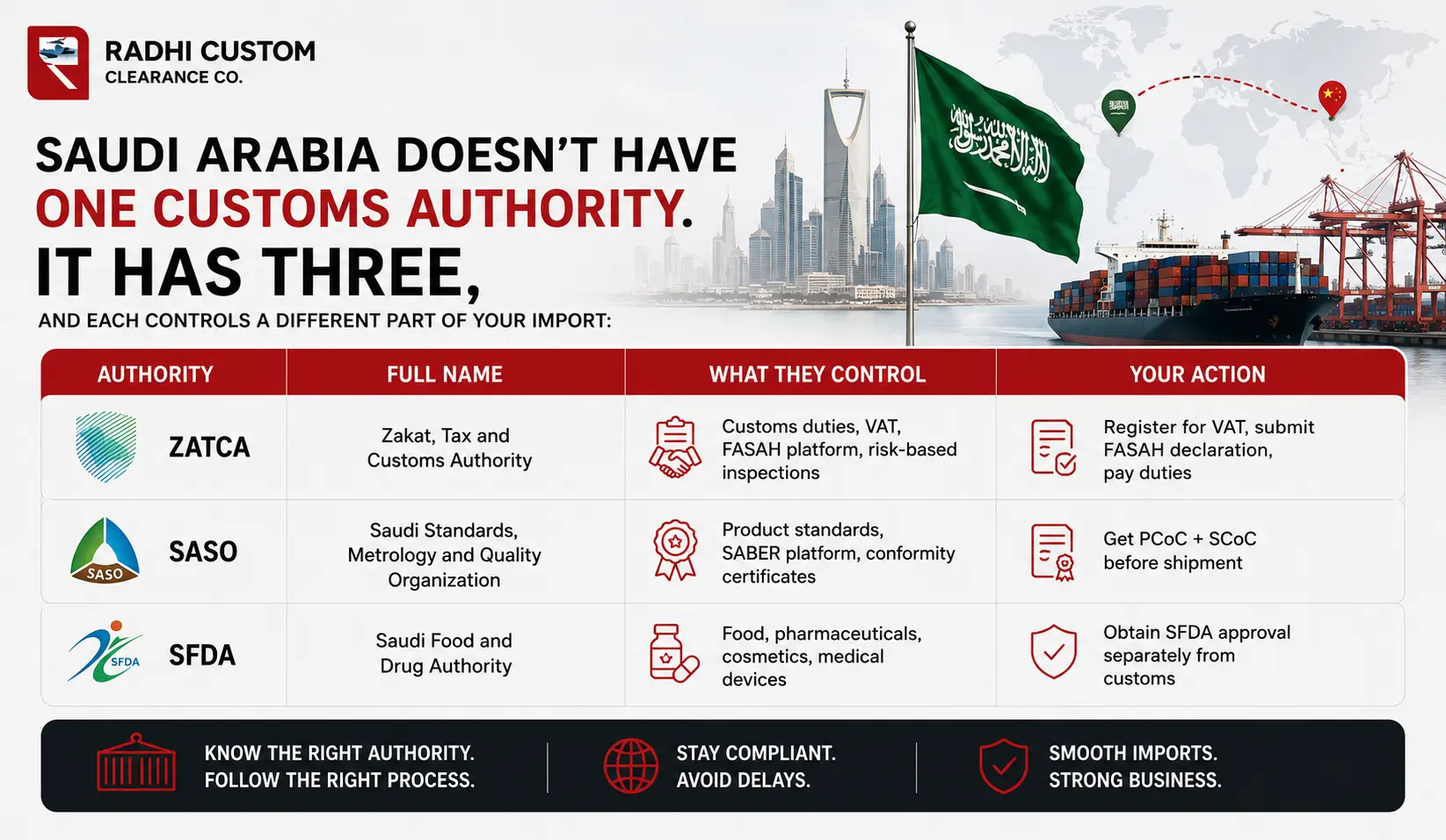
Who Controls Saudi Imports? The 3 Authorities Every Importer Must Know

Saudi Arabia Customs Authority, ZATCA, SASO, SFDA
Saudi Arabia Customs Authority

Saudi Arabia doesn’t have one customs authority. It has three, and each controls a different part of your import:

AuthorityFull NameWhat They ControlYour Action
ZATCAZakat, Tax and Customs AuthorityCustoms duties, VAT, FASAH platform, risk-based inspectionsRegister for VAT, submit FASAH declaration, pay duties
SASOSaudi Standards, Metrology and Quality OrganizationProduct standards, SABER platform, conformity certificatesGet PCoC + SCoC before shipment
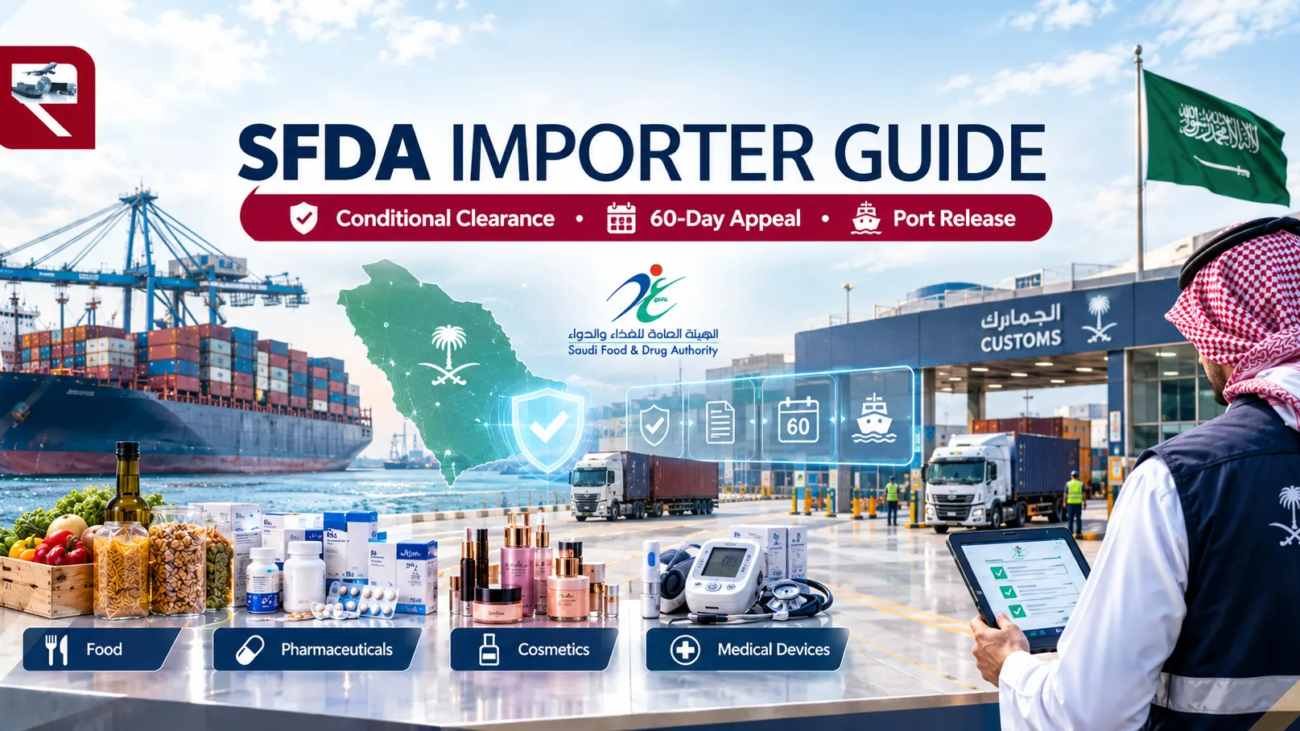
SFDASaudi Food and Drug AuthorityFood, pharmaceuticals, cosmetics, medical devicesObtain SFDA approval separately from customs

For food, pharmaceuticals, cosmetics, and medical devices, you need both SABER (SASO) and SFDA approval. They’re separate processes with separate portals and separate timelines.

Which Authority Handles Your Product?

Product TypeZATCASASO/SABERSFDA
Electronics✅ + IECEE
Machinery
Textiles
Furniture✅ (regulated)
Cosmetics
Food✅ (packaged)
Pharmaceuticals
Raw Materials

Step-by-Step Process: Importing from China to Saudi Arabia in 2026

Follow these 8 steps in order, and your shipment will clear customs smoothly.

Step 1: Get Saudi Commercial Registration (CR) & ZATCA Registration

Before you order anything from China, you need to be legally registered to import in Saudi Arabia.

Importer of Record (IOR) Concept

In Saudi Arabia, only CR-registered Saudi entities can import commercially. You cannot import business goods on a personal visa or as an individual.

Requirements:

  • Valid Commercial Registration (CR) with import/trading activity code –
  • ZATCA VAT registration (mandatory for all commercial imports) –
  • Authorized signatory registered on the FASAH platform –
  • Bank account in the company’s name for duty payments

Step 2: Find Your HS Code & Check 2026 ZATCA Tariff Updates

This is where most importers go wrong — and it costs them dearly.

🚨 BREAKING 2026 UPDATE

On January 1, 2026, Saudi Arabia updated SABER HS codes. Many products shifted categories. Duty rates changed for some classifications. And yet, most competitor blogs haven’t updated this information.

If you’re using an HS code from a 2024 or 2025 guide, you might be using the wrong code.

What Is an HS Code?

The Harmonized System (HS) Code is a 12-digit number that classifies your product for customs purposes. It determines: – Your duty rate (5% vs 25% makes a huge difference) – Whether SABER is required – Which inspection channel you enter (Green, Yellow, or Red)

12-Digit Structure:

  • Digits 1-2: Chapter (broad category)
  • Digits 3-4: Heading (product group)
  • Digits 5-6: Subheading (specific product)
  • Digits 7-8: Saudi-specific sub-classification
  • Digits 9-12: Detailed product specification

Where to Verify Your HS Code

ZATCA Tariff Database — Official source, always up-to-date

SABER Platform HS Code Search — Shows SABER requirements per code

💡 Always verify your HS code with ZATCA’s official database before placing your order.

Step 3: Get Your SABER Certificate (PCoC & SCoC Explained)

This is the #1 reason shipments get delayed. 40% of customs holds are SABER-related.

If you remember nothing else from this guide, remember this: SABER must be obtained BEFORE your goods leave China.

The Two-Certificate System

SABER operates on a two-certificate model. Understanding the difference is critical:

CertificateFull NameTypeValidityCostWhen Needed
PCoCProduct Certificate of ConformityProduct-level1 year~500 SAR/productBefore first shipment of product
SCoCShipment Certificate of ConformityShipment-levelPer consignment~350 SAR/shipmentBefore each individual shipment

Step 4: Choose Shipping Method: Sea vs Air vs DDP

Your shipping method determines cost, speed, and customs complexity. Choose based on your product, budget, and urgency.

MethodTransit TimeBest ForCostCustoms HandlingRadhi Customs Clearance
Sea Freight (FCL)20-35 daysBulk cargo, heavy machinery, containersLowestRequires brokerKing Abdul Aziz Sea Port, Dammam
Sea Freight (LCL)25-40 daysSmaller shipments, shared containerLowRequires brokerKing Abdul Aziz Sea Port, Dammam
Air Freight4-8 daysUrgent, high-value, perishable, small volumeHighRequires brokerKing Fahd Airport, Dammam
DDP (Door-to-Door)25-40 daysE-commerce, first-time importers, hassle-freeAll-inclusiveIncluded in serviceAll branches

Sea Freight: The Workhorse

Best for: Bulk orders, heavy machinery, non-urgent inventory

  • Dammam (King Abdul Aziz Sea Port): Closer to China’s shipping routes. Typically 2-3 days faster than Jeddah for China-origin cargo.
  • Jeddah Islamic Port: Better for goods destined to western Saudi Arabia (Makkah, Madinah, Taif).

Air Freight: The Speed Option

Best for: Urgent orders, high-value electronics, perishables, samples

  • King Fahd Airport (Dammam): Our dedicated branch handles air freight clearance in 24-48 hours.
  • Jeddah (King Abdulaziz Airport): Alternative for western KSA destinations.

DDP (Delivered Duty Paid): The Beginner’s Choice

Best for: First-time importers, e-commerce sellers, those who want zero hassle

DDP means your logistics provider handles everything — shipping, customs clearance, duties, VAT, and final delivery to your warehouse. You pay one price. They handle the complexity.

Step 5: Prepare Import Documents Checklist

Documents are the backbone of customs clearance. Missing one document can delay your shipment by days or weeks.

Here are the 7 core documents every China-to-Saudi shipment needs:

#DocumentWhat It Must Include⚠️ If Missing
1Commercial InvoiceTriplicate, attested, HS codes, unit values, total CIF value in USDCustoms rejection, duty recalculation, potential audit
2Packing ListEvery carton’s weight, dimensions, contents, total packagesPhysical inspection triggered, clearance delayed
3Bill of Lading (B/L)Sea freight — original or telex release, vessel name, voyage numberCannot claim cargo from shipping line
4Air Waybill (AWB)Air freight — master or house AWB, flight detailsCannot claim cargo from airline
5Certificate of OriginAttested by China Chamber of Commerce (CCPIT)Duty rate dispute, potential penalty, ZATCA review
6SABER SCoCValid, matching shipment details, product descriptionsShipment refused entry — sent back or destroyed
7FASAH Customs DeclarationSubmitted electronically via FASAH platformCannot clear customs at all

Many documents must be attested (officially verified). This is where importers often slip up:

  • Commercial Invoice: Must be attested by the supplier’s chamber of commerce in China
  • Certificate of Origin: Must be attested by China Council for the Promotion of International Trade (CCPIT)
  • Some documents: May require Saudi Embassy attestation for high-value shipments

Step 6: Submit Customs Declaration on FASAH (48 Hours Before Arrival)

🚨 NEW 2026 RULE: This is now mandatory, and the penalties are real.

What Changed in 2026

Starting January 1, 2026, Saudi Arabia made pre-arrival customs declaration mandatory on the FASAH platform. You must submit your declaration at least 48 hours before your vessel arrives at the port.

Miss this deadline, and you face:

  • Port dwell penalties starting Day 4
  • Automatic Yellow or Red Channel inspection (more delays)
  • Potential rejection of late declarations for high-risk goodsubmit and receive declaration number

Step 7: Customs Inspection: Green, Yellow, or Red Channel?

ZATCA uses a risk-based inspection system that assigns every shipment to one of three channels:

ChannelWhat HappensHow to QualifyTypical Clearance Time
🟢 GreenAutomated clearance, no inspectionAccurate HS code, complete documents, compliant import history1-3 hours
🟡 YellowDocument review only (no physical inspection)Minor discrepancies, new importer, random selection1-2 days
🔴 RedFull physical inspection of cargoWrong HS code, missing documents, high-risk product, random selection3-7+ days

The #1 Factor: HS Code Accuracy

Your HS code accuracy and product compliance are the single biggest factors determining which channel you enter. Get these right, and 80%+ of your shipments will clear on Green channel.

How to maximize Green Channel probability:

  • Use verified, correct HS codes –
  • Submit complete, accurate documents –
  • Ensure SABER is valid and matches shipment –
  • Use specific product descriptions (not vague terms) –
  • Maintain clean import history (no past violations) –
  • Work with a licensed broker who knows ZATCA’s risk criteria

What triggers Red Channel:

  • Wrong or suspicious HS code –
  • Missing SABER or documents –
  • Vague product descriptions (“Electronics,” “Spare Parts”) –
  • First-time importer with no history –
  • High-risk product category –
  • Random selection (unavoidable, but rare)

Step 8: Pay Duties, VAT & Receive Your Shipment

The final step: paying what you owe and taking your goods.

How Customs Duty Is Calculated

Customs Duty = CIF Value × Duty Rate (5% — 25%)
VAT = (CIF Value + Customs Duty) × 15%
ZATCA Service Fee = CIF Value × 0.15% (capped at 500 SAR)

CIF Value = Cost of goods + Insurance + Freight (shipping cost to Saudi port)

Worked Example: $10,000 Electronics Shipment

ItemCalculationAmount (USD)
CIF Value$10,000
Customs Duty (5%)$10,000 × 5%$500
VAT Base$10,000 + $500$10,500
VAT (15%)$10,500 × 15%$1,575
ZATCA Service Fee$10,000 × 0.15%$15
Total Landed Cost$12,090

Your true cost isn’t $10,000. It’s $12,090. Plan your pricing accordingly.

Payment Process

  • ZATCA issues payment notice via FASAH
  • Pay through SADAD (Saudi payment system) or bank transfer
  • Receive payment confirmation
  • ZATCA issues clearance certificate
  • Collect goods from port or arrange delivery
  • Timeline: Payment to clearance = 2-24 hours for Green Channel shipments.
  • Complete Documents Checklist for Importing from China to Saudi Arabia

The 10 Essential Documents

#DocumentWhat It Must Include⚠️ If MissingWhere to Get
1Commercial InvoiceTriplicate, attested, HS codes, CIF value in USD, supplier signatureRejection + duty recalculationSupplier (must be attested)
2Packing ListPer-carton weight, dimensions, contents, total packages, marks & numbersPhysical inspection triggeredSupplier
3Bill of Lading (B/L)Original or telex release, vessel name, voyage number, container numbersCannot claim cargoShipping line
4Air Waybill (AWB)Master or house AWB, flight number, date, shipper/consignee detailsCannot claim cargoAirline / Freight forwarder
5Certificate of OriginAttested by China CCPIT, product description matching invoiceDuty rate dispute, penaltySupplier + CCPIT
6SABER SCoCValid, matching shipment details, product descriptions, CB approvalShipment refused entrySABER platform
7FASAH DeclarationSubmitted 48hrs pre-arrival, all HS codes, CIF values, B/L referenceCannot clear customsFASAH platform
8Import LicenseFor regulated goods only (chemicals, weapons, certain electronics)Seizure + legal penaltiesRelevant ministry
9SFDA ApprovalFor food, pharma, cosmetics, medical devices onlySeizure + destructionSFDA portal
10IECEE CertificateFor electrical/electronic products onlySABER rejectionIECEE system

Document Verification Checklist (Before Shipment Leaves China)

Use this checklist before your supplier ships:

  • Commercial invoice is attested by supplier’s chamber of commerce
  • Certificate of Origin is attested by CCPIT
  • HS codes on invoice match ZATCA database
  • Product descriptions are specific (not vague)
  • SABER PCoC is active for all products
  • SABER SCoC is applied for (or ready to apply)
  • Arabic labeling is present (if required for your product)
  • All documents are in English or Arabic (bilingual preferred)
  • CIF value is accurately calculated
  • FASAH declaration is ready to submit upon B/L receipt

The Hidden Cost Most Importers Forget

Hidden CostWhen It AppliesTypical Amount
Storage feesAfter 72-hour free period20-40 SAR/container/day
Inspection feesRed Channel physical inspection500-2,000 SAR
DemurrageLate container return to shipping line50-150 SAR/day
DetentionLate empty container return30-100 SAR/day
Customs broker feePer shipment500-2,000 SAR
Delivery from portTo your warehouseVariable by distance

💬 Get a free, accurate landed cost estimate for your specific product. Contact Radhi Awad with your HS code and CIF value. We’ll calculate every cost — not just the obvious ones.

Why Use a Licensed Customs Clearance Agent in Saudi Arabia?

Here’s a fact most importers don’t know:

A licensed customs broker is mandatory for commercial imports in Saudi Arabia.

ZATCA regulations require that commercial imports be handled by a ZATCA-licensed customs broker acting as the Importer of Record or authorized representative.

What a Licensed Broker Does for You

ServiceWhat It MeansValue
HS Code ClassificationCorrect classification = correct duty + Green ChannelSaves money, prevents delays
SABER ManagementPre-shipment PCoC + per-shipment SCoCPrevents 40% of customs holds
FASAH SubmissionOn-time declaration (48-hour rule)Avoids port dwell penalties
Inspection ManagementGreen Channel optimization1-3 hour clearance vs 3-7 days
Duty Dispute ResolutionChallenging wrong classifications or valuationsRecovers overpaid duties
Port Handling CoordinationContainer pickup, storage, deliveryReduces storage fees
Document VerificationPre-shipment document reviewCatches errors before they cost you
Regulatory UpdatesStaying current with 2026 rule changesCompliance without research

Radhi Awad: Your Licensed Partner Since 1988

38 years of clearing customs in Saudi Arabia. Thousands of China-to-KSA shipments. Branches across the Kingdom.

Our Branches: – 📍 Dammam — King Abdul Aziz Sea Port – 📍 Dammam — King Fahd Airport – 📍 Al-Batha – 📍 Al-Khafji – 📍 KFCA Causeway

Why importers choose Radhi Awad:

– ✅ Licensed ZATCA customs broker (not a freight forwarder pretending to be one)

– ✅ Direct relationships with SABER Certification Bodies

– ✅ 85% Green Channel clearance rate

– ✅ Arabic, English, and Urdu speaking staff

– ✅ 24/7 shipment tracking and updates

– ✅ Transparent pricing — no hidden fees

Frequently Asked Questions

Do I need a SABER certificate for all products from China?

No. Only regulated consumer goods, electronics, chemicals, and certain machinery require SABER. Non-regulated raw materials and some personal items may be exempt. Always verify using your HS code on the SABER platform before assuming compliance is required.

How long does customs clearance take in Saudi Arabia?

With complete documents and Green Channel: 1-3 business days. Missing SABER or FASAH issues can extend this to 7-14+ days with additional storage fees. Red Channel inspection: 3-7+ days.

What is the import duty rate from China to Saudi Arabia?

The standard rate is 5%, but ranges from 0% to 25% depending on HS code. VAT of 15% applies on top of CIF value plus duties. Some products under trade agreements may have reduced rates.

Can I import from China without a customs broker?

Technically possible for personal imports under 3,000 SAR. Commercial imports require a ZATCA-licensed customs broker as the Importer of Record or authorized representative. Attempting commercial import without a broker can result in shipment rejection.

What is the FASAH platform?

FASAH is Saudi Arabia’s National Single Window for Trade operated by ZATCA. It’s the portal where customs declarations must be submitted electronically. Since January 2026, pre-arrival declaration is mandatory 48 hours before vessel arrival.

What documents are needed to import from China to Saudi Arabia?

The 7 core documents: Commercial invoice (attested, triplicate), packing list, Bill of Lading/Air Waybill, Certificate of Origin (attested by CCPIT), SABER SCoC, and FASAH customs declaration. Regulated goods need additional permits (SFDA, IECEE, import license).

How much does a SABER certificate cost?

PCoC (Product Certificate): Approximately 500 SAR per product, valid for 1 year. SCoC (Shipment Certificate): Approximately 350 SAR per shipment. Total per product (first year): ~850 SAR + testing costs (if required).

What is the difference between PCoC and SCoC?

PCoC is product-level — one certificate per product type, valid for 1 year, covers all shipments of that product. SCoC is shipment-level — one certificate per individual consignment, required for every shipment.

Can I get SABER after my shipment arrives in Saudi Arabia?

No. SABER must be obtained before goods leave China. The PCoC process takes 5-15 business days. The SCoC process takes 1-3 business days. Applying after arrival results in automatic customs hold, storage fees, and potential rejection.

Which port is better for China imports — Dammam or Jeddah?

Dammam (King Abdul Aziz Sea Port) is closer to China’s shipping routes and typically 2-3 days faster for China-origin cargo. Jeddah Islamic Port serves western Saudi Arabia and is ideal for goods destined to Makkah, Madinah, or the Red Sea coast. For air freight, King Fahd Airport (Dammam) is the primary gateway.

What is the cheapest way to import from China to Saudi Arabia?

Sea freight to Dammam or Jeddah port is cheapest for bulk cargo. For smaller shipments, consolidated sea freight (LCL) reduces costs by sharing container space. Air freight is 3-5x more expensive but 5x faster.

How much does customs clearance cost in Saudi Arabia?

ZATCA charges 0.15% of CIF value (capped at 500 SAR). Broker fees vary by shipment complexity, typically 500-2,000 SAR. Additional costs: SABER (~850 SAR), port handling (~200-500 SAR), and potential storage fees.

Can I import from China to Saudi Arabia without a company?

Personal imports up to 3,000 SAR value are allowed without a company. Commercial imports require a Saudi-registered company with CR and VAT registration. A licensed customs broker is mandatory for commercial shipments.

How do I track my shipment in Saudi customs?

Use the FASAH platform with your declaration number. Your customs broker can also provide real-time updates. For Radhi Awad clients, we provide 24/7 tracking via WhatsApp and email.

What happens if my shipment is held at Saudi customs?

Common reasons: missing SABER, wrong HS code, incomplete documents, or Red Channel inspection. Contact your broker immediately. Storage fees apply after 72 hours. The sooner you act, the lower the cost.

How long does sea freight from China to Saudi Arabia take?

20-35 days depending on the port. Shanghai to Dammam: ~22-25 days. Shenzhen to Jeddah: ~28-32 days. Air freight: 4-8 days.

Do I need to speak Arabic to import to Saudi Arabia?

No, but it helps. All official documents must be in Arabic or English. ZATCA and SABER platforms are available in English. However, working with a bilingual broker (like Radhi Awad) eliminates language barriers entirely.

Ready to Import from China to Saudi Arabia? Get a Free Consultation

You’ve read the complete guide. You know the process. You understand the costs. You see the pitfalls.

Now, let us handle the complexity for you.

Radhi Awad has been Saudi Arabia’s trusted customs clearance partner since 1988. In 38 years, we’ve cleared thousands of China-to-KSA shipments. We’ve seen every mistake. We’ve solved every problem. And we’ve built the relationships that get your goods through customs fast.

Why Importers Trust Radhi Awad

  • 38 years licensed ZATCA customs broker
  • 8 branches across Saudi Arabia
  • 85% Green Channel clearance rate
  • 24/7 tracking and updates
  • Transparent pricing — no hidden fees
  • Arabic, English speaking staff

What You Get in a Free Consultation

  • 📋 HS code verification for your product
  • 💰 Accurate landed cost estimate
  • 📄 SABER requirement assessment
  • 🚢 Shipping method recommendation
  • 📍 Optimal port and branch selection
  • 📅 Timeline planning for your shipment

Contact Us Now

📞 Phone: +966558959205 📧 Email:info@radhiawad.com.sa 🌐 Website:radhiawad.com.sa

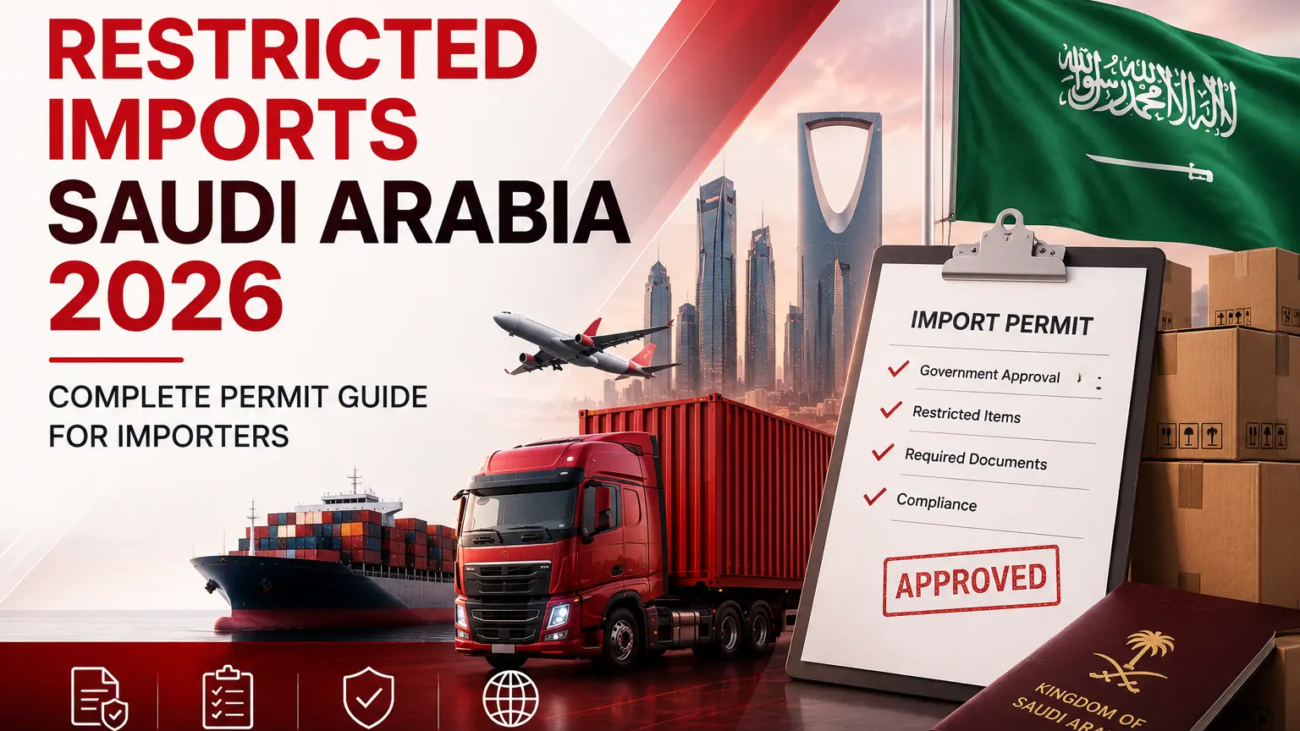
Restricted Imports Saudi Arabia 2026: Complete Permit Guide for Importers

Restricted Imports Saudi Arabia 2026: Complete Permit Guide for Importers

If you are an importer, freight forwarder, or procurement manager bringing goods into Saudi Arabia, this guide is written for you. In 2026, the Kingdom’s import landscape has shifted dramatically. What worked in 2024 will get your shipment seized today.

This guide covers the four restricted import categories that attract the most scrutiny from Saudi authorities: pharmaceuticals (SFDA), drones and UAVs (GACA), telecom and wireless devices (CST), and wood and agricultural products (MEWA). Each category is governed by a different authority, follows different timelines, and carries different penalties for non-compliance.

This guide is updated for June 2026 and reflects current ZATCA (الهيئة الزكاة والضريبة والجمارك), SFDA (الهيئة العامة للغذاء والدواء), GACA (الهيئة العامة للطيران المدني), CST (هيئة الاتصالات والفضاء والتقنية), and MEWA (وزارة البيئة والمياه والزراعة) regulations.

At Radhi Awad Customs Clearance Co., we have managed Saudi customs clearance since 1988. We are a ZATCA-authorized, AEO-certified customs broker with branches at Dammam (King Abdulaziz Port), Jeddah (Islamic Port), King Fahad Airport (KFCA), Al-Batha, Salwa, Al-Khafji, and other major Saudi gateways.


Table of Contents

  1. What Are “Restricted Imports” in Saudi Arabia? (vs Prohibited)
  2. The 2026 “Copy-Paste” Rule — Why Document Matching Is Now Critical
  3. Category 1: Pharmaceutical & Medical Products — SFDA Import Permit
  4. Category 2: Drones & UAVs — GACA Import & Flight Permit
  5. Category 3: Telecom & Wireless Devices — CST Type Approval
  6. Category 4: Wood & Agricultural Products — MEWA Quarantine Certificates
  7. 5 Mistakes That Cost Importers SAR 50,000+
  8. Penalties for Non-Compliance in 2026
  9. How Radhi Awad Clears Restricted Imports — 4-Step Process
  10. FAQ — Restricted Imports Saudi Arabia 2026

What Are “Restricted Imports” in Saudi Arabia? (vs Prohibited)

Restricted imports are goods that CAN enter Saudi Arabia — but only with pre-approval from specific government authorities. They are different from prohibited goods (which are completely banned). In 2026, the four categories that attract the most scrutiny are: pharmaceuticals (SFDA), drones (GACA), telecom devices (CST), and wood/agricultural products (MEWA).

Understanding the difference between “restricted” and “prohibited” is not academic — it is the difference between a delayed shipment and a seized one.

Prohibited vs Restricted: Quick Reference

Prohibited (Banned Entirely)Restricted (Needs Special Permit)
Alcohol and narcoticsPharmaceuticals and controlled medicines
Pork and pork-derived productsDrones and UAVs
Pornographic materialTelecom and wireless devices
Realistic replica weaponsWood and agricultural products
Used clothing and retreaded tyresChemicals and certain food items
Gambling devicesMedical devices requiring SFDA MDMA

Governing Authorities (2026)

Every restricted category has a dedicated regulator. In 2026, these authorities operate under fully automated systems with zero tolerance for documentation errors:

  • ZATCA (الهيئة الزكاة والضريبة والجمارك) — Customs, tax, and border enforcement. Operates the FASAH (منصة فسح) single window and the automated risk-scoring engine.
  • SFDA (الهيئة العامة للغذاء والدواء) — Food, drug, and medical device registration.
  • GACA (الهيئة العامة للطيران المدني) — Civil aviation and unmanned aerial systems.
  • CST (هيئة الاتصالات والفضاء والتقنية) — Telecom, wireless, and RF device approval.
  • MEWA (وزارة البيئة والمياه والزراعة) — Biosecurity, plant quarantine, and agricultural imports.

According to ZATCA enforcement guidelines, bypassing these agencies is treated as smuggling. Penalties include fines up to 5x the cargo value, blacklisting of the importer, and potential criminal prosecution for the local agent. In Q1 2026, Radhi Awad observed that 34% of restricted import delays were caused by repeat-flagged importers with prior violations.

AEO Certification: Your Fast Lane

Businesses with ZATCA Authorized Economic Operator (AEO) certification receive expedited clearance for restricted imports. Radhi Awad is an AEO-certified customs broker, which means our clients’ shipments are pre-cleared through the Green Track in FASAH.

AuthorityProduct TypePermit NameTypical TimelineValidity
SFDAPharmaceuticals, medical devicesProduct Registration + Import Permit3-6 months (registration); 1-3 days (per-batch)Registration: 5 years; Permit: per shipment
GACADrones, UAVsImport Permit + Flight Permit7-15 business days1 year      
CSTTelecom, wireless, RF devicesType Approval Certificate2-4 weeks1-2 years
MEWAWood, plants, agricultural productsPhytosanitary Certificate + ISPM-157-20 daysPer shipment

The 2026 “Copy-Paste” Rule — Why Document Matching Is Now Critical

Here is a rule no one told you: in 2026, Saudi customs does not read your documents. It matches them.

Saudi customs systems — FASAH (منصة فسح) integrated with ZATCA’s automated risk engine — are fully automated. If your Commercial Invoice says “Bluetooth Router” but your CST permit says “Wireless Access Point,” the system auto-rejects. There is no human override for a system-level mismatch.

Every field must match exactly:

  • HS code (8-digit level)
  • Product name (exact spelling)
  • Declared value
  • Permit numbers
  • Manufacturer name
  • Country of origin

The 30-Day Buffer Rule

Apply for per-batch import permits at least 21–30 days before your vessel arrives at Jeddah Islamic Port or King Abdulaziz Port (Dammam). Waiting until the ship is already in transit guarantees port storage fees.

Important timing note: During Ramadan and Eid, add 7–10 additional processing days to all timelines. Government offices operate on reduced hours, and permit queues back up significantly.

💡 Pro Tip: Radhi Awad’s team performs document verification before your shipment departs. We cross-check your Commercial Invoice, HS code, and permit names against FASAH pre-arrival requirements. Contact us for a pre-shipment compliance check.

Category 1: Pharmaceutical & Medical Products — SFDA Import Permit

Pharmaceuticals are the highest-risk category for restricted imports. The SFDA (الهيئة العامة للغذاء والدواء) maintains one of the strictest drug regulatory frameworks in the Gulf region. In 2026, under Vision 2030’s healthcare transformation, enforcement has tightened further.

Which Medicines & Medical Products Require SFDA Approval?

High-risk prescription medications: Controlled drugs such as Xanax, Adderall, Tramadol, and similar substances require electronic SFDA clearance before the shipment arrives in Saudi Arabia. Attempting to import these without clearance is treated as narcotics smuggling.

OTC medicines and medical devices: Must meet SFDA certification standards. Medical devices require SFDA MDMA (Medical Device Marketing Authorization) before import.

Supplements in commercial quantities: Generally, anything above a personal use threshold requires SFDA registration. The exact threshold varies by product type, but commercial importers should assume registration is mandatory.

Halal certification: Under the 2025-2026 SFDA-SASO Halal coordination framework, an increasing number of supplement and pharmaceutical imports require Halal certification. This is particularly relevant for products containing animal-derived ingredients.

SFDA Registration Timeline — Plan Months Ahead

StageTimeframe
Initial product registration3 to 6 months
Per-batch import permit (once registered)1 to 3 business days
Recommended lead time before shippingAt least 6 months in advance

Critical Warning: Do NOT book ocean freight until SFDA product registration is fully approved. This is the most common — and most expensive — mistake pharmaceutical importers make. We have seen importers lose entire shipments because they booked freight during month 2 of a 6-month registration process.

Cold Chain Documentation

For temperature-sensitive pharmaceuticals, 2026 regulations require complete cold chain documentation:

  • Temperature monitoring logs from manufacturer to port
  • Validated packaging qualification
  • Reefer container calibration certificates
  • Temperature excursion protocols

Documents Required for Pharmaceutical Import

  • SFDA registration number (or MDMA for medical devices)
  • SABER certificate (PCoC + SCoC) — where applicable per HS code
  • Commercial invoice — product name must match SFDA registration exactly
  • Certificate of Origin (COO)
  • Bill of Lading or Air Waybill
  • Temperature control documentation (for cold-chain products)
  • Halal certificate (if applicable)

Category 2: Drones & UAVs — GACA Import & Flight Permit

In Saudi Arabia, a drone is not viewed as a consumer gadget — it is treated as an airspace security asset. The Kingdom heavily regulates anything that flies and records data. In 2026, this stance has become even stricter under Vision 2030’s national security framework.

Why Saudi Arabia Treats Drones as Airspace Security Assets

Saudi Arabia’s airspace sovereignty is non-negotiable. Drones equipped with cameras, GPS, and data transmission capabilities are classified as potential security threats until proven otherwise. GACA (الهيئة العامة للطيران المدني) treats drone imports with the same rigor as manned aircraft parts.

Who Can Import Drones in 2026?

GACA requires drone operators to register and obtain permits before import. Key requirements in 2026:

  • The importing entity must have a GACA account with commercial aviation or operator credentials
  • Commercial sellers must verify that the buyer holds a GACA Remote Pilot Certificate before shipping
  • Industry practice indicates that GACA prioritizes applications from Saudi-registered entities with demonstrated operational need

Note: Specific regulatory updates should always be verified against GACA.gov.sa UAS regulations before finalizing import plans.

The GACA Dual Permit Process

Importing a drone into Saudi Arabia requires two permits simultaneously:

  1. Local importing entity must have a GACA account and specific commercial aviation or operator credentials
  2. Submit drone technical specs, flight control system data, and CE/FCC safety certificates
  3. File the “Intended Use” Declaration — specify the exact use (mapping, aerial photography, inspections) and designated flight zones
  4. GACA review period: 7–15 business days
  5. After approval, GACA issues both an Import Permit AND a Flight Permit simultaneously

Can I Bring a Drone in My Luggage?

This is one of the most common questions we receive. The answer: personal drones in luggage must be declared at customs. Unregistered drones may be seized. Commercial quantities require full GACA permits regardless of how they enter the country.

Category 3: Telecom & Wireless Devices — CST Type Approval

Telecom and wireless devices represent the fastest-growing category of restricted imports into Saudi Arabia. With Vision 2030’s digital transformation, demand for routers, IoT devices, and smart wearables has exploded — and so has CST (هيئة الاتصالات والفضاء والتقنية) enforcement.

Which Devices Need CST Type Approval?

If your device does any of the following, it needs CST Type Approval:

  • Emits radio frequency (RF) signals
  • Connects to public telecom networks
  • Has wireless connectivity (Wi-Fi, Bluetooth, cellular, GPS)

Specific examples: – Routers, modems, and Wi-Fi access points – Mobile phones, tablets, and laptops with wireless connectivity – IoT modules and smart home devices – GPS trackers — even small, unbranded “asset tracking” devices – Smart wearables — AR/MR headsets with recording capability require a specialized CST permit – Bluetooth accessories

The SABER + CST Dual Compliance Requirement

This is the most misunderstood requirement for telecom importers in 2026. Most companies assume SABER certification is the only requirement — it is not.

For wireless or RF products, you typically need BOTH:

  • CST Type Approval — issued by the Communications, Space & Technology Commission. This certifies that your device meets Saudi RF emission and telecom network standards.
  • SABER certification (PCoC + SCoC) — issued through the SABER (منصة سابر) platform under SASO. Requirement varies by HS code; not all telecom devices require SABER, but most consumer electronics do.

Common Mistake: Importers assume that CE or FCC marks are sufficient for Saudi Arabia. They are not. CST requires those certificates as part of the application package, but they do NOT replace CST Type Approval. Shipping without CST clearance means your goods will be held under port demurrage until they are seized or re-exported.

IECEE Certificate — The Hidden Requirement

Many telecom devices also require a SASO IECEE certificate under specific HS codes. IECEE is mandatory for electrical and electronic products that fall under Saudi technical regulations. Before shipping, verify your HS code against the SASO IECEE product list.

HS Code Mismatch — The #1 Cause of Telecom Clearance Delays

Incorrect HS code classification is the most common cause of ICT import delays in Saudi Arabia.

Classifying a “router with built-in Wi-Fi” under general network parts instead of “data communication equipment” triggers an RF inspection flag. A single wrong code can hold your shipment for weeks and result in reclassification penalties.

CST Compliance Documents Checklist

  • CST Type Approval Certificate (valid 1-2 years depending on product category)
  • SABER PCoC + SCoC (where HS code requires)
  • IECEE Certificate (if applicable to HS code)
  • Commercial invoice — product name must match CST permit exactly (the 2026 Copy-Paste Rule)
  • HS code verification document
  • CE and/or FCC test reports (supporting documents for CST application)

Category 4: Wood & Agricultural Products — MEWA Quarantine Certificates

Biosecurity is a major national priority in Saudi Arabia in 2026. Whether you are shipping wooden furniture, timber, plywood, live plants, agricultural seeds, or animal products — all must clear MEWA (وزارة البيئة والمياه والزراعة) quarantine.

Why Wood Is a “Red Zone” Product in 2026

Under Vision 2030’s environmental initiatives, Saudi Arabia has significantly strengthened its biosecurity framework. The Kingdom is investing billions in agricultural self-sufficiency, and protecting domestic ecosystems from invasive pests is a strategic priority.

Many importers believe that processed wood (furniture, plywood, particle board) is exempt from biosecurity requirements. It is not. In 2026, ALL wood products require phytosanitary documentation.

MEWA Phytosanitary Requirements

  • Government-issued Phytosanitary Certificate from the exporting country’s official plant protection authority — private certificates are not accepted
  • MEWA/NCW registration: Specify the species, origin country, and intended use of the wood
  • ISPM-15 Fumigation Certificate — required for all wood packaging materials. Fumigation must be performed by a MEWA-approved facility
  • For furniture and processed wood: Wood species declaration must match the commercial invoice exactly

Required Documents for Wood Product Imports

  • Phytosanitary Certificate (government-issued from exporting country’s official authority)
  • ISPM-15 Fumigation Certificate
  • Commercial Invoice with exact wood species name
  • Certificate of Origin
  • SABER Certificate (PCoC + SCoC where HS code requires)

5 Mistakes That Cost Importers SAR 50,000+

After processing 200+ restricted import clearances in Q1 2026, these are the mistakes we see again and again:

1. Booking Freight Before Permit Approval

The #1 mistake across all categories. SFDA registration takes 3-6 months. GACA review takes 7-15 days. CST Type Approval takes 2-4 weeks. Booking freight before approval = guaranteed storage fees. We have seen importers pay SAR 80,000+ in demurrage because they assumed “the permit will be ready by the time the ship arrives.”

2. Product Name Mismatch (The “Copy-Paste” Fail)

Invoice says “Wireless Router.” Permit says “Wi-Fi Access Point.” System auto-rejects. Cost: SAR 20,000-50,000 in demurrage. Fix: Copy and paste product names exactly. Do not paraphrase. Do not abbreviate. Do not translate.

3. Assuming CE/FCC Is Enough

CE and FCC certificates are application support documents. They do NOT replace CST Type Approval or SABER certification. This mistake is most common among European and American exporters who assume their home-market certifications transfer to Saudi Arabia.

4. Thinking Processed Wood Is Exempt

Furniture, plywood, particle board — ALL need MEWA phytosanitary certificates. Private certificates are rejected. Government-issued only. Species must match invoice exactly.

5. Ignoring the 30-Day Buffer

Ramadan, Eid, system maintenance, public holidays — all add delays. Apply 30 days minimum before vessel arrival. During holidays, add 7-10 more days. In 2026, ZATCA’s automated system does not recognize “urgent” as a valid reason for expedited processing.

Penalties for Non-Compliance in 2026

Understanding penalties is not about fear — it is about risk management. Here is what you face if you get it wrong:

ViolationPenalty
Undeclared restricted goods — first offenceFine up to 25% of seized cargo value
Undeclared restricted goods — repeat offenceTreated as smuggling; fine up to 5x cargo value + blacklisting
Criminal prosecution casesJail time + permanent deportation + business license revocation
HS code misdeclarationReassessment + interest + penalties
Non-ZATCA compliant e-invoicingFines up to SAR 5,000 per invoice

Once a shipment is flagged in ZATCA’s automated risk-scoring system, future shipments from the same importer are placed under increased scrutiny. A single compliance failure in 2026 can create long-term delays across ALL future imports. That “one mistake” can cost you for years.

According to Trade.gov’s Saudi Arabia Country Commercial Guide, enforcement has intensified significantly since ZATCA’s full automation rollout in late 2025.

 Frequently Asked Questions — Restricted Imports Saudi Arabia 2026

Q1: What items are restricted for import in Saudi Arabia in 2026?

Pharmaceuticals, drones and UAVs, telecom and wireless devices, wood and agricultural products, chemicals, and certain food items all require special government permits before they can legally enter Saudi Arabia. Each category is governed by a different authority: SFDA (الهيئة العامة للغذاء والدواء), GACA (الهيئة العامة للطيران المدني), CST (هيئة الاتصالات والفضاء والتقنية), and MEWA (وزارة البيئة والمياه والزراعة) respectively.

Q2: What is the penalty for importing restricted goods without a permit?

Fines begin at up to 25% of cargo value for first-time violations and escalate to 5x cargo value for smuggling cases. Penalties include blacklisting, criminal charges, imprisonment, and permanent deportation according to ZATCA enforcement guidelines.

Q3: Do I need a CST permit for all electronic devices?

Any device that uses radio frequency (RF), connects to a telecom network, or has wireless capability requires CST Type Approval. This includes routers, smartphones, IoT devices, GPS trackers, Bluetooth accessories, and smart wearables. Source: CST.gov.sa

Q4: How long does SFDA pharmaceutical registration take?

Initial SFDA registration takes between 3 and 6 months. Once a product is registered, per-batch import permits are typically issued within 1 to 3 business days. It is strongly recommended to complete registration at least 6 months before your planned shipment date. During Ramadan and Eid holidays, add 7–10 additional days.

Q5: Can I import drones into Saudi Arabia in 2026?

Yes, with a GACA Import Permit and Flight Permit. Commercial importers must verify that the buyer holds a valid GACA Remote Pilot Certificate before shipping. Personal drones in luggage must be declared at customs. Source: GACA.gov.sa

Q6: Does wooden furniture require biosecurity clearance?

Yes. All wood products — including processed furniture, plywood, and particle board — require a government-issued phytosanitary certificate from the exporting country, along with an ISPM-15 fumigation certificate. Assuming processed wood is exempt is one of the most common and costly mistakes importers make.

Q7: Is CE mark enough for Saudi Arabia?

No. CE and FCC certificates are supporting documents for CST applications but do NOT replace CST Type Approval or SABER certification. Shipping without CST clearance means your goods will be held under port demurrage until they are seized or re-exported.

Q8: What is the difference between SABER and CST?

SABER (منصة سابر) is SASO’s product conformity platform for consumer goods safety and quality. CST Type Approval is for telecom and RF devices. Many products need BOTH. SABER = safety and conformity. CST = radio frequency and telecom compliance.

Q9: How do I avoid port demurrage fees?

Four steps: (1) Match all documents exactly (the Copy-Paste Rule), (2) Apply for permits 30 days before shipping, (3) Submit FASAH pre-arrival declaration with all certificates uploaded, (4) Use an AEO-certified customs broker for Green Track clearance.

Q10: What is FASAH and why does it matter for restricted imports?

FASAH (منصة فسح) is Saudi Arabia’s single window for customs declarations. In 2026, all restricted import permits must be pre-uploaded to FASAH before vessel arrival. Missing documents = automatic Red Track (full inspection) = delays + demurrage fees. FASAH is where ZATCA’s automated risk engine decides whether your shipment gets Green Track (fast) or Red Track (slow).

Conclusion

In 2026, Saudi customs automation means zero tolerance for documentation errors. There is no human override for a system-level mismatch. There is no “calling someone” to fix a typo. The algorithm decides, and the algorithm is unforgiving.

Each of the four categories — pharmaceuticals, drones, telecom, wood — requires a different regulatory authority, different timelines, and different documentation. Getting one right does not mean you will get the others right.

Radhi Awad has managed Saudi customs clearance since 1988. We are a authorized customs broker with branches at every major Saudi port and border crossing.

Contact our team before your shipment departs — not after it is held at the port.

How to get Customs Exemption

How to Get Customs Exemption in Saudi Arabia: Healthcare, Education & Investment Sectors (2026 Complete Guide)

Every year, hundreds of importers in Saudi Arabia overpay on customs duties — not because exemptions don’t exist, but because they don’t know how to claim them.

If your business imports medical equipment, pharmaceutical supplies, educational materials, or industrial machinery, there is a strong chance you qualify for a partial or full customs duty exemption under Saudi law. Yet most importers either miss these exemptions entirely or lose them due to paperwork errors.

This guide explains exactly who qualifies, what documents are required, how to apply through ZATCA (هيئة الزكاة والضريبة والجمارك), and what has changed in 2026 — including the landmark Special Economic Zone framework that took effect in April 2026.

Difference Between Customs Duty Exemption and VAT Exemption

This is where most importers get confused — and the confusion is costly.

Saudi Arabia imposes two separate charges on imported goods:

1. Customs Duty (رسوم جمركية  A tax collected at the border based on the product’s HS Code (رمز النظام المنسق) and its CIF value (Cost, Insurance, Freight). The standard GCC Common Customs Tariff rate is 5%, but certain goods qualify for 0%.

2. Value Added Tax — VAT (ضريبة القيمة المضافة) A 15% tax applied on top of the customs value at the point of import. VAT is governed separately by ZATCA under the VAT Law (نظام ضريبة القيمة المضافة).

A customs duty exemption does NOT automatically mean VAT exemption, and a VAT exemption does NOT automatically waive customs duties. These are two separate processes with separate applications.

For example, Qualifying Medicines (الأدوية المؤهلة) are zero-rated for VAT upon import under ZATCA’s Healthcare VAT Guideline — but customs duties on those same medicines may still apply depending on their HS Code classification. You must verify both separately.

Who Governs Customs Exemptions in Saudi Arabia?

All customs exemptions in the Kingdom are governed by:

ZATCA — Zakat, Tax and Customs Authority (هيئة الزكاة والضريبة والجمارك)

ZATCA is the single authority responsible for customs policy, tariff enforcement, VAT, and duty exemption approvals. It operates through the FASAH platform (منصة فسح), Saudi Arabia’s unified digital customs window, where all import declarations and exemption claims are filed electronically.

Exemptions are never automatic. They must be supported by:

  • The correct HS Code (رمز النظام المنسق) declared in the customs declaration
  • Sector-specific approvals from relevant government bodies
  • Complete and accurate documentation submitted through FASAH

Healthcare Sector Customs Exemptions

Under the GCC Common Customs Tariff (التعريفة الجمركية الموحدة لدول مجلس التعاون), the following healthcare goods are classified at 0% customs duty:

  • Pharmaceutical products and medicines (الأدوية والمستحضرات الصيدلانية)
  • Medical devices and diagnostic equipment (الأجهزة الطبية ومعدات التشخيص)
  • Surgical instruments (الأدوات الجراحية)
  • Hospital furniture and specialized medical beds (أثاث المستشفيات والأسرة الطبية)
  • Prosthetics and orthopaedic equipment (الأطراف الصناعية والمعدات التعويضية)

For Qualifying Medical Goods (البضائع الطبية المؤهلة) and Qualifying Medicines (الأدوية المؤهلة) as defined by ZATCA’s Healthcare VAT Guideline, a zero VAT rate (0%) also applies upon import. This means imports of these items are subject to neither customs duty nor VAT — provided the correct HS Code is declared and SFDA registration is confirmed.

The January 2026 tariff code updates revised several HS Code classifications in the medical devices category. If your business was clearing these goods before 2026, verify your HS Codes are still correct under the updated GCC Tariff Schedule. An incorrect code eliminates your exemption and may trigger a ZATCA audit.

Mandatory Pre-Requisites for Healthcare Imports

Before any healthcare goods can clear Saudi customs — regardless of exemption status — the following are required:

1. SFDA Registration (تسجيل هيئة الغذاء والدواء) The Saudi Food and Drug Authority (هيئة الغذاء والدواء — SFDA) requires all pharmaceutical products and medical devices to be registered in its database before they enter the Kingdom. SFDA registration must be active at the time of import.

2. SABER Certificate (شهادة سابر) SABER (منصة سابر) is Saudi Arabia’s electronic product conformity certification platform managed by SASO (المنظمة السعودية للمواصفات والمقاييس والجودة). Even goods exempt from customs duties must have a valid SABER Shipment Certificate of Conformity (شهادة المطابقة للشحنة) before they can be cleared at the port.

3. Correct HS Code Declaration The importer or licensed customs broker must declare the precise HS Code (رمز النظام المنسق) for each product in the Customs Declaration Form (البيان الجمركي) submitted through FASAH. The system automatically checks this code against the exemption list. A misclassified code = no exemption.

Documentation Checklist — Healthcare

DocumentArabic NameIssuing Authority
Commercial Invoiceالفاتورة التجاريةSupplier
Bill of Lading / Airway Billبوليصة الشحنShipping Company
Certificate of Originشهادة المنشأChamber of Commerce
Packing Listقائمة التعبئةSupplier
SFDA Registration Certificateشهادة تسجيل هيئة الغذاء والدواءSFDA
SABER Shipment CoCشهادة مطابقة الشحنة – سابرSASO via SABER platform
ZATCA Customs Declarationالبيان الجمركيFiled via FASAH

Education Sector Customs Exemptions

Under the GCC Common Customs Tariff, the following educational goods are exempt from customs duties (0%):

  • Books, printed educational materials, and academic journals (الكتب والمطبوعات التعليمية والدوريات الأكاديمية)
  • Scientific and laboratory equipment for approved educational use (الأجهزة العلمية ومعدات المختبرات للاستخدام التعليمي المعتمد)
  • Teaching aids and e-learning hardware for accredited institutions (الوسائل التعليمية وأجهزة التعليم الإلكتروني للمؤسسات المعتمدة)

VAT Exemption for Education — Saudi Government Policy

Since September 2021, the Saudi Government has covered the VAT due on private education services provided to Saudi citizens (المواطنين السعوديين). Under ZATCA Resolution No. 3839, the following institutions are covered:

Institution TypeScope of Coverage
Private and international schools accredited by the Ministry of Education (المدارس الخاصة والدولية المعتمدة من وزارة التعليم)Tuition fees and MoE-approved textbooks sold directly by the school
Private universities (bachelor’s level) under Ministry of Education supervision (الجامعات الخاصة تحت إشراف وزارة التعليم)Tuition fees and textbooks sold directly by the university
Training programs of 2+ years supervised by TVTC (المؤسسة العامة للتدريب التقني والمهني)Tuition fees and textbooks sold by accredited educational bodies

Who Must Have Active Accreditation?

To claim customs duty exemption on imported educational goods, the purchasing institution must hold:

  • Active accreditation from the Ministry of Education (وزارة التعليم)
  • A valid Commercial Registration (السجل التجاري) in Saudi Arabia
  • A purchase order clearly showing the goods are for approved educational purposes

Luxury electronics, office furniture, or recreational equipment imported under an educational label do not qualify. ZATCA conducts periodic audits and cross-checks purchase orders against curriculum requirements. Misrepresentation carries penalties.

Documentation Checklist — Education

DocumentArabic Name
Ministry of Education Accreditation Certificateشهادة اعتماد وزارة التعليم
Commercial Registrationالسجل التجاري
Purchase Order (showing educational purpose)أمر الشراء
Commercial Invoiceالفاتورة التجارية
SABER Certificate (where applicable)شهادة سابر
Customs Declaration via FASAHالبيان الجمركي عبر منصة فسح

Investment Sector Exemptions — SEZs and Industrial Exemptions (2026 Update)

This section covers the most significant customs exemption development in Saudi Arabia in recent years.

The 2026 SEZ Framework

In January 2026, the Saudi Council of Ministers (مجلس الوزراء) approved the comprehensive regulatory frameworks for four Special Economic Zones (المناطق الاقتصادية الخاصة). These frameworks were published in the Official Gazette (أم القرى ) and entered into full legal force on 16 April 2026.

The four zones are:

ZoneLocationTarget Sectors
King Abdullah Economic City SEZ — KAEC (مدينة الملك عبدالله الاقتصادية)West — RabighAdvanced manufacturing, automotive, pharma, MedTech, logistics
Ras Al-Khair SEZ (رأس الخير)Northeast — Eastern ProvinceMaritime, mining, metals, heavy industries
Jazan SEZ (جازان)SouthwestRefining, petrochemicals, food processing
Cloud Computing SEZ (منطقة الحوسبة السحابية)Central — Riyadh (KACST)Technology, cloud computing, digital infrastructure

Customs Benefits Inside SEZs

Companies operating within a licensed SEZ enjoy the following customs incentives:

1. 0% Customs Duty on Capital Equipment and Inputs Machinery, equipment, and raw materials imported for use within the SEZ are exempt from customs duties. This applies to capital goods directly required for the licensed activity inside the zone.

2. Customs Duty Deferral for Intra-Zone Goods Goods moving between licensed companies within and between SEZs are subject to customs duty suspension — meaning duties are deferred, not collected, as long as goods remain within the SEZ ecosystem.

3. 0% VAT on Intra-SEZ Transactions Goods exchanged within and between the four SEZs are not subject to VAT, facilitating cost-efficient supply chain operations inside the zones.

4. Additional Tax Incentives Alongside Customs Benefits

IncentiveRate
Corporate Income Tax (ضريبة الدخل على الشركات)5% for up to 20 years
Withholding Tax on Profit Repatriation (ضريبة الاستقطاع)0%
Zakat (زكاة)Exempt for licensed SEZ entities
VAT on intra-SEZ goods0%

ECZA and MISA: SEZ licensing is issued by the Economic Cities and Special Zones Authority (ECZA — هيئة المدن الاقتصادية والمناطق الخاصة). After ECZA approval, companies also obtain an Investment Registration Certificate from MISA (وزارة الاستثمار — Ministry of Investment). Both are required before customs benefits apply.

Industrial Exemptions — For Factories Outside SEZs

Even outside SEZs, Saudi manufacturers can benefit from customs exemptions on industrial imports through ZATCA’s Industrial Exemption (الإعفاء الصناعي) programme.

Under this programme, approved industrial facilities can import:

  • Machinery and production equipment (الآلات ومعدات الإنتاج)
  • Spare parts for industrial operations (قطع الغيار للعمليات الصناعية)
  • Raw materials not locally available (المواد الخام غير المتوفرة محلياً)

Through ZATCA’s Industrial Exemption e-service portal at eservices.zatca.gov.sa. The portal issues a detailed report of approved quantities and tracks remaining allowances for each exemption decision.

GCC Origin Preference — Reduced Duties for GCC Goods

Under the GCC Unified Economic Agreement (الاتفاقية الاقتصادية الموحدة لدول مجلس التعاون), goods manufactured in GCC member states and imported into Saudi Arabia qualify for customs duty exemption — provided:

  1. The goods hold a valid Certificate of Origin (شهادة المنشأ) issued by the relevant GCC Chamber of Commerce
  2. The goods arrive in Saudi Arabia directly from the GCC country of manufacture — transit through a non-GCC country breaks eligibility
  3. The goods meet the local manufacturing content requirements defined in the GCC rules of origin (as updated by Ministerial Decision No. 3852, effective July 2021)

Other Goods Exempt from Customs Duties

Beyond the three main sectors, Saudi customs law also provides exemptions for the following categories:

  • Diplomatic and military imports (الواردات الدبلوماسية والعسكرية): Goods imported by embassies, consulates, and foreign military missions are exempt under international conventions.
  • Personal belongings of relocating citizens and expatriates (المقتنيات الشخصية للمواطنين والمقيمين): Household goods and personal effects of individuals relocating to the Kingdom are exempt, subject to conditions.
  • Returned goods (البضائع المُعادة): Goods previously exported from Saudi Arabia and returned in their original condition are exempt from customs duties.
  • Traveller personal items under SAR 3,000: Personal items carried by travellers with a value below SAR 3,000 are not subject to customs duties.
  • Approved development project goods: Goods imported under approved national development or investment schemes may qualify for full or partial exemption by Ministerial Decision.

Step-by-Step — How to Apply for a Customs Exemption in Saudi Arabia

Step 1 — Verify Your HS Code

The Harmonized System Code (رمز النظام المنسق) is the single most important factor in determining your exemption eligibility. Before any shipment departs, verify your product’s exact HS Code against ZATCA’s Integrated Tariff (التعريفة الجمركية المتكاملة).

Following the January 2026 tariff updates, several HS Code classifications were revised. An outdated code that qualified for exemption before 2026 may no longer qualify — or a code that previously attracted duty may now be exempt.

Step 2 — Obtain Sector-Specific Approvals

Depending on your product category, obtain the relevant pre-approval before goods arrive at the Saudi port:

  • Healthcare: SFDA registration certificate (active and matching the imported product)
  • Education: Ministry of Education accreditation certificate
  • Investment / Industrial: ECZA licence (for SEZ) or ZATCA Industrial Exemption approval
  • GCC origin goods: Certificate of Origin from the relevant GCC Chamber of Commerce

Exemptions cannot be claimed retroactively after arrival in most cases. The approval must be in place before or at the time of import.

Step 3 — Prepare All Documents

Compile the full documentation set as listed in the relevant sector checklist above. Documents must be accurate and consistent — discrepancies between the commercial invoice, bill of lading, and packing list are the most common cause of customs holds and exemption rejections.

Step 4 — File the Customs Declaration Through FASAH

Submit the Customs Declaration Form (البيان الجمركي) electronically through the FASAH Platform (منصة فسح). FASAH is the unified digital customs window that connects importers, customs brokers, and government agencies.

When the correct HS Code is declared and all supporting documents are attached, the FASAH system automatically cross-checks exemption eligibility. Shipments are then routed into one of three inspection lanes:

  • Green Lane (المسار الأخضر): Automatic release — no physical inspection required
  • Yellow Lane (المسار الأصفر): Document review by customs officer
  • Red Lane (المسار الأحمر): Physical inspection of goods

Correct HS Code classification and complete documentation significantly increase the probability of Green Lane clearance.

Step 5 — Pay Any Remaining Duties Electronically

If partial duties remain after the exemption is applied, these are paid electronically through the SADAD system (نظام سداد). Once payment is confirmed, the goods are released.

Step 6 — Retain All Records for Audit

ZATCA conducts periodic post-clearance audits (مراجعات ما بعد التخليص). Importers must retain all customs declarations, invoices, SFDA/MoE/ECZA approvals, and transport documents for a minimum of five years. Failure to produce records during an audit — even if the exemption was legitimately claimed — can result in penalties.

Common Mistakes That Cost You Your Exemption

1. Using an Outdated HS Code

The January 2026 tariff code updates changed classifications across several categories including medical devices, technology equipment, and agri-industrial inputs. Importers using 2024 or early 2025 codes should verify these are still valid.

2. Confusing VAT Exemption With Customs Duty Exemption

A product being zero-rated for VAT does not mean it is exempt from customs duty. These are separate determinations. Both must be individually confirmed with reference to the correct HS Code and ZATCA regulations.

3. Missing Sector Approval Before Arrival

SFDA registration, MoE accreditation, and ECZA licences must be in place before the goods arrive at the Saudi port of entry. Attempting to obtain these approvals after arrival delays clearance and in many cases results in forfeiture of the exemption for that shipment.

4. GCC Goods Not Arriving Directly From Country of Manufacture

If GCC-origin goods transit through a non-GCC country — even briefly — they lose eligibility for the customs duty exemption under the GCC rules of origin. Direct routing is a hard requirement.

5. Arriving Without a SABER Shipment Certificate

Even goods fully exempt from both customs duty and VAT cannot clear Saudi customs without a valid SABER Shipment Certificate of Conformity (شهادة مطابقة الشحنة). SABER and FASAH are integrated — missing SABER blocks clearance at the point of declaration, not at the port.

6. Declaring Goods Under an Incorrect Category

Some importers attempt to classify goods under a lower-duty category to reduce costs. ZATCA’s post-clearance audit system flags statistical anomalies and compares declared values against market prices. Misdeclaration carries financial penalties, potential blacklisting, and in serious cases criminal liability.

Frequently Asked Questions

Q1: Are medicines fully exempt from customs duties in Saudi Arabia?

Most pharmaceutical products and Qualifying Medicines are classified at 0% customs duty under the GCC Common Customs Tariff. They are also zero-rated for VAT upon import under ZATCA’s Healthcare VAT Guideline — provided SFDA registration is active and the correct HS Code is declared. However, not all medicines fall under the 0% category; some specialised pharmaceutical compounds carry a 5% duty. HS Code verification is essential.

Q2: Can a private school claim customs exemption on imported laboratory equipment?

Yes — provided the school holds active accreditation from Saudi Arabia’s Ministry of Education (وزارة التعليم) and the equipment is demonstrably for approved curriculum use. The purchase order must clearly indicate educational purpose. The school’s commercial registration must also be valid.

Q3: What is the industrial exemption and who qualifies?

The Industrial Exemption (الإعفاء الصناعي) allows licensed Saudi manufacturers to import machinery, equipment, and raw materials at 0% customs duty. Applications are submitted through ZATCA’s Industrial Exemption e-service portal at eservices.zatca.gov.sa. Approval is based on the nature of the manufacturing activity and whether the imported goods are directly required for production.

Q4: Do GCC companies automatically get customs exemption when exporting to Saudi Arabia?

Not automatically. GCC-origin goods qualify for the customs duty exemption only when: (a) a valid Certificate of Origin is issued by the relevant GCC Chamber of Commerce, (b) goods arrive directly from the GCC country of manufacture without transiting a non-GCC country, and (c) the goods meet the local content requirements under the GCC rules of origin framework updated in July 2021.

Q5: What are the customs benefits of operating inside a Saudi SEZ in 2026?

Under the regulatory framework effective 16 April 2026, companies licensed within the four Saudi SEZs (KAEC, Ras Al-Khair, Jazan, Cloud Computing) enjoy: 0% customs duties on capital equipment and inputs, customs duty deferral for intra-zone goods, 0% VAT on intra-SEZ transactions, 5% corporate income tax for up to 20 years, 0% withholding tax on profit repatriation, and Zakat exemption. These benefits are conditional on genuine operations within the zone and compliance with ECZA licensing requirements.

Q6: How long does ZATCA take to process a customs exemption?

If all documents are correct and the HS Code is properly classified, Green Lane clearance through FASAH can be completed within 1 to 2 business days. Yellow Lane (document review) typically adds 2 to 3 days. Red Lane (physical inspection) can take 3 to 7 business days. Industrial exemption pre-approvals through ZATCA’s portal typically take 5 to 15 business days depending on the complexity of the application.

Radhi Awad Customs Clearance Co. — Serving Saudi Arabia since 1988. Branches at King Abdul Aziz Sea Port (Dammam), Jeddah Islamic Port, King Fahd International Airport, King Khalid International Airport, and all major Saudi ports and land borders.

For customs exemption consultation and Customs clearance services, contact us.

SABER Registration for International Vendors (2026): The Definitive Compliance Guide for Saudi Giga Project Suppliers

SABER Registration for International Vendors (2026). A Definitive Compliance Guide

The $50M Problem: Why SABER Compliance Is Make-or-Break for Giga Project Suppliers

In 2026, 40% of shipments bound for Saudi Arabia’s Giga Projects face customs holds due to SABER non-compliance. A single rejected Product Certificate of Conformity (PCoC) costs between 5,000 and 20,000 SAR in non-refundable fees — plus 2 to 4 weeks of catastrophic project delay. For a NEOM construction timeline where every day of delay triggers contractual penalties, SABER is not an administrative checkbox. It is a strategic supply chain framework that can make or break your contract.

Saudi Arabia’s Giga Projects — NEOM, Qiddiya, Red Sea Global, Diriyah Gate, AMAALA, and ROSHN — represent the largest infrastructure investment program in modern history. Collectively backed by the Public Investment Fund (PIF), these projects are transforming the Kingdom’s landscape with cutting-edge infrastructure, smart city technology, renewable energy systems, and world-class hospitality developments. They also operate on aggressive construction timelines where a single delayed shipment due to compliance issues can trigger massive contractual penalties across the entire supply chain.

The SABER platform, managed by the Saudi Standards, Metrology and Quality Organization (SASO), has evolved from a simple certification portal into a deeply integrated compliance ecosystem directly linked with Saudi customs through the Fasah platform. In 2026, SASO has intensified digital enforcement, and the consequences of non-compliance are immediate and severe: rejection at Jeddah and Dammam ports, non-refundable fees, and potential blacklisting for repeat offenders.

Critical 2026 Update: SASO has officially eliminated the Letter of Undertaking (LUT) workaround that many suppliers previously used to bypass full certification. As of early 2026, full PCoC and SCoC compliance is mandatory for all regulated imports — no exceptions, no shortcuts.

But here is the core challenge that most international vendors discover too late: SABER is an importer-centric system. An international vendor cannot directly open a SABER account without a legal Saudi entity. This guide bridges that gap — providing the exact roadmap global suppliers need to navigate SABER, secure their certificates, and ensure their shipments clear Saudi customs without delay.

Key Takeaway: International vendors CANNOT directly open SABER accounts. You need a Saudi legal entity, joint venture partner, or an Importer of Record (IOR) service to interface with the platform. Plan this relationship before you sign your supply contract.

[🟢 Get Your Free SABER Compliance Assessment]

Find out if your product qualifies for SABER — and what it will cost — before you ship. Zero obligation. 24-hour turnaround from Radhi Customs Clearance.

[Start Free Assessment →]
⚡ 24/7 Emergency Response | 📍 Riyadh & Jeddah Offices |

Stuck at Saudi Customs? We Clear It in 48 Hours

Radhi’s SABER desk has cleared over $50 million in held shipments for global suppliers. If your cargo is currently stuck at Dammam or Jeddah port, we know exactly why — and how to fix it.

Emergency Clearance Support →
📞 WhatsApp: +966558959205 | 📧 info@radhiawad.com.sa

How International Vendors Can Access SABER — 3 Legal Pathways

Before you can issue a single certificate, you must solve the access problem. SABER accounts can only be opened by Saudi-registered entities with valid Commercial Registration (CR) numbers verified against the Ministry of Commerce database. For international vendors, this creates three viable pathways:

Local Importer Partnership

The most common route for international suppliers is partnering with a Saudi importer who already has an active SABER account. The importer registers your products under their CR, issues the PCoC and SCoC, and acts as the consignee on your Bill of Lading.

Advantages: – Fastest setup if you already have a Saudi buyer – No need to establish your own legal entity – Importer handles Arabic documentation and local communication

Risks: – You are entirely dependent on the importer’s compliance history – If their SABER account has previous rejections or suspensions, your products may face additional scrutiny – Limited control over timeline and certificate management – Potential conflicts if the importer also sources from your competitors

Best For: One-off shipments, trial orders, or suppliers with established Saudi distributor relationships.

Joint Venture Entity

For suppliers planning long-term, high-volume engagement with Giga Projects, establishing a joint venture (JV) with a Saudi partner provides maximum control. This requires obtaining a MISA (Ministry of Investment) license and registering a new Commercial Registration (CR) specifically for the JV entity.

Advantages: – Full control over SABER account and certificate management – Direct relationship with SASO and certification bodies – Ability to build independent brand presence in Saudi market – Potential eligibility for Saudi government incentives and preferential procurement

Challenges: – Setup time: 3 to 6 months minimum – High capital requirements and ongoing compliance costs – Complex shareholder agreements and governance structures – Requires deep understanding of Saudi commercial law

Best For: Suppliers with multi-year Giga Project contracts, strategic market entry plans, or proprietary technology requiring direct IP protection.

Importer of Record (IOR) Service (Recommended for Project-Based Suppliers)

An Importer of Record (IOR) is a specialized logistics and compliance firm that acts as the legal importer on your behalf. The IOR opens the SABER account, manages all certification processes, handles customs clearance through Fasah, and delivers your goods to the final project site — all under a service agreement.

Advantages:

  • Fastest route: typically 3 to 5 days to activate
  • No need for Saudi legal entity or CR
  • Expert handling of all SABER, Fasah, and customs complexities
  • Fixed-cost predictability (usually 2% to 5% of shipment value)
  • Risk transfer: IOR assumes legal liability for compliance

Considerations:

  • Ongoing service fees for each shipment
  • Less control over direct customer relationships
  • Need to vet IOR’s SASO accreditation and track record

Best For: Project-based suppliers, first-time Saudi exporters, and companies testing market demand before committing to full entity establishment.

Account Setup Protocol (2026)

Regardless of pathway, the SABER account setup now requires:

  1. Nafath Two-Factor Authentication (2FA): All SABER logins must be verified through Nafath, Saudi Arabia’s national digital identity system, linked to the account holder’s Absher profile.
  2. SADAD Payment Integration: All SABER fees — system fees, certificate fees, and renewal charges — are processed exclusively through the SADAD payment network. These fees are non-refundable if your application is rejected.
  3. Delegation Management: If using a customs broker or third-party service provider, you must formally delegate SABER account access through the portal’s delegation management module, specifying exact permissions and time limits.
PathwaySetup TimeCostControlRisk LevelBest For
Local Importer1–2 weeksLowLowHighOne-off shipments
Joint Venture3–6 monthsHighHighMediumLong-term commitment
IOR Service3–5 daysMediumMediumLowProject-based suppliers

Not Sure Which Pathway Fits Your Project? Book a 15-minute strategy call with Radhi’s Customs Clearance team. We’ll map the fastest, cheapest route for your specific product category and project timeline.

Step 1: Map Your Product to Saudi’s 12-Digit HS Code (Updated January 2026)

The entire SABER compliance framework is built on a single data point: your product’s Harmonized System (HS) code. Get this wrong, and everything that follows fails.

The International HS Code Trap

Most international suppliers operate with 6-digit or 8-digit HS codes — the global standard used for customs classification worldwide. These codes are insufficient for SABER. Saudi Arabia uses a 12-digit customs tariff classification that includes Saudi-specific subcategories determining which Technical Regulations (TRs) apply, what testing is required, and whether your product is classified as regulated or non-regulated.

Using an international 6-digit code for “General Plastic” when your product is actually a “Child’s Toy” will trigger a cascade of failures: wrong TR assignment, incorrect testing requirements, certificate rejection, and potentially a complete shipment hold at port.

🚨 Critical 2026 HS Code Update

Effective January 1, 2026, SASO implemented a major update to the HS codes used within the SABER platform. Several existing codes were removed and replaced with new classifications, affecting products across multiple Technical Regulations:

  • Textiles (clothing, fabrics, technical textiles)
  • Building materials (metals, ceramics, sanitaryware, pipes)
  • Pressure equipment and simple pressure vessels
  • Electrical equipment and appliances
  • Machinery and lifting equipment
  • ICT devices (laptops, tablets, smartphones)
  • Electric vehicles and vehicle spare parts

What This Means for Existing Certificates:

  • Valid PCoCs and SCoCs issued under old tariff codes remain valid until their expiry date
  • However, when these certificates are presented at Saudi ports after January 1, 2026, Saudi Customs (ZATCA) will automatically assign the new 12-digit codes during clearance
  • This automatic reassignment often causes significant processing delays and additional scrutiny

Strong Recommendation: Update your SABER registrations to the new 12-digit standard now, even if your current PCoC is still valid

The updated HS code list is available at saber.sa/Assets/Home/hscodes-11-2025.pdf

The 12-Digit HS Code Mapping Process

Follow this exact sequence to classify your product correctly:

Step 1.1: Use the ZATCA tariff lookup tool to identify the base 8-digit HS code for your product category.
Step 1.2: Cross-reference with the SABER product category database to identify the Saudi-specific 12-digit extension.
Step 1.3: Confirm the classification output in SABER, which will automatically determine:

  • Risk classification (Regulated High/Medium vs. Non-Regulated Low)
  • Applicable Technical Regulation(s)
  • Required certificate type (PCoC + SCoC vs. SCoC only)
  • Testing and audit requirements
Risk LevelCertificate RequiredTesting NeedsExamples
Regulated (High Risk)PCoC + SCoCFull lab testing + possible factory auditPressure equipment, electricals, toys, automotive
Regulated (Medium Risk)PCoC + SCoCLab testing (no audit)Building materials, machinery, textiles
Non-Regulated (Low Risk)SCoC onlySelf-declarationRaw materials, general hardware, packaging

Wrong HS code = automatic rejection. Non-refundable SADAD fees lost. Always verify against the latest SASO tariff list before production begins. A 15% discrepancy exists between Chinese and Saudi HS classifications — never guess.

Step 2: Determine Your SASO Technical Regulation (TR) and Risk Level

Once your 12-digit HS code is confirmed, SABER automatically maps your product to one or more of the 60+ SASO Technical Regulations (TRs). Understanding which TR governs your product is critical because it determines the exact certification pathway, testing standards, and documentation requirements.

The Technical Regulations

SASO maintains separate Technical Regulations for major product categories. For Giga Project suppliers, the most commonly encountered TRs include:

  • TR-01: Building Materials — Cement, steel, ceramics, glass, insulation materials
  • TR-04: Low Voltage Electrical Equipment — Cables, switches, distribution boards, lighting
  • TR-08: Pressure Equipment — Boilers, pressure vessels, piping systems (critical for Green Hydrogen projects)
  • TR-10: Toys — Children’s products, educational materials
  • TR-16: Automotive Spare Parts — Vehicle components, filters, brake systems
  • TR-24: Electrical Energy Efficiency — Appliances, HVAC systems, lighting efficiency ratings
  • TR-26: Restriction of Hazardous Substances (RoHS) — Electronics, electrical components

Risk Mitigation Matrix

Product CategoryRisk LevelCertificate RequiredSpecial Requirements
Building Materials (structural steel, cement)MediumPCoC + SCoCSaudi Quality Mark (SQM) mandatory for structural steel
Low Voltage Electricals (cables, switches)HighPCoC + SCoC + IECEEEnergy efficiency label required; IECEE Recognition Certificate
Pressure Equipment (hydrogen systems)HighPCoC + SCoC + SQMASME/ISO alignment; factory audit mandatory
General Machinery (pumps, generators)LowSCoC onlySelf-declaration sufficient
Toys (project site safety equipment)HighPCoC + SCoCSFDA + SASO dual compliance required
ICT Devices (smart building systems)HighPCoC + SCoCUSB Type-C mandate (Phase 2, April 2026); EMC testing

When You Need More Than PCoC/SCoC

Several product categories require additional certifications beyond the standard SABER certificates:

Saudi Quality Mark (SQM):

  • 3-year validity (vs. 1-year for PCoC)
  • Mandatory for electrical plugs, switches, and certain building materials
  • Requires factory audit and ongoing surveillance
  • Significant competitive advantage in procurement tenders

IECEE Recognition Certificate:

  • For electrical and electronic products
  • Based on international IEC standards testing
  • Accepted by SASO as equivalent to local testing for many categories
  • Reduces certification timeline by 2–3 weeks

Energy Efficiency Registration:

  • Mandatory for air conditioners, refrigerators, lighting, and motors
  • Must display Saudi Energy Efficiency Label on product and packaging
  • Test reports must be from SASO-accredited laboratories

SFDA Parallel Track:

  • Food, pharmaceuticals, cosmetics, and medical devices require simultaneous SFDA clearance
  • Separate documentation, separate portal, separate timeline
  • Plan for 4–6 weeks additional processing time

Unsure About Your TR Classification? One wrong classification costs 5,000–20,000 SAR and 4 weeks. Radhi customs clearance expert reviews your product specs and confirms the exact TR, required certificates, and testing needs — in 24 hours.

Step 3: Obtain Your Product Certificate of Conformity (PCoC)

The PCoC is your “type approval” — it proves that your specific product model complies with Saudi safety and quality standards. Without a valid PCoC, you cannot issue a single SCoC, and your shipment will be rejected at port.

Selecting the Right R-CAB by Country

PCoCs must be issued by a SASO-accredited Recognized Conformity Assessment Body (R-CAB). The choice of R-CAB significantly impacts cost, timeline, and acceptance rates. Selection should be based on:

  1. Product expertise: Does the R-CAB have deep experience in your specific product category?
  2. Country coverage: Is the R-CAB accredited to operate in your manufacturing country?
  3. Turnaround time: Standard vs. expedited processing options
  4. Factory audit capability: Required for high-risk products
  5. Cost structure: Fixed fee vs. variable testing costs

Pro Tip: For Giga Project suppliers with multi-country sourcing, consider using a single global R-CAB with accreditation across all your manufacturing locations. This simplifies certificate management and ensures consistent standards interpretation.

Document Upload Protocol (2026)

SABER requires a comprehensive technical file for PCoC applications. Missing or incorrect documents are the #1 cause of rejection. Your submission must include:

  1. Test Reports:
    1. From ISO 17025 accredited laboratories
    1. Less than 3 years old (some TRs require <1 year)
    1. Must reference the exact Saudi standard (SASO standard number, not just international equivalent)
  2. Risk Assessment:
    1. Per ISO 12100 for machinery and industrial equipment
    1. Must identify all potential hazards and mitigation measures
    1. Required in English or Arabic
  3. Factory Audit Records:
    1. Mandatory for high-risk products (Type 3 certification)
    1. Must demonstrate quality management system (ISO 9001 preferred)
    1. Audit valid for 2 years
  4. Product Images:
    1. High-resolution photographs showing:
      1. Complete product (all angles)
      1. Product labeling and markings
      1. Packaging (showing Arabic + English labels)
      1. Warning labels and safety instructions
    1. 2026 Update: Images must clearly show the GTIN-13 barcode applied to each individual unit
  5. Technical Specifications:
    1. Complete product datasheet
    1. Bill of materials (BOM) for complex products
    1. Wiring diagrams for electrical products
    1. Material safety data sheets (MSDS) for chemicals

PCoC Cost and Timeline Breakdown

Cost ComponentAmount (SAR)Timeline
SABER System Fee200–300Instant (upon submission)
R-CAB Assessment Fee1,500–5,000+3–15 working days
Laboratory Testing2,000–10,000+5–20 working days
Factory Audit (high-risk)3,000–8,0007–14 working days
Total Typical Range5,000–20,000+10–30 working days

Important Notes:

  • All SABER fees are paid through SADAD and are NON-REFUNDABLE if the application is rejected
  • PCoC validity: 1 year from date of issuance
  • 2026 Renewal Alert: Q2 2025 registrations are expiring mid-2026. Apply for renewal at least 60 days before expiry to avoid shipment holds

Step 4: Issue Your Shipment Certificate (SCoC) and Activate Fasah Clearance

The SCoC is your “batch approval” — it proves that the specific items in this particular shipment belong to a valid PCoC and are cleared for entry. Every single shipment requires its own SCoC, regardless of how many times you have shipped the same product before.

SCoC Requirements Per Shipment

For each shipment, you must provide:

Active PCoC: Must be valid (not expired, not suspended, not under review)

Commercial Invoice:

  • Invoice number must match exactly across all documents
  • Product descriptions must match PCoC registered descriptions
  • Values must be declared accurately (ZATCA cross-checks against market values)
  • Currency must be specified
  • Packing List:
    1. Exact quantity (units, cartons, pallets)
    1. Gross weight and net weight (must match Bill of Lading)
    1. Dimensions and volume
    1. Critical: Even a 0.5kg variance between Packing List and SCoC can trigger a ZATCA hold
  • Bill of Lading / Airway Bill:
    1. Consignee name must match SABER account holder
    1. Port of discharge must be specified
  • 🆕 2026: Address Short Code:
    1. Mandatory for ALL shipments as of January 1, 2026
    1. Format: 4 English letters + 4 Arabic numerals (e.g., RRRD2929)
    1. Issued by Saudi Post (SPL) through the National Address system
    1. Required for customs clearance, logistics routing, and last-mile delivery
    1. Action: Obtain from your Saudi consignee BEFORE booking shipment via splonline.com.sa

The Fasah Integration Reality

Since July 2020, SABER and Fasah have been fully integrated. When you issue an SCoC in SABER and complete payment, the certificate data automatically transfers to the Fasah platform within minutes. However, automatic transfer does NOT equal automatic clearance.

Critical Fasah Requirements:

  • Fasah requires a 48-hour pre-arrival declaration for pre-clearance eligibility
  • Without pre-arrival submission: 5–10 days port dwell time, $100–500/day demurrage
  • ZATCA’s “24-hour clearance” target is only achievable for shipments with complete pre-arrival documentation
  • SCoC must be active in Fasah BEFORE the vessel arrives at port

Complete Shipment Timeline

PhaseActionDeadline Before ETDOwner
Pre-ProductionHS Code verification against 2026 updated list30 daysSupplier
ProductionApply Arabic/English labels and GTIN-13 barcodesOngoingSupplier
Pre-ShipmentSubmit PCoC application to R-CAB21 daysSupplier / IOR
BookingIssue SCoC in SABER3–5 daysImporter / IOR
Pre-ArrivalSubmit Fasah declaration (48-hour rule)48 hoursCustoms Broker
ArrivalCustoms clearance (green channel if compliant)24–48 hoursZATCA
DeliveryFinal mile with Address Short CodeSame dayLocal Logistics

Step 5: The 7 Critical Failure Points (And How to Avoid Them)

This section addresses the real-world operational failures that cause Giga Project shipments to be rejected — issues that most generic SABER guides completely ignore.

Failure Point 1: The Non-Refundable Fee Trap

The Problem: SABER processes all payments through SADAD, and these fees are non-refundable if your application is rejected. A single rejected PCoC application means losing the full system fee, R-CAB assessment fee, and any testing fees already incurred.

Common Rejection Causes:

  • HS code misclassification
  • Expired test report (older than 3 years, or 1 year for some TRs)
  • Product images not showing required labeling
  • Mismatched technical parameters between test report and product declaration
  • Factory audit findings (for high-risk products)

Mitigation:

  • Pre-validate ALL documents with your R-CAB before SABER submission
  • Use a compliance checklist specific to your product’s TR
  • Maintain a document expiry tracking system with 90-day advance alerts

Failure Point 2: Quantity and Weight Variance

The Problem: ZATCA’s automated risk assessment system cross-references SCoC data against the Bill of Lading and Packing List. Even a 0.5kg variance in gross weight between the Packing List and the SCoC can trigger a manual inspection hold.

Real Impact: Manual inspection adds 2–5 days to clearance, plus potential opening and re-weighing fees. For Giga Projects operating on just-in-time delivery, this can delay entire construction sequences.

Mitigation:

  • Weigh products AFTER final packaging (including pallets, wrapping, and dunnage)
  • Update SCoC immediately if any weight changes occur between booking and departure
  • Use calibrated scales and document the calibration certificate

Failure Point 3: Labeling Failures

The Problem: Saudi labeling requirements are strict and frequently underestimated by international suppliers:

  • Country of Origin: Must be permanently marked on the product (not just on packaging)
  • Arabic Language: Must be primary or equal prominence with English
  • Warning Labels: Safety warnings must be in Arabic
  • Product Name and Model: Must match PCoC exactly
  • Voltage/Frequency: For electrical products, must specify 220V/60Hz (Saudi standard)

2026 Update: Arabic language requirements have been strengthened. Products with English-only labeling are now automatically flagged for inspection, even if all other documentation is correct.

Mitigation:

  • Design labels with Arabic as primary or co-primary language from the start
  • Engage a certified Arabic technical translator (not just Google Translate)
  • Include labeling compliance in your factory quality control checklist
  • Photograph labels during production for pre-validation

Failure Point 4: Barcode Scan Failures

The Problem: Every individual product unit must carry a non-removable GTIN-13 barcode. Customs officers at Dammam and Jeddah ports conduct random sample scans. If the barcode is:

  • Missing
  • Unscannable (poor print quality, damaged, wrong format)
  • Removable (sticker instead of direct print)
  • Linked to wrong product data

the entire shipment may be rejected or held for full inspection.

Mitigation:

  • Print barcodes directly on product or packaging (not stickers)
  • Test scan every batch before shipment
  • Verify GTIN-13 registration in the GS1 database
  • Include barcode images in your SABER product registration

Failure Point 5: Address Short Code Missing

The Problem: Since January 1, 2026, the Saudi Transport General Authority (TGA) mandates an Address Short Code for all deliveries. This 8-character code (4 letters + 4 numbers) is the unique identifier in Saudi Arabia’s National Address system.

Impact of Missing Code:

  • Inability to submit shipment pre-alert information
  • Customs clearance delays even if SCoC is valid
  • Delivery failure at final mile
  • Potential return-to-sender at shipper’s expense

Mitigation:

  • Request Address Short Code from your Saudi consignee BEFORE booking
  • Verify code validity at splonline.com.sa
  • Include code on all shipping documents, not just SABER

Failure Point 6: PCoC Renewal Gap

The Problem: PCoCs are valid for exactly 1 year. Many suppliers forget to track expiry dates, especially when managing multiple products across multiple TRs.

The Gap Risk: If your PCoC expires on June 15, and you ship on June 16, the SCoC cannot be issued. Even a 1-day gap means:

  • Complete shipment hold
  • Emergency PCoC re-application (10–30 days)
  • Potential contractual penalties from your Giga Project client

2026 Surge Alert: Q2 2025 registrations are expiring in mid-2026. SASO has formally reminded all registered exporters to initiate renewal procedures at least 60 days before expiry.

Mitigation:

  • Maintain a certificate expiry calendar with 90-day, 60-day, and 30-day alerts
  • Initiate renewal 60 days before expiry (SASO recommendation)
  • For high-volume suppliers, consider multi-year SQM certification where applicable

Failure Point 7: Fasah Pre-Arrival Miss

The Problem: Many suppliers assume that issuing an SCoC in SABER is the final step. It is not. The SCoC must be linked to a Fasah pre-arrival declaration submitted at least 48 hours before the vessel arrives.

The Miss Impact:

  • Post-arrival inspection (100% physical check)
  • Demurrage: $100–500 per day depending on port and container type
  • Potential rejection if SCoC-Fasah linkage fails
  • Reputation damage with ZATCA (repeat offenders face enhanced scrutiny)

Mitigation:

  • Integrate SABER and Fasah workflows into a single timeline
  • Use a customs broker with automated Fasah submission
  • Build a 48-hour buffer into every shipment schedule
  • Monitor Fasah status through the MASAR tracking system

Step 6: Advanced Strategies for Multi-Shipment Giga Projects

For suppliers with ongoing Giga Project contracts, these strategies optimize compliance cost and timeline:

Bulk PCoC Strategy

Where SASO Technical Regulations allow, register product families under a single PCoC rather than individual certificates for each SKU. This requires:

  • Test reports covering all variants within the family
  • Consistent manufacturing process across variants
  • Clear variant identification in product registration

Savings: 30–50% reduction in annual certification costs for suppliers with 10+ related SKUs.

RHQ “Green Track” Advantage

Suppliers who establish a Regional Headquarters (RHQ) in Saudi Arabia through MISA may qualify for expedited SABER technical review. Benefits include:

  • Priority processing for PCoC applications
  • Dedicated SASO liaison for complex classifications
  • Streamlined renewal processes
  • Enhanced credibility in Giga Project procurement tenders

Requirement: MISA RHQ license with minimum investment and local employment commitments.

Integrated SABER + Fasah + Logistics Dashboard

High-volume suppliers should consider API integrations connecting:

  • SABER certificate management
  • Fasah declaration submission
  • MASAR shipment tracking
  • Internal ERP/WMS systems

This creates real-time visibility across the entire compliance-to-delivery pipeline, enabling proactive exception management.

Seasonal Surge Planning

Saudi Arabia’s business calendar includes predictable slowdowns:

  • Ramadan: 2–3 week reduction in government processing capacity
  • Eid Al-Fitr and Eid Al-Adha: 1–2 week closures
  • Hajj season: Logistics congestion around Jeddah and Mecca
  • Riyadh Season: Increased port volume (September–March)

Action: Add 2 weeks to all certification and clearance timelines during these periods. For critical Giga Project milestones, avoid shipping during peak holiday periods.

Frequently Asked Questions

Q1: Can an international vendor register directly on SABER?

No. Only Saudi-registered entities with Commercial Registration (CR) can open SABER accounts. International vendors must use an importer partner, joint venture, or Importer of Record (IOR) service.

Q2: How much does SABER certification cost in 2026?

PCoC: 5,000–20,000+ SAR (including testing). SCoC: ~500 SAR per shipment. All SADAD fees are non-refundable if rejected.

Q3: What happens if my shipment arrives without SCoC?

Customs hold, potential rejection, return to origin, or penalties. No exceptions since SASO eliminated the Letter of Undertaking (LUT) workaround.

Q4: How long does SABER certification take?

PCoC: 10–30 working days. SCoC: 1–3 working days. Total: Plan 4–6 weeks from start to clearance.

Q5: Do I need Arabic labels for industrial equipment?

Yes. Arabic must be primary or equal prominence. Missing or inadequate Arabic labeling = automatic inspection hold.

Q6: What’s the difference between SABER and Fasah?

SABER = product compliance platform (managed by SASO). Fasah = customs clearance platform (managed by ZATCA). SCoC auto-transfers from SABER to Fasah, but Fasah requires a separate 48-hour pre-arrival declaration.

Q7: Can I use my international HS code in SABER?

No. You must use Saudi 12-digit customs tariff codes, updated January 2026. International 6–8 digit codes will be rejected.

Q8: Is SABER mandatory for all products?

Yes. All imports require SCoC. Regulated products additionally require PCoC + testing. Non-regulated products require SCoC only (self-declaration).

Q9: What is the Address Short Code requirement?

Since January 2026, all shipments need a Saudi Post Address Short Code (4 letters + 4 numbers, e.g., RRRD2929) for delivery. Obtain from your consignee.

Q10: How do I renew my PCoC?

Apply 60 days before expiry through the same R-CAB. New test reports may be required if standards have updated. Q2 2025 registrations expire mid-2026 — renew now.

Conclusion: Compliance as Competitive Advantage

SABER mastery is not merely about avoiding rejection — it is about building a sustainable competitive advantage in the world’s largest infrastructure investment program. Suppliers who treat compliance as a strategic capability rather than a bureaucratic burden will:

  • Clear customs 30–50% faster than competitors
  • Avoid demurrage costs that can exceed $50,000 per shipment
  • Build stronger relationships with Giga Project procurement teams who value reliability
  • Qualify for preferred supplier status in future tenders
  • Position themselves for long-term success as Saudi Arabia continues its Vision 2030 transformation

The Kingdom is streamlining. The regulatory framework is tightening. The suppliers who master SABER today will dominate procurement pipelines tomorrow.

Let Radhi Customs clearance Co. play its role

Radhi Awad is a Saudi compliance and logistics expert specializing in customs clearance, and Giga Project supply chain management. With offices in Riyadh and Jeddah, Radhi Awad serves as an authorized Importer of Record (IOR) for international suppliers targeting Saudi Vision 2030 projects.

Contact: – 🌐 radhiawad.com.sa – 📞 WhatsApp: +966558959205 – 📧 info@radhiawad.com.sa

Customs Clearance for Renewable Energy Tech in Saudi Arabia (2026)

Customs Clearance for Renewable Energy Tech in Saudi Arabia (2026)

The Definitive Guide to ZATCA, SABER & Giga Project Logistics

Saudi Arabia is executing the most ambitious renewable energy transformation in modern history. With $100 billion+ committed to clean energy infrastructure and a target of 50% renewable energy by 2030, the Kingdom is not merely participating in the global green transition—it is redefining it.

The scale is staggering. NEOM, the $500 billion futuristic city, will host the world’s largest green hydrogen plant. The Red Sea Global is building the world’s most sustainable tourism destination across 28,000 km². Sudair Solar PV, with 1.5 GW capacity, represents just the beginning of Saudi Arabia’s solar ambitions. These are not projects—they are civilizational shifts.

But here’s what most industry publications won’t tell you: the success of these giga projects hinges not on technology or capital, but on customs clearance.

A single delayed shipment of solar inverters can stall a 500 MW solar farm for weeks. An incorrectly classified electrolyzer can trigger a 30-day ZATCA hold, costing millions in demurrage and project penalties. A missing SABER certificate can turn a routine customs process into a bureaucratic nightmare.

The data is clear. Under ZATCA’s new AI-powered risk assessment system, 60% of shipments now clear within 2 hours through the Green Channel—but renewable energy equipment, with its complexity and high value, often falls into the Red Channel, requiring physical inspection and extended processing.

This is not a theoretical concern. When NEOM’s green hydrogen project—valued at $8.5 billion with 1.4 million tons of components—needed to move 190 wind turbines and 67 tower sets from port to desert installation sites, the logistics challenge was unprecedented. The solution wasn’t better technology. It was specialized customs clearance expertise that understood Saudi Arabia’s unique regulatory, cultural, and logistical landscape.

This guide is the most comprehensive resource available for clearing renewable energy equipment through Saudi customs in 2026. Whether you’re an EPC contractor, logistics manager, customs broker, or renewable energy investor, you’ll find actionable intelligence that your competitors likely don’t have.

The Renewable Energy Tech Landscape in Saudi Arabia (2026)

Understanding what you’re importing is the first step to clearing it efficiently. Saudi Arabia’s renewable energy sector spans three primary technology categories, each with distinct customs requirements, HS codes, and compliance frameworks.

Solar Power Components: The Foundation of Saudi’s Energy Transition

Saudi Arabia possesses some of the world’s highest solar irradiance levels, making solar the cornerstone of its renewable strategy. The components you’ll import fall into specific regulatory categories:

Photovoltaic (PV) Panels (HS Code: 8541.40.10)

Solar panels are the most imported renewable energy component in Saudi Arabia. But clearing them is not straightforward. Every shipment requires:

  • SASO Energy Efficiency Label: Mandatory since 2023, this label certifies that panels meet Saudi Arabia’s specific performance standards for desert climates. The testing must be conducted by SASO-accredited laboratories.
  • Environmental Conformity Certificate (ECC): Required for all electrical equipment, confirming compliance with Saudi environmental regulations.
  • SABER Product Certificate of Conformity (PCoC): Valid for one year per product model, obtained through the SABER electronic platform before shipment.
  • SABER Shipment Certificate of Conformity (SCoC): Per-shipment certificate required for customs clearance, obtained after PCoC validation.

The critical detail most importers miss: SASO-IEC 61215 certification for PV modules is not merely recommended—it is enforced. Panels without this certification face automatic rejection at Saudi ports.

Solar Inverters (HS Code: 8504.40.90)

Inverters represent the second-highest value component in solar imports. Their clearance requires:

  • SASO Efficiency Certification: Saudi Arabia mandates specific efficiency thresholds for static converters.
  • IECEE Recognition Certificate (SIRC): For electrical products, this international certification must be obtained before SABER PCoC application.
  • Grid Connection Approval: From the Ministry of Energy, required for utility-scale inverters before installation.

Battery Energy Storage Systems (BESS) (HS Code: 8507.60.00)

Lithium-ion batteries are the fastest-growing import category, driven by Saudi Arabia’s need for grid stabilization. But they are also the most heavily regulated:

  • UN38.3 Safety Report: Mandatory for all lithium battery shipments, testing crush, impact, and thermal stability.
  • Civil Defense Import Permit: Required for hazardous materials, with specific packaging and labeling requirements.
  • Temperature-Controlled Transport: Batteries must maintain specified temperature ranges during port storage and inland transport.
  • SASO Labeling: Energy efficiency and safety labels in Arabic.

Mounting Structures (HS Code: 7308.90.90)

Often overlooked, mounting structures require: 

Environmental Conformity Certificate (ECC) 

Corrosion Resistance Certification: Critical for Saudi Arabia’s harsh desert and coastal environments. 

Structural Load Reports: For areas with specific wind or sand load requirements.

Wind Energy Infrastructure: Moving Mountains Across Deserts

Wind energy is expanding rapidly, with the Dumat Al Jandal Wind Farm (400 MW) already operational and multiple projects in development. The challenge is not just technical—it’s logistical.

Complete Wind Generating Sets (HS Code: 8502.31.00)

Wind turbines are classified as complete generating sets for customs purposes. Requirements include:

SASO Noise and Performance Standards: Saudi Arabia has specific noise limitations for wind installations.

Environmental Impact Assessment: Required before installation permits are granted.

Turbine Blades (HS Code: 8412.90.20)

The most challenging component to import. A single blade can exceed 80 meters in length and 20 tons in weight.

  • Structural Conformity Reports: Certification of blade integrity for Saudi wind conditions.
  • Oversized Cargo Permits: Special transport licenses from the Ministry of Transport.
  • Route Surveys: Mandatory for blade transport, with police escorts for certain routes.

The Dumat Al Jandal Example

When Vestas delivered turbines for the Dumat Al Jandal project, the logistics were extraordinary:

98 turbines, each 205 meters long, weighing 69 tons

1,700-kilometer journey from Duba Port to the Al Jouf region

Specialized trailers with hydraulic steering for desert roads

6-month transport window coordinated with customs pre-clearance.

This is not standard freight. This is precision engineering applied to logistics, with customs clearance as the critical enabler.

Green Hydrogen Systems: The Future of Saudi Energy Exports

NEOM Green Hydrogen Project is the crown jewel of Saudi Arabia’s renewable energy strategy—and the most complex customs challenge in the Kingdom.

The Scale$8.5 billion investment2.2 GW solar + 1.65 GW wind powering electrolysis – 650 tonnes/day green hydrogen at full capacity (2027) – 1.4 million tons of components to be imported and installed – 257 installation sites across NEOM

Key Components and Their Challenges

ComponentHS CodeCustoms ComplexitySpecial Requirements
Electrolyzers8543.30.00Very HighSASO chemical safety, pressure vessel certification
Hydrogen Storage Tanks7311.00.00HighASME certification, Civil Defense approval
Specialized Piping7304.11.00MediumMaterial certificates, welding specs
Ammonia Synthesis Equipment8419.60.00HighProcess safety review, environmental permits
Power Transformers (>10MVA)8504.23.00HighSASO efficiency, grid code compliance

The Timeline Pressure

Commercial operations began in Q2 2026, with full capacity targeted for 2027. This means customs clearance cannot be reactive—it must be predictive. Every component must be pre-classified, pre-certified, and pre-cleared before it reaches Saudi waters.

Navigating the Saudi Regulatory Landscape (2026 Update)

Saudi Arabia’s customs and regulatory environment has undergone a digital transformation that rivals its renewable energy ambitions. Understanding these systems is not optional—it is survival.

ZATCA & The Fasah Digital Platform: The New Customs Reality

Zakat, Tax and Customs Authority (ZATCA) has unified all customs procedures under a single digital ecosystem. The implications for renewable energy importers are profound.

The Fasah Single Window System

Fasah is not merely a portal—it is the central nervous system of Saudi trade. All customs declarations, certificates, and payments flow through this platform. For renewable energy equipment, the process works as follows:

  1. Advance Cargo Declaration (ACD): Submitted 48 hours before vessel arrival
  2. Document Upload: Commercial invoice, packing list, bill of lading, certificates of origin
  3. Certificate Verification: Automatic cross-checking with SABER, SASO, and IECEE databases
  4. Risk Assessment: AI assigns Green, Yellow, or Red Channel status
  5. Duty Calculation: Automated based on HS code and declared value
  6. Payment: Electronic transfer or bank guarantee
  7. Release: Digital customs release order

The Channel System: Your Risk Profile

ChannelClearance TimeInspection LevelTypical for Renewable Equipment
Green0-2 hoursDocument check onlyLow-risk AEO operators, routine solar components
Yellow4-24 hoursDocument + selective physicalNew suppliers, complex classifications
Red2-30 daysFull physical inspectionHigh-value tech, first-time imports, discrepancies

The 2026 Critical Update

In April 2025, ZATCA implemented new VAT regulations specifically affecting large-scale projects. Key changes:

  • Reverse Charge Mechanism: Expanded for qualified renewable energy projects, shifting VAT responsibility to the Saudi recipient
  • SEZ Treatment: Zero VAT on goods under customs suspension within Special Economic Zones (KAEC, Ras Al-Khair, Jazan)
  • Input VAT Recovery: Enhanced mechanisms for project developers to recover VAT on imported equipment

These changes are not minor administrative adjustments—they represent millions of riyals in cash flow impact for giga project developers.

SABER & SASO: The Two-Certificate Compliance Wall

SABER (Saudi Product Safety Program) is the mandatory conformity assessment platform for all imported goods. For renewable energy equipment, the two-certificate system is non-negotiable.

Certificate 1: Product Certificate of Conformity (PCoC)

  • Scope: Per product model, per manufacturer
  • Validity: 1 year
  • Process: Technical file review by SASO-accredited body
  • Requirements: Test reports, factory audit (for some categories), quality management system certification
  • Cost: $500-$2,000 per product family

Certificate 2: Shipment Certificate of Conformity (SCoC)

  • Scope: Per shipment
  • Validity: Single use
  • Process: Verification that shipped goods match PCoC specifications
  • Requirements: Invoice, packing list, photos, PCoC reference
  • Cost: $200-$500 per shipment

The Renewable Energy Specifics

For solar panels and electrical components, an additional layer exists:

IECEE Recognition Certificate (SIRC)

Before applying for SABER PCoC, electrical products must obtain SIRC. This requires: – CB Test Certificate from IECEE-member lab – Factory quality assessment – Annual surveillance audits

The timeline is critical: SIRC application takes 4-6 weeks, and PCoC cannot proceed without it. For a giga project with 500+ component types, this means starting certification 6 months before first shipment.

Additional Regulatory Bodies: The Compliance Ecosystem

Beyond ZATCA and SABER, renewable energy imports intersect with multiple Saudi authorities:

Saudi Food and Drug Authority (SFDA) 

– Regulates chemical components in battery storage systems 

– Requires material safety data sheets (MSDS) in Arabic 

– Environmental release permits for certain electrolytes

General Directorate of Civil Defense 

– Import permits for hazardous materials (lithium batteries, hydrogen storage) 

– Fire safety compliance for battery storage facilities 

– Emergency response plan approval

Ministry of Energy 

– Grid connection approvals for utility-scale equipment 

– Renewable energy project registration 

– Power purchase agreement (PPA) coordination

Ministry of Environment, Water and Agriculture (MEWA) 

– Environmental impact assessments for large projects 

– Water usage permits for hydrogen production 

– Waste management plans for decommissioned equipment

The Coordination Challenge

A single container of solar panels with lithium battery storage might require interaction with 6 different government agencies. Without a customs broker who understands these interdependencies, clearance delays are inevitable.

HS Code Classification & Duty Structure for Renewable Equipment

HS code classification is where most renewable energy imports fail. A single digit error can change duty rates by 15% or trigger incorrect regulatory requirements. Precision is not optional—it is financial survival.

Critical HS Codes for Renewable Energy (2026)

Equipment CategoryHS CodeDescriptionDuty RateKey Compliance
Solar PV Panels8541.40.10Photosensitive semiconductor devices5%SASO energy label, ECC, SABER PCoC+SCoC
Solar Inverters8504.40.90Static converters5%SASO efficiency, IECEE SIRC, SABER
Wind Turbines (Complete)8502.31.00AC generating sets >750KVA5%SASO noise/performance, environmental assessment
Wind Turbine Blades8412.90.20Parts of engines and motors5%Structural conformity, oversized transport permits
Lithium-Ion Batteries8507.60.00Lithium-ion5%UN38.3, Civil Defense permit, temperature control
BESS Systems8507.20.00Lead-acid accumulators (for BESS classification)5%ECC, SASO labeling, grid code compliance
Power Transformers (>10MVA)8504.23.00Liquid dielectric transformers5%SASO efficiency, grid connection approval
Electrical Cables8544.42.90Other electric conductors >80V5%IEC + SASO safety standards, fire resistance
Mounting Structures7308.90.90Other structures and parts of structures5%ECC, corrosion resistance, structural load reports
Electrolyzers8543.30.00Electrical machines and apparatus5%SASO chemical safety, pressure vessel certification
Hydrogen Storage Tanks7311.00.00Containers for compressed gas5%ASME certification, Civil Defense approval

The 5% Duty Rate: A Strategic Advantage

In 2025, Saudi Arabia reduced customs duties on solar panels and electric vehicle components from 12% to 5% as part of its renewable energy incentive framework. This is not automatic—it requires:

  • Correct HS code classification
  • Proof of renewable energy end-use
  • Project registration with Ministry of Energy
  • Compliance with local content requirements (where applicable)

The Classification Trap

Consider a BESS system. Is it classified under: 

8507.60.00 (Lithium-ion batteries)? 

8504.40.90 (Inverters)? 

8537.10.00 (Electrical control boards)?

It depends on the primary function as declared in the technical specifications. A containerized BESS with integrated inverter might require multiple HS codes, each with distinct compliance requirements.

VAT Framework: The 15% Factor

Saudi Arabia’s 15% VAT applies to most imported goods, but renewable energy projects have specific considerations:

Standard VAT Treatment – 15% on CIF value + customs duty – Paid at clearance or via bank guarantee – Recoverable as input VAT for registered businesses

Reverse Charge Mechanism – Applicable for cross-border B2B transactions – Shifts VAT liability to Saudi recipient – Requires specific contractual structures and VAT registration

 – 2026 Update: Expanded for qualified renewable energy EPC contracts

SEZ Zero VAT – Goods under customs suspension within Special Economic Zones – KAEC, Ras Al-Khair, and Jazan SEZs offer this benefit – Requires SEZ entity registration and specific customs procedures 

Critical: Equipment must remain in SEZ or be transferred under customs bond

The Cash Flow Impact

For a $50 million solar farm import: – Customs duty (5%): $2.5M – VAT (15% on $52.5M): $7.875M

 – Total upfront: $10.375M

With proper structuring (SEZ placement + reverse charge), this can be reduced or deferred. Without it, the project faces a $10M+ cash flow hit before generating a single kilowatt-hour.

Duty Exemptions & Incentives: The Vision 2030 Advantage

Beyond the 5% reduced rate, specific exemptions exist:

Ministry of Industry and Mineral Resources Exemptions – Zero customs duty for manufacturing equipment – Requires industrial license and local partnership – Renewable energy component manufacturing qualifies

GCC Unified Industrial Regulation (2025) – Exemptions on industrial imports across GCC states – Facilitates regional supply chains – Requires GCC origin certification for components

Project-Specific Exemptions – Certain Vision 2030 giga projects have negotiated exemptions – Requires royal decree or council of ministers approval – Typically limited to specific component categories

Specialized Transport: Engineering Meets Logistics

Wind Turbine Blade Transport

A single 80-meter blade requires:

Specialized blade trailer with hydraulic steering (12+ axles)

Route survey 30 days before transport

Police escort for certain highway segments

Night transport for reduced traffic (in some regions)

Permits from Ministry of Transport and municipal authorities

The Dumat Al Jandal experience: 98 turbines, 1,700km, 6 months. This is not freight—it is mobile infrastructure installation.

Hydrogen Electrolyzer Transport

Electrolyzers for NEOM’s green hydrogen plant:

High value: $2-5M per unit

Sensitive: Shock monitoring, climate control

Heavy: 50-200 tons per unit

Dimensions: Require flat-rack or open-top containers

Insurance: Specialized marine and inland cargo coverage

Pre-Clearance & AEO Strategies: Speed as Competitive Advantage

Pre-arrival Clearance (PAC)

ZATCA’s PAC system allows customs processing before vessel arrival: 

Document submission: 72 hours before arrival 

Risk assessment: Completed while cargo is at sea 

Duty payment: Electronic transfer before discharge 

Release: Immediate upon vessel arrival (Green Channel)

For renewable energy projects with tight construction windows, PAC is not optional. A single day of port storage for 500 containers costs $15,000-$25,000 in demurrage.

Authorized Economic Operator (AEO) Status

AEO certification is the gold standard for Saudi importers:

BenefitImpact
Priority inspectionGreen Channel default, Yellow maximum
Reduced physical checks90% document-only clearance
Faster digital review24-hour processing guarantee
Deferred paymentMonthly duty settlement vs. per-shipment
Simplified proceduresReduced documentation for regular shipments

AEO Requirements

– 3 years of compliant import history 

– Financial solvency proof 

– Security management system (ISO 28000) 

– Record-keeping system audited by ZATCA 

Timeline: 6-12 months for full certification

For giga project suppliers, AEO status should be pursued 18 months before first shipment.

Common Customs Challenges & Risk Mitigation

Even with perfect preparation, renewable energy imports face specific challenges that can derail timelines and budgets. Here’s how to anticipate and mitigate them.

Documentation Pitfalls: The Devil in the Details

Arabic Translation Errors

All customs documents must include certified Arabic translations. Common failures: 

– Technical specifications translated by non-specialists

– Inconsistent terminology across documents

– Missing Arabic labels on product packaging 

Mitigation: Use ZATCA-approved translation services with renewable energy expertise

Quantity Mismatches

Discrepancies between packing list, invoice, and actual shipment trigger automatic Red Channel inspection

– Partial shipments without updated documentation 

– Sample units not declared separately 

– Spare parts included without specification 

Mitigation: Implement triple-check system before document submission

Certificate Gaps

The most common cause of shipment holds: 

Expired PCoC: Valid only 1 year, must be renewed 

Missing SCoC: Cannot be obtained after shipment arrival 

Incorrect SIRC scope: Certificate doesn’t cover exact model variant 

Mitigation: Certificate tracking system with 90-day expiration alerts

Physical Inspection Risks: When Red Channel Strikes

Why Renewable Energy Gets Flagged

ZATCA’s AI risk assessment considers: 

High declared value: >$100K shipments auto-flagged for review 

First-time importer: No customs history = higher risk 

Complex HS classification: Multiple codes in single shipment 

Sensitive technology: Electrical, chemical, or pressure equipment 

Origin from certain countries: Enhanced scrutiny applies

Managing Physical Inspection

If flagged for inspection: 

1. Immediate response: Broker must be present within 4 hours 

2. Document preparation: Original certificates, technical manuals, photos 

3. Sample availability: If testing required, samples must be accessible 

4. Time management: Inspection can take 2-30 days depending on complexity

Cost of Inspection Delays

Delay DurationCost Impact
2-5 days$5,000-$15,000 (demurrage, storage)
5-10 days$15,000-$50,000 + project penalty risk
10-30 days$50,000-$200,000 + potential contract breach

Local Content Requirements: The IKTVA & LCA Factor

IKTVA (In-Kingdom Total Value Add)

Aramco’s localization program requires suppliers to achieve 70% local content:

– Local manufacturing or assembly 

– Saudi workforce utilization 

– Local supplier spending 

– Technology transfer

For Renewable Energy Imports

While IKTVA is primarily an Aramco requirement, it influences the broader market: 

Local assembly partnerships: Reduce import volume and complexity 

Saudi component sourcing: Certain steel, concrete, and electrical components 

Training programs: Saudi workforce development counts toward localization

Local Content Authority (LCA)

Government-wide mandate expanding beyond Aramco: 

Vision 2030 projects: Increasing localization requirements 

Customs implications: Higher local content can qualify for duty exemptions 

Strategic response: Partner with Saudi entities early in project development

The Partnership Strategy

Rather than viewing local content as a barrier, successful importers: 

Form joint ventures with Saudi logistics providers 

Establish local warehousing for inventory and pre-assembly 

Hire Saudi customs specialists for regulatory navigation 

Invest in training for local workforce development

2026 Compliance Checklist for Renewable Energy Imports

Use this checklist as your operational framework. Missing any item can delay clearance by days or weeks.

Pre-Shipment (8-12 Weeks Before Arrival)

  • Confirm HS codes with ZATCA or certified customs broker
  • Verify HS code against actual product specifications (not just category)
  • Obtain PCoC via SABER platform for all product models
  • Complete IECEE/SIRC for all electrical components
  • Secure SASO energy efficiency labels for solar equipment
  • Arrange UN38.3 testing for lithium batteries (8-week lead time)
  • Apply for Civil Defense permit for hazardous materials
  • Prepare Arabic translations of all technical documents
  • Confirm port selection based on final destination and cargo type
  • Book specialized transport for oversized cargo (30-day lead time)
  • Arrange cargo insurance with Saudi coverage
  • Verify AEO status (if applicable) or initiate application

Pre-Arrival (2-4 Weeks Before)

  • Apply for SCoC via SABER (after PCoC validation)
  • Submit Advance Cargo Declaration (ACD) to ZATCA
  • Upload documents to Fasah platform:
    • Commercial invoice (Arabic + English)
    • Packing list (detailed, per container)
    • Bill of lading or airway bill
    • Certificate of origin
    • PCoC and SCoC references
    • IECEE/SIRC certificates
    • UN38.3 test reports (for batteries)
    • Civil Defense permits (for hazardous materials)
  • Arrange customs broker with renewable energy expertise
  • Confirm duty payment method (electronic transfer or guarantee)
  • Coordinate with port for oversized cargo handling
  • Book inland transport with specialized carriers
  • Arrange warehousing if immediate site delivery not possible

Arrival & Clearance (0-3 Days)

  • Track channel assignment (Green/Yellow/Red) via Fasah
  • Respond immediately if Red Channel inspection required
  • Present original certificates if physical inspection called
  • Verify duty calculation against expected amount
  • Confirm VAT treatment (standard, reverse charge, or SEZ zero)
  • Obtain customs release order digitally
  • Coordinate container pickup with port operator
  • Inspect cargo for damage before inland transport
  • Document any discrepancies immediately

Post-Clearance (1-4 Weeks)

  • Arrange specialized transport to project site
  • Obtain transport permits for oversized cargo
  • Coordinate site delivery with construction schedule
  • Maintain customs records for 5 years (ZATCA requirement)
  • Process VAT recovery if applicable
  • Update certificate tracking for renewal alerts
  • Review clearance performance for process improvement

The Future of Renewable Energy Logistics in Saudi Arabia (2026-2030)

Saudi Arabia’s customs and logistics landscape is evolving as rapidly as its energy sector. Understanding emerging trends is essential for long-term competitive positioning.

Digital Transformation: The AI Customs Revolution

ZATCA’s 2026-2028 Roadmap

  • Full AI risk assessment: Machine learning models trained on 5 years of import data
  • Blockchain documentation: Immutable certificate and origin verification
  • Predictive compliance: AI alerts for certificate expiration and regulatory changes
  • Autonomous clearance: Green Channel expansion to 80% of shipments by 2028

Impact on Renewable Energy

For compliant importers, clearance times will decrease from days to hours. For non-compliant importers, AI will flag risks faster and more accurately than ever before. The gap between efficient and inefficient importers will widen dramatically.

Local Manufacturing: The Import Reduction Strategy

Saudi Arabia is aggressively building local renewable energy manufacturing:

  • Solar panel factories: Vision Industries, JinkoSolar partnerships
  • Battery assembly: Lithium-ion cell production planned for 2027
  • Wind turbine components: Local blade manufacturing
  • Electrolyzer assembly: NEOM-based green hydrogen equipment production

For Importers

This creates a dual opportunity: 

1. Component imports will decrease for locally manufactured items 

2. Machinery and technology imports will increase for manufacturing facilities

The customs strategy must evolve from “import finished goods” to “import manufacturing equipment”.

Green Port Initiatives: Sustainable Logistics

Saudi ports are adopting renewable energy: 

Jeddah Islamic Port: Solar-powered operations by 2027 

NEOM Port: 100% renewable energy from project inception 

King Abdullah Port: Wind and solar hybrid power

Logistics Implication

Green port certification may become a selection criterion for environmentally conscious project developers. Partnering with green-certified logistics providers will become a competitive advantage.

Hydrogen Export Infrastructure: The Next Frontier

By 2027, NEOM will begin ammonia exports to global markets: 

Ammonia export terminal: Operational at NEOM Port 

Customs procedures: New HS codes and safety protocols for hydrogen derivatives 

International standards: Alignment with IMO and IRENA guidelines

For Customs Broker

Hydrogen logistics expertise will be the next high-value specialization. Early movers in this space will capture significant market share.

The Competitive Advantage of Customs Clearance Expert

Saudi Arabia’s renewable energy revolution is not just about technology or investment. It is about execution at scale—and execution depends on logistics, and logistics depends on customs clearance.

The importers and contractors who master Saudi customs in 2026 will build the projects that define the Kingdom’s energy future. Those who don’t will watch from the sidelines as competitors capture the $100 billion opportunity.

Key Takeaways

  1. Customs clearance is strategic, not administrative. A 2-day delay can cost more than a year’s broker fees.
  2. The 2026 regulatory landscape rewards preparation. AEO status, pre-classified HS codes, and advance SABER certification are competitive weapons.
  3. Port selection is project-critical. NEOM cargo through Jeddah is not just inefficient—it is irrational.
  4. Local partnerships are compliance multipliers. Saudi customs expertise, IKTVA compliance, and local content requirements all favor local collaboration.
  5. The window is narrowing. As AI-driven customs systems mature, the advantage of early compliance investment will compound.

The Cost of Inaction

For a typical 100 MW solar project: 

Equipment value: $50-80 million 

Customs duty (5%): $2.5-4 million 

VAT (15%): $7.9-12.6 million 

Potential delay costs: $500K-2M per week 

Total at risk: $11-19 million in customs-related costs

With proper structuring (SEZ placement, reverse charge, AEO status), 30-50% of these costs can be reduced or deferred.

Your Next Step

The renewable energy projects transforming Saudi Arabia will be built by companies that understand customs clearance is not a cost center—it is a competitive advantage.

Whether you’re planning your first solar panel shipment or managing logistics for giga projects, the difference between success and delay often comes down to who you partner with for customs expertise.

Don’t let customs complexity determine your project timeline. Contact Radhi Customs Clearance who understand ZATCA’s 2026 digital framework, SABER’s two-certificate system, and the unique logistics of Saudi giga projects.

Frequently Asked Questions (FAQ)

Q: How long does customs clearance take for renewable energy equipment in Saudi Arabia? 

A: With proper documentation and AEO status, Green Channel clearance takes 0-2 hours. Without preparation, Red Channel inspection can extend to 2-30 days.

Q: What is the total cost of SABER certification for solar panels? 

A: PCoC ($500-$2,000 per model) + SCoC ($200-$500 per shipment) + IECEE SIRC ($1,000-$3,000) = approximately $1,700-$5,500 per shipment.

Q: Can I get customs duty exemption for renewable energy equipment? 

A: Yes, through Ministry of Industry exemptions (manufacturing equipment) or specific Vision 2030 project approvals. Standard renewable components qualify for reduced 5% duty.

Q: What happens if my shipment is flagged for physical inspection? 

A: ZATCA will inspect cargo within 2-5 days. You must provide original certificates and technical documentation. Costs include demurrage ($100-$500/day) and potential project delays.

Q: Is NEOM Port operational for commercial imports? 

A: Yes, NEOM Port is operational with specialized facilities for giga-project cargo. It offers the most efficient clearance for NEOM-bound equipment.

Q: How do I apply for AEO status in Saudi Arabia? 

A: Apply through ZATCA’s online portal. Requirements include 3 years of compliant history, financial solvency proof, ISO 28000 security management, and audited record-keeping. Timeline: 6-12 months.

Ready to streamline your renewable energy imports to Saudi Arabia? Get a free customs strategy consultation tailored to your specific equipment and project timeline.

Importing Construction Materials for Saudi Giga Projects: The Definitive 2026 Regulatory Guide

Importing Construction Materials for Saudi Giga Projects: The Definitive 2026 Regulatory Guide

The Saudi construction sector is entering its most consequential phase since Vision 2030 (رؤية 2030) was announced. With $86.1 billion in projected contractor awards for 2026 — and the buildings sector commanding a dominant 49% share — the Kingdom is no longer just planning megaprojects. It is executing them.

But here is the critical shift most international suppliers miss: 2026 is the year of regulatory enforcement, not regulatory introduction.

The Saudi Standards, Metrology and Quality Organization (الهيئة السعودية للمواصفات والمقاييس والجودة — SASO) and the Zakat, Tax and Customs Authority (الهيئة العامة للزكاة والدخل والجمارك — ZATCA) have spent years building digital compliance infrastructure. Now, that infrastructure is operational, interconnected, and unforgiving. A single incorrect HS Code (رمز النظام المنسق), an expired Product Certificate of Conformity (شهادة مطابقة المنتج — PCoC), or a missing Arabic label (ملصق عربي) can trigger immediate shipment rejection at Jeddah Islamic Port (ميناء جدة الإسلامي) or King Abdulaziz Port in Dammam (ميناء الملك عبدالعزيز بالدمام) — with customs holds increasing by 40% in 2026 for non-compliant construction material shipments.

This guide is not a general overview. It is a tactical manual for construction material exporters, procurement managers, and logistics professionals who need to move steel (الصلب), glass (الزجاج), sustainable insulation (عزل مستدام), and specialized building products into Saudi Arabia’s active Giga Projects (المشاريع العملاقة) without delays, penalties, or reputational damage.

The 2026 Reality: From Spectacle to Execution

If you are still sourcing materials for “The Line (ذا لاين)” or the “Mukaab (المكعب)” as active construction sites, your market intelligence is outdated.

The Saudi Giga Project (مشروع عملاق) landscape underwent a strategic recalibration (إعادة معايرة استراتيجية) in late 2025 and early 2026:

Saudi Giga Projects
  • NEOM’s The Line: Construction suspended indefinitely. The project pivoted toward AI data centre infrastructure (بنية تحتية لمراكز البيانات) and smaller-scale developments.
  • Mukaab (New Murabba — مربع الجديد): Opening delayed to 2040. Active construction is minimal.
  • Qiddiya (القدية): The most commercially viable operational Giga Project. Six Flags Qiddiya opened December 2025; Aquarabia water theme park opened April 2026. Active construction continues across entertainment, sports, and hospitality zones.
  • Diriyah (الدرعية): Near completion with 50,000 workers on site. Phased opening ahead of Expo 2030 Riyadh (إكسبو 2030 الرياض).
  • The Red Sea (البحر الأحمر) & Amaala (أمالا): Moved to phased delivery. Construction halted after initial 27 resorts; operating costs are being weighed against tourism revenue.
  • ROSHN (روشن):  Sedra Phase 5 launched; Alarous is 91% infrastructure complete. Foreign property ownership (ملكية العقارات للأجانب) opened January 2026, creating new demand surges.

What this means for material importers: The speculative “future city” narrative has given way to operational, phased construction (إنشاء تشغيلي مرحلي) with strict deadlines and tighter budgets. Project developers are no longer buying futuristic concepts — they are buying materials that arrive on time, meet exact specifications, and clear customs immediately.

Your competitive advantage in 2026 is not price. It is compliance velocity (سرعة الامتثال).

The SABER Gateway: 2026 Updates You Cannot Ignore

SABER (سابر) — the Saudi Product Safety Program (برنامج سلامة المنتجات السعودي) — is no longer a standalone platform. In 2026, it operates as the central nervous system of Saudi import compliance, integrated with customs, business registration, and port clearance systems.

The Pre-Arrival Regulation Model (نموذج التنظيم قبل الوصول)

Saudi Arabia has shifted from post-arrival inspection (الفحص بعد الوصول) to pre-arrival digital verification (التحقق الرقمي قبل الوصول). Before your container leaves Shanghai, Jebel Ali, or Genoa, its compliance status must be digitally locked in SABER.

Key 2026 integration points:

  • Saudi Business Center (SBC — المركز السعودي للأعمال) Link: Your Saudi importer-of-record (المستورد المسجل) must have an active, verified Commercial Registration (السجل التجاري — CR) in the SBC database before any SABER product registration can proceed.
  • ZATCA Customs Synchronization (مزامنة الجمارك): SCoC (Shipment Certificate of Conformity — شهادة مطابقة الشحنة) data flows directly to customs systems. If the SCoC is invalid or mismatched with the Bill of Lading (بوليصة الشحن), the container is flagged before it reaches the berth.
  • 2.5+ million certificates issued in 2026 with a reported 99.2% market compliance rate (معدل امتثال سوقي) — meaning non-compliant shipments stand out immediately and are rarely granted exceptions.

PCoC vs. SCoC: The Two-Key System Explained

Understanding the distinction between these certificates is fundamental. One is your product’s passport (جواز سفر). The other is its visa (تأشيرة) for a specific journey.

FeaturePCoC (Product Certificate of Conformity — شهادة مطابقة المنتج)SCoC (Shipment Certificate of Conformity — شهادة مطابقة الشحنة)
Scope (النطاق)Product-type approvalSpecific shipment validation
Validity (الصلاحية)1 year from issueSingle shipment only
Purpose (الغرض)Confirms product meets SASO technical regulations (اللوائح الفنية)Links approved product to commercial invoice (الفاتورة التجارية) and shipping docs
Cost (التكلفة)Higher (includes testing, factory audit if required)Administrative fee (~500 SAR — ريال سعودي)
Processing Time (مدة المعالجة)2-3 weeks (allow 4 weeks for complex materials)Less than 10 minutes if PCoC is valid
When to Apply (متى تقدم)Before production or shipment bookingMinimum 3 days before Estimated Time of Departure (ETD — الوقت المتوقع للمغادرة)
Renewal (التجديد)Must be renewed before expiry; 30-day buffer recommendedNew SCoC required for every shipment

Critical 2026 Update: SCoC issuance speed is now under 10 minutes for valid PCoCs. However, if your PCoC expires during ocean transit (النقل البحري), the SCoC becomes invalid, and customs will reject the shipment upon arrival. Track PCoC expiry dates against shipping timelines religiously.

The Local Representative Mandate: No Direct Foreign Registration

Here is a compliance barrier that surprises many first-time exporters: You cannot register products on SABER as a foreign entity.

Since 2026 enforcement tightening, SABER requires every non-Saudi manufacturer to bind with a legally established Saudi entity (كيان سعودي مرخص) — typically the importer, distributor, or a licensed customs clearance agent (وكيل جمركي) — who acts as the importer-of-record.

This representative must provide:

  • Valid Commercial Registration (السجل التجاري — CR) number
  • Active SASO authorization status (حالة التفويض)
  • Legal liability for product compliance in KSA

Your Saudi partner is not just a customer. They are your regulatory proxy (وكيلك التنظيمي). Choose partners with active SABER credentials and a track record in construction materials.

HS Code Accuracy: The #1 Cause of Port Rejection

On January 1, 2026, ZATCA implemented revised customs tariff codes (رموز التعريفة الجمركية) for building materials, specifically affecting:

  • Steel and iron products (منتجات الحديد والصلب) — Chapter 72
  • Ceramic tiles and sanitaryware (السيراميك والأدوات الصحية) — Chapter 69
  • Glass and glassware (الزجاج والأدوات الزجاجية) — Chapter 70
  • Plastic pipes and fittings (المواسير والتجهيزات البلاستيكية) — Chapter 39
  • Insulation materials (مواد العزل) — Chapter 68

Existing PCoCs registered under pre-2026 HS codes remain valid until their expiry date. However, all new product registrations must use the updated 2026 codes.

A mismatch between your commercial invoice HS code and your SABER registration triggers an automatic flag. In 2026, this is not resolved with a “correction letter.” It is resolved with a return-to-origin order (أمر الإعادة إلى بلد المنشأ) at your expense.

Before registering any new product variant in 2026, cross-reference your HS code against the ZATCA 2026 tariff list (قائمة التعريفة الجمركية 2026). If you are unsure, request a binding tariff classification ruling (قرار تصنيف ملزم) from ZATCA — it costs nothing and prevents catastrophic misclassification.

Standards for Core Construction Materials

A. Steel & Rebar: The Structural Backbone (العمود الفقري الهيكلي)

Steel remains the most imported construction material by volume in Saudi Arabia, and it is also the most regulated. In 2026, steel imports face a three-layer compliance gate (بوابة امتثال ثلاثية الطبقات):

Layer 1: SABER Registration (Universal — شامل) All steel products must have a valid PCoC under the relevant SASO technical regulation (اللائحة الفنية) (typically TR for building materials — اللائحة الفنية لمواد البناء). This applies to rebar (حديد التسليح), structural sections (الأقسام الهيكلية), sheet metal (الصفائح المعدنية), and wire rod (سلك الفولاذ).

Layer 2: Saudi Quality Mark (SQM — علامة الجودة السعودية)— Mandatory for Critical Categories The SQM is not required for all steel. It is mandatory for specific product categories identified by SASO as high-risk (عالي الخطورة) or high-volume (عالي الحجم):

  • Cement (الأسمنت)
  • Steel and steel products (الصلب ومنتجاته) — specifically rebar and structural sections
  • Thermal insulation materials (مواد العزل الحراري)
  • Ceramic tiles (البلاط السيراميك)

For steel, the SQM confirms that the manufacturing facility meets Saudi quality management standards (معايير إدارة الجودة) and that product samples pass SASO testing. Without SQM, these specific steel categories cannot enter the Kingdom — regardless of SABER status.

Layer 3: Technical Standards (المعايير الفنية)

  • SASO ISO 6935-2: Steel for the reinforcement of concrete — mechanical properties (الخصائص الميكانيكية) and chemical composition (التركيب الكيميائي).
  • ISO/IEC 17025 Lab Requirement: All test reports must originate from laboratories accredited to ISO/IEC 17025. As of 2026, 17 CNAS-recognized laboratories in China are approved by SASO for steel testing.

Using a non-accredited lab — even a reputable one — results in automatic PCoC rejection.

Timeline Planning for Steel Exporters:

  • Factory audit (تدقيق المصنع) (if required): 2-3 weeks
  • Sample testing (اختبار العينات) at accredited lab: 1-2 weeks
  • SABER PCoC processing (معالجة شهادة سابر): 1 week
  • SQM application (طلب علامة الجودة السعودية) (if applicable): 4-6 weeks
  • Total lead time: 8-12 weeks before first shipment

B. Glass & Glazing: Performance Under Extreme Conditions (الأداء في الظروف القصوى)

Saudi Arabia’s Giga Projects — particularly the operational developments at Qiddiya and Diriyah — demand glazing systems (أنظمة التزجيج) that perform under extreme thermal stress (الإجهاد الحراري الشديد), sand abrasion (تآكل الرمال), and seismic requirements (متطلبات الزلازل).

Thermal Performance Standards (معايير الأداء الحراري): Saudi Arabia’s building codes enforce strict U-value (معامل التوصيل الحراري — U-value) requirements for glazing. In Riyadh and Jeddah climates, standard single-pane glass is effectively banned for commercial construction. Exporters must provide:

  • Certified U-value test reports (تقارير اختبار معامل التوصيل الحراري) (typically ≤ 2.0 W/m²K for curtain walls)
  • Solar Heat Gain Coefficient (SHGC — معامل الربح الحراري الشمسي) data
  • Air leakage test reports (تقارير اختبار تسرب الهواء) under positive and negative pressure

Safety Glass Requirements (متطلبات الزجاج الآمن): For high-rise applications (hotels, residential towers, commercial facades), SASO mandates:

  • Tempered glass (الزجاج المقسى): SASO 1498 compliance for mechanical strength (القوة الميكانيكية) and fragmentation patterns (أنماط التفتت)
  • Laminated glass (الزجاج الرقائقي): SASO 1499 for interlayer adhesion (التصاق الطبقات الداخلية) and post-breakage integrity (سلامة ما بعد الكسر)
  • Fire-rated glass (الزجاج المقاوم للحريق): Where specified, must carry SASO fire resistance test reports (تقارير اختبار مقاومة الحريق)

C. Sustainable & “Green” Materials: SAAF® vs. Mostadam

Sustainability compliance in Saudi Arabia is bifurcated between two systems. Exporters who conflate them risk tender disqualification (الاستبعاد من المناقصات).

SAAF® Certification (Saudi Assessment Framework for Built Environment — الإطار السعودي لتقييم البيئة المبنية)

  • Administered by the Saudi Green Building Forum (المنتدى السعودي للبناء الأخضر — SGBF)
  • 76.31 regional performance score as of 2026
  • 1.03 million square meters of certified projects
  • 7,300+ registered experts (خبراء مسجلون) in the system
  • SAAF® is a certification system (نظام اعتماد) that evaluates building performance across energy (الطاقة), water (المياه), materials (المواد), and indoor environmental quality (جودة البيئة الداخلية).

Mostadam (مستدام)

  • The official national green building rating system (النظام الوطني الرسمي لتقييم المباني الخضراء) of Saudi Arabia
  • Developed by the Ministry of Municipal and Rural Affairs (وزارة الشؤون البلدية والقروية — MOMRA)
  • Mandatory for government and Giga Project developments
  • Mostadam-compliant materials must meet specific benchmarks for:
    • Recycled content percentage (نسبة المحتوى المعاد تدويره)
    • Local sourcing radius (نطاق التوريد المحلي) (where applicable)
    • Embodied carbon thresholds (عتبات الكربون المدمج)
    • Low-VOC emissions (انبعاثات المركبات العضوية المتطايرة المنخفضة) (paints, adhesives, sealants)

If you are supplying to The Red Sea Project or ROSHN sustainable communities, your materials may need both SAAF® recognition and Mostadam alignment. The Red Sea’s “regenerative tourism (السياحة التجددية)” mandate requires 30% land conservation (حماية 30% من الأراضي) and strict environmental compliance — materials that exceed baseline SASO requirements gain competitive preference.

Green Material Categories in Demand (2026):

  • Low-VOC paints and coatings (دهانات وطلاءات منخفضة المركبات العضوية المتطايرة): SASO ISO 16000 compliance
  • Recycled steel and aggregates (الصلب والركام المعاد تدويره): minimum 25% recycled content for Mostadam points
  • Energy-efficient insulation (عزل موفر للطاقة): XPS, EPS, mineral wool with certified thermal values
  • FSC-certified timber (الأخشاب المعتمدة من FSC): (where permitted)

Giga Project-Specific Compliance Pathways (2026 Active Projects)

Qiddiya City (مدينة القدية): The Operational Priority

Qiddiya is no longer a vision board. It is a construction site with active theme parks (مدن ملاهي نشطة), sports facilities (منشآت رياضية), and hospitality zones (مناطق ضيافة).

Material Compliance Nuances:

  • Entertainment venue safety standards (معايير السلامة) override standard building codes in specific zones
  • High-traffic flooring (الأرضيات) and facade materials (مواد الواجهات) require additional slip-resistance (مقاومة الانزلاق) and impact-test certifications (شهادات اختبار التصادم)
  • Electrical and mechanical materials must comply with Saudi Electricity Company (SEC — الشركة السعودية للكهرباء) standards in addition to SASO

Diriyah (الدرعية): Heritage Meets High Specification

With 50,000 workers on site and phased opening deadlines tied to Expo 2030 Riyadh (إكسبو 2030 الرياض), Diriyah cannot afford material delays.

Special Considerations:

  • Aesthetic compliance (الامتثال الجمالي): Materials must match heritage design guidelines (إرشادات التصميم التراثي) (mud-brick appearance, traditional patterns)
  • Imported stone (الحجر), tile (البلاط), and decorative metals (المعادن الزخرفية) may require Ministry of Culture (وزارة الثقافة) approval in addition to SASO certification
  • Logistics (اللوجستيات): Diriyah’s location near Riyadh means Dammam port clearance + inland trucking; plan for 3-5 additional transit days

The Red Sea (البحر الأحمر) & Amaala (أمالا): Phased Sustainability

Construction is paused after initial resort phases, but procurement for Phase 2 (التوريد للمرحلة الثانية) continues for 2027-2028 delivery.

Regulatory Premium:

  • Materials must demonstrate carbon footprint data (بيانات البصمة الكربونية) — not just compliance, but quantified environmental impact
  • Packaging requirements (متطلبات التغليف): The Red Sea Development Company (TRSDC) mandates recyclable or biodegradable packaging (تغليف قابل لإعادة التدوير أو التحلل البيولوجي) for all material shipments
  • Sustainability mismatches (عدم تطابق الاستدامة) are the #1 cause of supplier disqualification for this project

ROSHN (روشن): Residential Scale & Speed

ROSHN is Saudi Arabia’s largest residential developer, with 10 active projects (10 مشاريع نشطة) and foreign ownership now permitted.

Volume Compliance:

  • Standardized material lists (قوائم مواد موحدة) reduce certification variety but increase volume requirements
  • Repeat shipments of identical products benefit from streamlined SCoC processing (معالجة مبسطة لشهادات مطابقة الشحنات)
  • Cost pressure (ضغط التكلفة): ROSHN procurement is price-sensitive; compliance efficiency (avoiding delays) is your margin protection (حماية الهامش)

The 2026 Compliance Checklist: Step-by-Step Execution

StepsAction (الإجراء)Responsible Party (الجهة المسؤولة)Timeline (الجدول الزمني)
1Appoint Saudi local representative (ممثل محلي سعودي) (importer-of-record) with valid CR (السجل التجاري) and SABER authorizationExporter / Saudi Partner2-4 weeks
2Verify updated 2026 HS codes (رموز النظام المنسق) on ZATCA tariff databaseCustoms Broker / Compliance TeamImmediate
3Register product on SABER platform (منصة سابر) under correct technical regulation (اللائحة الفنية)Saudi Representative1-2 weeks
4Submit samples to ISO/IEC 17025 accredited lab (مختبر معتمد) for testingExporter1-2 weeks
5Obtain PCoC (شهادة مطابقة المنتج) after lab reports and factory audit (if triggered)Certification Body2-3 weeks
6Prepare Arabic labeling (الملصقات العربية) and technical documentationExporterParallel to PCoC
7Issue SCoC (شهادة مطابقة الشحنة) minimum 3 days before ETD (الوقت المتوقع للمغادرة), linking to commercial invoice (الفاتورة التجارية)Saudi Representative<10 minutes
8Submit customs declaration (إقرار جمركي) with SCoC referenceCustoms BrokerUpon arrival
9Port clearance (تخليص الميناء) and inland deliveryLogistics Provider3-7 days (Jeddah/Dammam)

Total Lead Time from First Contact to Delivery: 10-14 weeks for new products; 2-3 weeks for repeat shipments with valid PCoCs.

Common Pitfalls to Avoid in 2026

Common Customs Clearance Pitfalls to avoid in 2026

1. Wrong HS Code Classification (التصنيف الخاطئ لرمز النظام المنسق)

With ZATCA’s January 2026 tariff updates, even experienced exporters are misclassifying. A common error: classifying galvanized steel rebar (حديد تسليح مجلفن) under general steel sections rather than the specific reinforced concrete steel code (رمز حديد الخرسانة المسلحة). Result: customs hold, manual inspection, and potential rejection.

Prevention: Request a binding tariff ruling (قرار تصنيف ملزم) from ZATCA before first shipment. Cost: zero. Value: immeasurable.

2. Non-Accredited Laboratory Reports (تقارير من مختبرات غير معتمدة)

SASO maintains a strict list of recognized laboratories. A test report from a “reputable” lab that lacks ISO/IEC 17025 accreditation (اعتماد) — or lacks SASO-specific recognition — is worthless for SABER registration.

Prevention: Verify your lab’s SASO recognition status (حالة الاعتراف من ساسو) on the SABER portal before conducting any testing.

3. Missing or Incorrect Arabic Labeling (الملصقات العربية المفقودة أو غير الصحيحة)

All building chemicals (المواد الكيميائية للبناء), adhesives (المواد اللاصقة), sealants (المواد المسددة), and safety materials (مواد السلامة) must carry Arabic instructions (تعليمات عربية), hazard warnings (تحذيرات المخاطر), and manufacturer identification (تحديد الشركة المصنعة). English-only labels are automatic rejection triggers at port.

Prevention: Integrate Arabic labeling into your production line (خط الإنتاج). Do not rely on stick-on labels that can peel or be misapplied during transit.

4. No Local Representative Appointment (عدم تعيين ممثل محلي)

Attempting to register on SABER without a Saudi entity is now impossible. Exporters who try to “figure it out later” find their shipments stuck at origin ports because no SCoC can be issued.

Prevention: Finalize your Saudi partnership before quoting or producing for the market.

5. Sustainability Certification Mismatch (عدم تطابق شهادة الاستدامة)

Submitting LEED documentation when the tender requires Mostadam alignment, or providing generic “eco-friendly” claims without SAAF® verification, results in tender disqualification (الاستبعاد من المناقصة) — not just delay.

Prevention: Ask the project developer or main contractor explicitly: “Which sustainability certification system is mandated for this procurement package?”

Penalties & Enforcement: The 2026 Reality

Saudi customs enforcement has shifted from warning-based (التحذير) to penalty-based (العقوبة) in 2026:

  • Shipment rejection at port (رفض الشحنة في الميناء): Container returned to origin at exporter’s expense
  • Financial penalties (العقوبات المالية): Levied by ZATCA for false declarations or non-compliance
  • Importer suspension (تعليق المستورد): Repeated violations result in SABER account suspension for the Saudi importer-of-record, halting all their imports
  • Blacklisting (القائمة السوداء): Severe or fraudulent cases result in manufacturer blacklisting across Saudi government procurement

The 40% increase in customs holds (زيادة بنسبة 40% في الاحتجازات الجمركية) for construction materials in 2026 is not random enforcement. It is targeted, data-driven, and unforgiving (مستهدفة، قائمة على البيانات، وغير قابلة للتسامح).

Compliance as Competitive Advantage

The Saudi construction market in 2026 is defined by a single word: execution (التنفيذ). The speculative mega project announcements of 2018-2022 have matured into phased, budget-conscious, deadline-driven developments. Qiddiya is welcoming visitors. Diriyah is preparing for Expo 2030. ROSHN is selling homes to first-time foreign buyers. The Red Sea is proving its tourism model.

For construction material exporters, this execution phase represents both the largest opportunity and the highest compliance bar in the Kingdom’s modern history. The projects that are actually delivering demand materials that are:

SABER-registered before production (مسجلة في سابر قبل الإنتاج)
SQM-certified where mandated (معتمدة بعلامة الجودة السعودية حيثما يُشترط)
Tested by SASO-recognized laboratories (مختبرة في مختبرات معترف بها من ساسو)
Labeled in Arabic with technical accuracy (ملصقة بالعربية بدقة فنية)
Sustainability-aligned with Mostadam or SAAF® (متناغمة مع الاستدامة وفق مستدام أو ساف)
Logistically planned for Jeddah/Dammam clearance realities (مخططة لوجستياً لتخليص جدة/الدمام)

In 2026, your compliance speed (سرعة الامتثال) is your competitive moat. While competitors struggle with port holds and rejected shipments, compliant suppliers are building long-term relationships with Saudi developers who cannot afford construction delays.

The market has shifted from “who can supply” to “who can supply without friction.” Be the supplier without friction.

Navigating SABER, SASO, and Giga Project Compliance: The Radhi Custom Clearance Advantage

The regulatory landscape outlined above is not theoretical. It is the daily operational reality for every container of steel (الصلب), glass (الزجاج), insulation (العزل), and sustainable materials (المواد المستدامة) entering Saudi Arabia in 2026.

At Radhi Custom Clearance (تخليص جمركي راضي), we specialize in the technical compliance architecture (البنية التحتية للامتثال التقني) that moves construction materials from factory floor (أرضية المصنع) to Giga Project site (موقع المشروع العملاق) without delay:

  • SABER Registration Management (إدارة التسجيل في سابر): From HS code verification to PCoC acquisition and SCoC issuance
  • SQM Facilitation (تسهيل علامة الجودة السعودية): Navigating the Saudi Quality Mark application for steel, cement, and insulation categories
  • Laboratory Coordination (تنسيق المختبرات): Ensuring your test reports originate from SASO-recognized (معترف بها من ساسو), ISO/IEC 17025 accredited (معتمدة) facilities
  • Sustainability Certification Guidance (إرشادات شهادات الاستدامة): SAAF® and Mostadam alignment for green building procurement
  • Port-Specific Clearance (التخليص الخاص بالميناء): Jeddah, Dammam, and King Abdullah Port (ميناء الملك عبدالله) logistics optimization
  • Penalty Prevention (منع العقوبات): Proactive compliance audits that identify rejection risks before shipment

Construction schedules do not wait for customs delays. Neither should you.

👉 Contact Radhi Custom Clearance today for a specialized compliance audit of your construction materials. Let us handle the regulatory complexity while you build the future of Saudi Arabia.

SFDA Registration for Food Imports in Saudi Arabia 2026

The Definitive Guide to SFDA Registration for Food Imports in Saudi Arabia 2026

Saudi Arabia’s food sector stands as one of the most lucrative markets in the Middle East, driven by a population of over 36 million, rising disposable incomes, and ambitious diversification goals under Vision 2030. The Kingdom’s strategic push to reduce oil dependency has transformed its food and beverage industry into a priority sector, with government investments aimed at boosting local production while simultaneously opening doors for high-quality international imports. For global food exporters, this represents an unprecedented opportunity—but one that comes with a rigorous regulatory gatekeeper.

Saudi Food and Drug Authority (SFDA) — الهيئة العامة للغذاء والدواء

At the center of this regulatory framework sits the Saudi Food and Drug Authority (SFDA) — الهيئة العامة للغذاء والدواء. Established to safeguard public health, the SFDA enforces some of the most stringent food safety and compliance standards in the Gulf region. Every food product destined for Saudi shelves must earn the authority’s approval through a structured digital registration process. Understanding this system is not optional; it is the fundamental prerequisite for market access.

Navigating SFDA regulations, ZATCA customs protocols, and bilingual labeling requirements can overwhelm even experienced exporters. This is where the expert customs clearance agent become indispensable—bridging the gap between global food manufacturers and Saudi regulatory compliance. From initial documentation to final customs clearance, expert guidance transforms a complex bureaucratic maze into a streamlined pathway to market entry.

What is the SFDA Food Registration System?

The Food Registration System (نظام تسجيل الغذاء) is the SFDA’s mandatory digital framework for regulating all imported and locally manufactured food products. This system ensures that every item entering the Saudi market meets strict safety, quality, and labeling standards aligned with Gulf Cooperation Council (GCC) regulations.

The Digital Gateway: Ghad Portal

All registrations flow through the Ghad Portal (منصة غد), the SFDA’s official electronic platform for product registration, approvals, and compliance tracking. The portal serves as a centralized command center where companies submit product data, upload technical documentation, and monitor application status in real-time. As of 2026, registration on the Ghad platform is mandatory for all companies intending to import food products into Saudi Arabia.

SFDA Certificate (شهادة الهيئة العامة للغذاء والدواء) & Customs Clearance (التخليص الجمركي)

The ultimate objective of this process is obtaining the SFDA Certificate (شهادة الهيئة العامة للغذاء والدواء). This certificate acts as your product’s passport for Customs Clearance (التخليص الجمركي) at Saudi ports of entry. Without it, shipments face detention, rejection, or destruction at the importer’s expense.

Essential Certifications & Standards

Success in the Saudi market demands more than just quality products—it requires a portfolio of internationally recognized certifications that demonstrate commitment to safety and compliance.

HACCP Certification in Saudi Arabia (نظام تحليل المخاطر ونقاط التحكم الحرجة)

The Hazard Analysis and Critical Control Points (HACCP) system serves as the baseline for food safety management. Saudi regulators expect imported food to originate from facilities implementing HACCP principles, ensuring systematic identification and control of potential biological, chemical, and physical hazards throughout the production process.

ISO 22000 Certification in Saudi Arabia (شهادة آيزو 22000)

ISO 22000 provides the global framework for food safety management systems, integrating HACCP principles with interactive communication and system management. While not always explicitly mandatory, possessing ISO 22000 certification significantly strengthens your SFDA application and signals manufacturing excellence to Saudi inspectors.

The Saudi Barcode (الباركود السعودي)

For retail distribution, products must carry compliant barcodes enabling Traceability (تتبع المنتجات) across the supply chain. This requirement supports the Kingdom’s broader food safety objectives and facilitates rapid response in case of product recalls or safety alerts.

Halal Certification (شهادة حلال)

Since November 2020, Saudi Arabia mandates Halal certification for all meat and poultry shipments. Under regulations SFDA.FD/GSO 2055-1 and SFDA.FD/GSO 993, this requirement extends beyond raw meat to include composite products containing animal-derived ingredients such as gelatin, collagen, animal fats, and rennet. All Halal certificates must be issued by certification bodies designated by the SFDA Halal Center.

Technical Requirements for Product Labels

Saudi labeling regulations are among the most strictly enforced in the region. Non-compliance remains the leading cause of border rejections.

Bilingual Labeling

Arabic Labeling (البطاقة الغذائية باللغة العربية) is mandatory. While English may accompany Arabic, all information must be identical across both languages. Arabic stickers are only permitted if affixed by the manufacturer, are irremovable under normal handling conditions, and do not obscure original labeling.

Mandatory Data Elements

Every prepackaged food label must include:

  • List of Ingredients (قائمة المكونات): Listed in descending order of predominance, with additives identified by functional class and international numbering.
  • Nutritional Facts (البيانات التغذوية): Presented in the approved format following GSO standards.
  • Production & Expiry Dates (تاريخ الإنتاج والانتهاء): Displayed in both Hijri and Gregorian calendars.
  • Country of Origin (بلد المنشأ): Must be indicated through permanent marking (printing, engraving, or embossing). Stickers are acceptable only if irremovable.
  • Allergen Warnings: Mandatory disclosure for 13 specified allergens including gluten, crustaceans, eggs, fish, peanuts, soybeans, nuts, milk, sulfites, celery, mustard, sesame, and lupine.

Step-by-Step SFDA Registration Process

Step 1: Account Setup

Register your company on the SFDA Electronic Portal (البوابة الإلكترونية للهيئة). This requires submission of your Commercial Registration (CR), tax ID, and authorized contact information. Account verification typically takes several business days.

Step 2: Product Categorization

Select the correct HS Code (الرمز التنسيقي) for your food item. Accurate classification determines applicable regulations, testing requirements, and duty rates. Misclassification can trigger delays or compliance failures.

Step 3: Document Upload

Submit your technical dossier including:

  • Product composition and formulation details
  • Manufacturer licenses and GMP certificates
  • Health Certificate (الشهادة الصحية) from the country of origin
  • Laboratory analysis reports from SFDA-accredited labs
  • Halal certificates (where applicable)
  • Label artwork with Arabic translations 

Step 4: Final Approval

Upon successful review, the SFDA issues the Product Registration Number (رقم تسجيل المنتج). Average processing timelines range from 3–6 weeks, with additional time required if laboratory testing is mandated.

Why Radhi Customs Clearance is Your Strategic Partner in KSA

Navigating ZATCA (هيئة الزكاة والضريبة والجمارك) regulations requires specialized knowledge of Saudi customs procedures, VAT obligations (currently 15% on imports), and documentation requirements. Radhi team ensures your shipments meet every customs checkpoint without surprises.

Time Efficiency

Port delays cost money. By ensuring complete documentation and pre-clearance compliance, Radhi Awad reduces bottlenecks at the Port of Entry (منفذ الدخول), preventing demurrage charges and preserving product shelf life.

End-to-End Logistics

From SFDA Registration (تسجيل الهيئة) through customs clearance to final delivery, a single strategic partner eliminates coordination gaps between regulators, shipping lines, and ground transport—transforming complex multi-stakeholder logistics into a seamless operation.

Conclusion: Streamlining Your Saudi Trade Journey

Saudi Arabia’s food import market offers extraordinary potential for global exporters, but that potential is gated by rigorous regulatory requirements. Success demands more than quality products—it requires precise compliance with SFDA registration protocols, bilingual labeling standards, Halal certifications, and ZATCA customs regulations.

Compliance is the key to market access. In a regulatory environment where a single missing document or mistranslated label can result in shipment rejection, working with experienced local expertise isn’t just convenient—it’s essential.

Don’t let regulations slow you down. Partner with Radhi Customs Clearance for expert SFDA Registration (تسجيل الغذاء) and efficient customs services.

Ready to enter the Saudi market? 

Contact Radhi Customs Clearance today to transform regulatory complexity into your competitive advantage.

📍 Office: Uhud District, Eastern Province City Dammam, Kingdom Of Saudi Arabia

📧 Email: Info@radhiawad.com.sa

📞 Phone: +966558959205

The Strategic Advantage of a Local Customs Clearance Expert at Jeddah & Dammam

The Strategic Advantage of a Local Customs Clearance Expert at Jeddah & Dammam

The Complexity of the Saudi Gateway

Saudi Arabia is the beating heart of global trade in the Middle East. Strategically positioned at the crossroads of Asia, Europe, and Africa, the Kingdom handles millions of TEUs annually through its world-class ports. Jeddah Islamic Port (ميناء جدة الإسلامي) — the largest port on the Red Sea — and King Abdulaziz Port Dammam (ميناء الملك عبدالعزيز بالدمام) — the Gulf’s premier gateway — serve as the primary arteries for goods flowing into the largest economy in the Arab world.

But here is the critical reality that every importer must understand: Saudi Arabia’s ports have unique rules that can make or break your business. The Kingdom operates one of the most digitally integrated yet least forgiving customs frameworks in the region.

A single missing document, a misclassified HS Code (رمز النظام المنسق), or an expired SABER certificate (شهادة سابر) can trigger a cascade of catastrophic consequences — weeks of delays, thousands of SAR in fines, and in worst-case scenarios, criminal prosecution and permanent blacklisting.

Under Vision 2030 (رؤية 2030), Saudi Arabia is aggressively modernizing its trade infrastructure. The FASAH platform (منصة فسح) has been fully integrated under ZATCA (الهيئة الزكاة والضريبة والجمارك), the SABER system (نظام سابر) now enforces stricter digital compliance, and as of January 1, 2026, all parcels must include a valid Short Address (العنوان الوطني المختصر).

The regulatory landscape is evolving faster than ever — and only a local customs clearance expert (مخلص جمركي محلي) with physical presence, native fluency, and deep institutional knowledge can navigate this system from the inside out.

This is where Radhi Customs Clearance doesn’t just “clear” cargo — we engineer compliance.

The Radhi Customs clearance Difference: Proximity is Power

Physical Presence at the Customs Counter

While remote “global” forwarders send emails and hope for the best, our team is physically present at the customs counters at Jeddah Islamic Port and King Abdulaziz Port Dammam every single day. We don’t rely on distant phone calls or ticket systems — we stand face-to-face with ZATCA officers (موظفو الهيئة الزكاة والضريبة والجمارك), resolve issues in real-time, and prevent problems before they metastasize into costly delays.

This proximity is not a luxury — it is a competitive necessity. When a shipment is flagged for inspection, when a document requires clarification, or when a last-minute regulatory change affects your cargo, seconds matter. Our physical presence translates directly into hours and days saved for your business.

Native Arabic Fluency: Navigating Arabic-Only Documentation

Saudi customs operates primarily in Arabic (العربية). The FASAH portal (بوابة فسح) — now migrated to ZATCA.Fasah.sa — requires navigation through Arabic-only interfaces for critical functions.

ZATCA declarations (إقرارات الزكاة والضريبة والجمارك), SABER registrations (تسجيلات سابر), and SFDA submissions (تقديمات الهيئة العامة للغذاء والدواء) all demand precise Arabic terminology.

A single mistranslated product description, an incorrectly Arabic-labeled certificate, or a misunderstood customs notification can trigger mandatory physical inspection (الفحص الجمركي الإلزامي) — adding days to your clearance time and exposing your cargo to additional scrutiny. Our team’s native fluency ensures every document, every portal entry, and every government communication is handled with 100% linguistic accuracy.

Speed as a Metric: Same-Day Clearance for Compliant Shipments

At Radhi Awad, we measure success in hours, not days. For shipments that arrive with complete, accurate documentation, our operational goal is “Same-Day Clearance (التخليص في نفس اليوم)”. In an environment where standard clearance can take 2–5 working days even with correct paperwork, and where non-compliant shipments face demurrage fees of $80–$150 per day per container, same-day clearance is not just a service promise — it is a profit protection strategy.

The Pillars of Saudi Trade: ZATCA, SABER, & SFDA

ZATCA Compliance: The Digital Backbone of Saudi Customs

The Zakat, Tax and Customs Authority (الهيئة الزكاة والضريبة والجمارك) is the single most powerful regulatory body governing trade in Saudi Arabia. In 2026, ZATCA has intensified its digital enforcement across multiple fronts:

E-Invoicing Waves (موجات الفوترة الإلكترونية)

ZATCA’s Fatoora portal (بوابة فاتورة) is rolling out mandatory e-invoicing in waves. Wave 23 took effect on March 1, 2026, targeting taxpayers with annual revenue exceeding SAR 500 million. Wave 24 is scheduled for June 1, 2026, covering taxpayers with revenue exceeding SAR 375 million. Non-compliance triggers penalties starting at 5% and escalating to 25% of undeclared tax value.

VAT & Withholding Tax Precision

Saudi Arabia imposes 15% VAT (ضريبة القيمة المضافة) on all commercial imports from the first riyal — there is no minimum value exemption for B2B commercial entries. VAT is calculated on CIF value plus customs duty, creating an effective import tax rate of approximately 20.9% for standard goods.

ZATCA also enforces strict withholding tax (الضريبة المقتطعة) compliance. The authority recently urged establishments to submit March 2026 withholding tax forms by April 10, 2026, warning that penalties of 1% per 30 days of delay apply to late submissions..

FASAH Platform Integration (دمج منصة فسح)

The old Fasah.sa portal is history. The new official platform is ZATCA.Fasah.sa, featuring mandatory OTP verification (التحقق بكلمة المرور لمرة واحدة), unified integration with ZATCA tax services, and a modernized interface designed for Vision 2030’s massive trade volume growth.

The FASAH platform now serves as the sole sovereign interface for managing cargo movement between international ports and Special Economic Zones (المناطق الاقتصادية الخاصة), with all operations requiring documentation under the “Sovereign Transit” system.

Radhi Customs Clearance handles all ZATCA compliance with 100% accuracy — from VAT calculations and withholding tax submissions to FASAH portal navigation and e-invoicing integration — ensuring your business never faces a ZATCA audit or penalty.

SABER Excellence: Your Product’s Digital Passport

SABER (نظام سابر) — the mandatory electronic portal operated by the Saudi Standards, Metrology and Quality Organization (SASO) — is the digital gatekeeper for all non-regulated product imports. No SABER certificate means no customs clearance.

Critical 2026 Update: HS Code Changes

As of January 1, 2026, Saudi Arabia updated multiple Customs Tariff Codes (رموز التعريفة الجمركية) in the SABER platform. This change affects products across:

  • Textiles
  • Building materials (metals, ceramics, sanitaryware, pipes)
  • Pressure equipment and simple pressure vessels
  • Electrical equipment and appliances
  • Machinery and lifting equipment
  • ICT devices
  • Electric vehicles
  • Vehicle spare parts

Valid Product Certificates of Conformity (P-CoCs) and Shipment Certificates of Conformity (S-CoCs) issued under old tariff codes remain valid until expiry, but customs will auto-assign new codes during clearance. Mismatches between tariff codes and product data cause immediate delays.

Mandatory SCoC Before Clearance

Since October 1, 2025, Saudi Arabia requires the SABER Shipment Certificate of Conformity (SCoC) to be issued before customs clearance for all imported products. Attempting to clear goods without an active, pre-issued SCoC results in immediate rejection at Jeddah/Dammam ports.

Required SABER Documentation:

CertificatePurposeValidity
Product Certificate (PCoC)Initial product registration; links product to HS codeUntil expiry/renewal
Shipment Certificate (SCoC)Per-shipment clearance authorizationSingle shipment only

Radhi Customs Clearance ensures SABER compliance before your cargo even leaves the origin port. We audit every SKU against the 2026 tariff codes, verify PCoC validity, and secure SCoC issuance before vessels reach Saudi waters.

SFDA Specialists: Food, Medical & Cosmetics Compliance

The Saudi Food and Drug Authority (الهيئة العامة للغذاء والدواء) maintains some of the strictest import controls in the region for food products, pharmaceuticals, medical devices, and cosmetics.

Medical Devices (الأجهزة الطبية)

All medical devices require SFDA MDMA registration (تسجيل الهيئة العامة للغذاء والدواء) before import. Registration timelines can extend to several months, and the classification level determines the registration pathway. CE/FDA certification serves as supportive evidence, but SFDA approval is mandatory.

Food Products (المنتجات الغذائية)

SFDA-regulated food imports require:

  • Halal certificate (شهادة حلال) from an SFDA-recognized body (where applicable)
  • Health certificate (شهادة صحية) from the country of origin
  • Certificate of Free Sale (شهادة البيع الحر)

In February 2026, SFDA notified the WTO of a major update to technical regulations governing vitamin and mineral fortification in food products, establishing comprehensive standards for permitted nutrients and enforcing a zero-addition rule for unprocessed foods.

Cold Chain & GDP Compliance

For temperature-sensitive healthcare products, GDP (Good Distribution Practice) compliance and cold chain requirements apply from the point of entry through final delivery. Any temperature deviation during customs hold or port storage can result in total cargo rejection.

Radhi’s SFDA specialists manage the entire approval chain — from pre-arrival registration verification to cold chain monitoring during customs clearance — ensuring your sensitive products pass inspection without compromise.

Why Remote “Global” Forwarders Are Not Enough

Massive global logistics companies have impressive networks, sophisticated tracking systems, and recognizable brand names. But what they lack is the ground-level agility (المرونة على مستوى الأرض) required to operate successfully in Saudi Arabia.

Here is the uncomfortable truth: Saudi customs does not operate on “global standard” procedures. The Kingdom’s trade framework is a unique ecosystem combining:

  • Arabic-only government portals with no English support for critical functions
  • Rapid regulatory changes that are announced in Arabic and implemented immediately
  • Relationship-based resolution where knowing the right ZATCA officer can mean the difference between same-day clearance and a 3-week hold
  • Multi-authority coordination requiring simultaneous compliance with ZATCA, SASO, SFDA, Ministry of Commerce, and Transport General Authority

A global forwarder sitting in London, Singapore, or Dubai simply cannot provide this level of localized execution. They rely on third-party subcontractors in Saudi Arabia — often with minimal oversight, no direct accountability, and no incentive to prioritize your shipment over hundreds of others.

Radhi Customs Clearance: Your Local Wing in the Kingdom

We position ourselves as the “Local Wing (الجناح المحلي)” for international businesses. You bring the global strategy; we ensure it meets Saudi reality.

Our value proposition is simple:

Global ForwarderRadhi Customs Clearance
Email-based communicationPhysical presence at customs counters
English-only documentation supportNative Arabic fluency + certified translations
Subcontracted local agentsDirectly employed, trained local team
Reactive problem-solving (after delays occur)Proactive compliance (preventing delays before they happen)
Generic HS code classificationSKU-level audit against 2026 ZATCA tariff codes
5–10 day standard clearanceSame-day clearance goal for compliant shipments

The True Cost of Port Delays: A Financial Reality Check

Let us be explicit about what port delays actually cost your business:

Direct Costs (التكاليف المباشرة):

Cost CategoryRate30-Day Delay (1 Container)
Demurrage (رسوم التأخير)$80–$150/day$2,400–$4,500
Port storage (رسوم التخزين)$25–$50/day$750–$1,500
Customs fines (الغرامات الجمركية)10%–30% of goods value (capped at 3x value)Variable — potentially catastrophic
Inspection fees (رسوم الفحص)$200–$500 per inspection$200–$500
Documentation correction$500–$2,000$500–$2,000

Indirect Costs (التكاليف غير المباشرة):

  • Production line stoppage: Idle factory workers, missed deadlines, contractual penalties
  • Lost sales: Empty shelves, disappointed customers, market share erosion
  • Reputation damage: Unreliable supplier perception among Saudi partners
  • Cash flow disruption: Capital tied up in detained inventory instead of generating revenue

The Worst-Case Scenario (السيناريو الأسوأ):

Under Article 45 of the Saudi Criminal Code, smuggling, forging SABER certificates, importing counterfeit brands, or bringing in religiously prohibited items can trigger:

  • Heavy fines and potential imprisonment
  • Permanent blacklisting of both the exporting company and the Saudi importing company
  • Effective termination of your Middle East business 

Even “honest mistakes” can escalate to forced destruction of goods if required certificates are not provided within the permitted timeframe — meaning total cargo loss, zero recovery, plus destruction costs billed to the importer.

Vision 2030: The Logistics Revolution Accelerating in 2026

Saudi Arabia’s trade infrastructure is not standing still. Under Vision 2030, the Kingdom is investing billions to transform itself into a global logistics hub. Key developments directly affecting importers in 2026:

King Abdullah Economic City (KAEC — مدينة الملك عبدالله الاقتصادية)

Located 100km north of Jeddah on the Red Sea coast, KAEC is the most operationally mature of Saudi Arabia’s economic cities. Unlike NEOM, which remains primarily under construction, KAEC offers:

  • King Abdullah Port (ميناء الملك عبدالله) — one of the fastest-growing ports in the Middle East
  • Industrial Valley (الوادي الصناعي) with fully serviced plots for manufacturing and logistics
  • Up to 100% foreign ownership in most sectors
  • Bonded zone status allowing duty-free storage and processing before onward distribution
  • Direct Red Sea shipping routes to Europe, Africa, and Asia 

Special Economic Zones (المناطق الاقتصادية الخاصة)

The FASAH platform now manages cargo movement between international ports and SEZs under the “Sovereign Transit” system, ensuring tax-exempt commodity data validity. Companies operating in SEZs benefit from:

  • 0% corporate tax for up to 50 years (Riyadh Airport SEZ)
  • Customs duty suspension on imports for re-export
  • Streamlined regulatory procedures

Short Address Mandate (إلزامية العنوان المختصر)

Since January 1, 2026, all parcels arriving in Saudi Arabia must include a valid Short Address (العنوان الوطني المختصر) — a standardized 8-character code (4 letters + 4 digits) generated by the Saudi National Address platform. Shipments without a proper Short Address face:

  • Customs clearance delays
  • Delivery disruption or rejection
  • Fines according to Saudi regulations 

Radhi Customs Clearance stays ahead of every Vision 2030 regulatory change — we don’t just react to new rules; we anticipate them and prepare your shipments accordingly.

Don’t Let Your Profits Sit at the Port

Logistics in Saudi Arabia is moving faster than ever under Vision 2030. New digital platforms, stricter compliance requirements, and massive infrastructure investments are transforming the Kingdom into a global trade powerhouse.

But here is the question: Is your current partner keeping up?

Every day your cargo sits at Jeddah Islamic Port or King Abdulaziz Port Dammam is a day your capital is frozen, your customers are waiting, and your competitors are gaining ground. The cost of inadequate customs clearance is not just measured in demurrage fees — it is measured in lost opportunities, damaged relationships, and eroded market position.

Radhi Customs Clearance Offers You:

Same-day clearance for compliant shipments
Physical presence at Jeddah & Dammam customs counters
Native Arabic expertise navigating ZATCA, FASAH, SABER & SFDA
SKU-level compliance audits against 2026 tariff codes
Proactive problem-solving before issues become delays
Transparent pricing with no hidden fees

[Get a Free Customs Compliance Audit from Radhi Customs Clearance Experts]

Our team will review your current import process, identify compliance gaps, and provide a clear roadmap to eliminate delays and hidden costs.

Contact Us Today:

📍 Jeddah Office: [Physical address near Jeddah Islamic Port]

📍 Dammam Office: Uhud District, Eastern Province City Dammam, Kingdom Of Saudi Arabia

📧 Email: Info@radhiawad.com.sa

📞 Phone: +966558959205

🌐 Website: https://radhiawad.com.sa/

Importance of HS Code

The Importance of HS Codes in International Trade

The Harmonized System (HS) Code — or رمز النظام المنسق — is the universal language of global trade. It is a standardized numerical classification system used to categorize traded goods for customs and statistical purposes. Developed by the World Customs Organization (WCO) — المنظمة الجمركية العالمية — this system is used by over 200 countries worldwide to facilitate international trade, reduce trade expenses, and standardize trade documentation . The code typically ranges from 6 to 12 digits (من 6 إلى 12 رقمًا), with the first six digits representing the globally harmonized standard, while additional digits allow countries to apply more granular, country-specific classifications .

The Global Standard (المعيار العالمي)

The World Customs Organization (WCO) — المنظمة الجمركية العالمية — maintains and updates the Harmonized System, with the most recent major revision being the 2022 edition, which came into effect in January 2022. The WCO reviews the system every five years to accommodate technological advancements, new product categories, and evolving trade patterns . This ensures that the system remains relevant in an era of rapid innovation—from electric vehicles to renewable energy components.

Core Objective (الهدف الأساسي)

At its heart, the HS code serves as the foundation for identifying goods and calculating tariffs — الأساس لتحديد البضائع وحساب الرسوم الجمركية. It determines not only the customs duty rate but also which regulatory requirements, trade agreements, and statistical tracking mechanisms apply to a shipment. Without accurate HS classification, the entire machinery of international trade—from customs clearance to trade policy enforcement—grinds to a halt.

The Vital Importance of HS Codes in Global Trade (الأهمية الحيوية لرموز HS في التجارة العالمية)

Tariff and Duty Determination (تحديد الرسوم الجمركية والضرائب)

Accurate HS classification is the only reliable way to calculate correct customs duties and taxes — الطريقة الوحيدة الموثوقة لحساب الرسوم الجمركية والضرائب الصحيحة. A single digit error can mean the difference between a 5% standard duty and a 20% luxury rate—or even duty exemption. In Saudi Arabia, where the standard GCC common external tariff is 5% but certain categories like tobacco face 100% duties, precision is not optional . The HS code directly determines the financial viability of an import transaction.

Trade Policy Enforcement (تطبيق سياسات التجارة)

HS codes are the enforcement mechanism for anti-dumping duties (رسوم مكافحة الإغراق), quotas (الحصص), and trade agreements (اتفاقيات التجارة). Governments use these codes to identify products subject to special trade measures. For example, when Saudi Arabia introduced new sugar content classifications in November 2025—creating four distinct tiers for sweetened beverages based on added sugar levels—all enforcement relied on precise HS subcategories . Similarly, the new HS code 98.04 — الرمز الجمركي 98.04 — introduced in late 2025, specifically covers goods transferred between customs zones within Saudi Arabia, including free zones .

Global Trade Statistics (إحصائيات التجارة العالمية)

Governments and international organizations rely on HS-coded data to analyze import/export trends and economic health — تحليل اتجاهات الاستيراد/التصدير والصحة الاقتصادية. The United Nations, World Bank, and national statistical offices use this data to track trade flows, identify emerging markets, and formulate economic policy. Over 98% of international trade products are classified using HS codes, making it the most comprehensive trade dataset in existence .

Supply Chain Efficiency (كفاءة سلسلة التوريد)

HS codes ensure consistency across shipping manifests (قوائم الشحن), insurance documents (وثائق التأمين), bills of lading (بوليصات الشحن), and customs declarations (الإقرارات الجمركية). When every party in the supply chain—from manufacturer to freight forwarder to customs broker—uses the same classification, the risk of documentation mismatches, port delays, and compliance failures drops dramatically. This consistency is especially critical in multimodal shipments where goods cross multiple jurisdictions.

The Specific Role of HS Codes in Saudi Customs (ZATCA) (دور رموز HS في الجمارك السعودية — هيئة الزكاة والضريبة والجمارك)

The 12-Digit Saudi Integrated Tariff (التعريفة الجمركية السعودية المدمجة المكونة من 12 رقمًا)

Saudi Arabia, along with other GCC nations, transitioned to a 12-digit Integrated Customs Tariff — التعريفة الجمركية المدمجة المكونة من 12 رقمًا — on January 1, 2025 . This represents a significant expansion from the previous 8-10 digit system. The structure breaks down as follows:

12 Digit Saudi Customs Tariff Code

This expansion increased the number of tariff lines from approximately 7,800 to over 13,400 — nearly doubling classification possibilities . The 12-digit system provides Saudi authorities with granular control over product categories, enabling more precise duty application and regulatory oversight.

ZATCA Regulations (2025-2026 Update) (تحديثات هيئة الزكاة والضريبة والجمارك 2025-2026)

In late 2025, Saudi Arabia issued significant amendments to its Integrated Tariff through Decision No. (1447-88-5) dated 27 October 2025, and Decision No. (1447-88-7) dated 14 November 2025 . These amendments, published in the official Saudi Gazette on 27 November 2025, introduced several critical changes:

  • Over 400 new HS codes — أكثر من 400 رمز جديد — and 100+ sub-categories to improve classification accuracy
  • Revised tariff classifications across food products, construction materials, chemicals, industrial inputs, and consumer goods
  • Transition of some previously exempt products into standard duty categories
  • New sugar content classifications for beverages, creating four tiers based on added sweetener levels (effective January 1, 2026)
  • Introduction of HS code 98.04 for goods moved between customs zones, including free zones
  • Revised customs duty rates for specific HS codes, with some items now subject to rates up to 20%

These changes reflect Saudi Arabia’s ongoing efforts to align with WTO commitments — التزامات منظمة التجارة العالمية — and GCC tariff harmonization — توحيد التعريفة الجمركية لدول مجلس التعاون — while supporting domestic industrial policy .

Automated Risk Management (إدارة المخاطر الآلية)

Saudi Customs leverages HS codes within its automated risk management systems — أنظمة إدارة المخاطر الآلية — to flag prohibited or restricted items. The FASAH platform (منصة فصة) — Saudi Arabia’s unified digital single-window for trade clearance — uses HS code data to conduct pre-arrival risk assessment . This automated screening identifies:

  • Prohibited items (البضائع الممنوعة) such as pork products (HS 02xx), alcohol (HS 22xx), and weapons (HS 93xx)
  • Restricted goods (البضائع المقيدة) requiring special permits, such as pharmaceuticals (SFDA approval — موافقة هيئة الغذاء والدواء), wireless devices (CST certification — شهادة هيئة الاتصالات), and chemicals
  • High-risk categories (الفئات عالية المخاطر) subject to enhanced inspection, including used electronics, camouflage clothing, and certain technical equipment

The system cross-references HS codes against multiple databases—including SABER conformity certificates, import licenses, and sanctioned party lists—before the shipment physically arrives at the border .

HS Codes in the Saudi Digital Ecosystem (رموز HS في النظام البيئي الرقمي السعودي)

The SABER Platform (منصة سابر)

The SABER platform (منصة سابر) — Saudi Product Safety Program — is the mandatory electronic portal for product conformity certification, and HS codes are the entry key — المفتاح الدخول — to the entire system . Here’s how it works:

  1. Product Registration (تسجيل المنتج): Importers must categorize products based on the Customs Code (HS Code) — الرمز الجمركي — when creating SABER accounts
  2. Certificate of Conformity (CoC) — شهادة المطابقة: A correct HS code is mandatory to obtain both the Product Certificate of Conformity (PCoC) — شهادة مطابقة المنتج — valid for one year—and the Shipment Certificate of Conformity (SCoC) — شهادة مطابقة الشحنة — required for each individual shipment
  3. Technical Regulations (TRs) — اللوائح الفنية: The HS code determines which SASO Technical Regulations — لوائح الهيئة السعودية للمواصفات والمقاييس — apply to a specific product. For example, electronics fall under HS Chapter 85 and must comply with IEC safety standards and EMC requirements

Critical 2026 Update: As of January 1, 2026, the SABER platform automatically rejects Product Certificate applications that do not align with the new 12-digit Saudi-specific classification . Existing certificates issued under old tariff codes remain valid until expiry, but new registrations must use updated codes . This affects major categories including textiles, building materials, electrical equipment, ICT devices, electric vehicles, and vehicle spare parts .

The FASAH Portal (بوابة فصة)

FASAH (فصة) — Facilitate Sea, Air, and Highway Customs Clearance — is Saudi Arabia’s unified digital single-window platform that integrates all customs procedures . HS codes are embedded throughout the FASAH workflow:

  • Pre-clearance filing (الإيداع المسبق): Submitting shipment data before cargo arrival, including HS codes, invoice values, and consignee details
  • Automated duty calculation (الحساب الآلي للرسوم): The system instantly calculates duties based on the declared HS code and CIF value
  • Certificate validation (التحقق من الشهادات): FASAH cross-checks HS codes against SABER certificates, CST approvals, and SFDA registrations in real-time
  • Release authorization (تصريح الإفراج): Only after HS code validation and duty payment does the system issue release notifications

Pre-clearance filing through FASAH significantly reduces port storage fees and clearance delays by catching document or classification issues before the shipment reaches the border .

Technical Regulations (TRs) (اللوائح الفنية)

Saudi Arabia’s Technical Regulations — اللوائح الفنية — are HS-code dependent. The classification determines:

  • Which standards apply (أي المعايير تنطبق): Electronics must meet SASO IEC standards; toys must comply with EN 71; construction materials require fire resistance testing (SASO 34)
  • Labeling requirements (متطلبات التسمية): Food and cosmetics require Arabic labeling; electronics need specific safety warnings
  • Inspection protocols (بروتوكولات الفحص): High-risk categories like batteries and children’s products may require factory audits or virtual inspections
  • New sustainability mandates (متطلبات الاستدامة الجديدة): As of 2025, environmental impact reports are required for certain plastics, and biodegradable certifications are being introduced

Risks and Consequences of Misclassification (المخاطر والعواقب الناتجة عن التصنيف الخاطئ)

Heavy Financial Penalties (الغرامات المالية الثقيلة)

ZATCA imposes severe financial penalties — غرامات مالية شديدة — for misdeclaration or incorrect HS code usage. According to official ZATCA documentation:

  • Tax evasion penalties (عقوبات التهرب الضريبي): Submitting false documents to evade payment can result in fines of at least the amount of VAT due, up to three times the value of the goods
  • Late filing fines (غرامات التأخير في الإيداع): Up to 25% of the tax value that should have been declared
  • Late payment fines 5% of the unpaid tax amount per month or part thereof until payment
  • General violations (المخالفات العامة): Maximum fines of SAR 50,000 for violations of VAT regulations, failure to maintain records, or obstruction of ZATCA officials
  • Incorrect tax returns: 50% of the difference between calculated tax and actual tax due

Additionally, applying an incorrect HS code can result in underpayment or overpayment of customs duties — الدفع الزائد أو الناقص للرسوم الجمركية — both of which trigger financial consequences. Underpayment may be treated as duty evasion, while overpayment represents lost working capital.

Shipment Delays and Demurrage (تأخير الشحنات والرسوم التأخيرية)

Misclassification is one of the leading causes of customs holds — الأسباب الرئيسية لاحتجاز الجمارك — in Saudi Arabia . When a shipment is flagged for incorrect HS coding:

  • Immediate customs hold (الاحتجاز الفوري): The shipment cannot clear until the classification is corrected
  • Re-classification process (عملية إعادة التصنيف): Requires formal correction through ZATCA, often involving physical inspection and documentation review
  • Demurrage charges (رسوم التأخير): A shipment delayed by three days at Jeddah Islamic Port can incur demurrage of SAR 3,000 to SAR 15,000 depending on container size and terminal
  • Storage fees (رسوم التخزين): Additional daily charges accumulate while the shipment awaits resolution
  • Supply chain disruption (تعطل سلسلة التوريد): Delayed raw materials halt production lines; delayed retail shipments miss sales seasons

In 2025, customs brokers reported that incorrect HS codes trigger inspections and delays in 15-30% of held shipments .

Legal Action and Blacklisting (الإجراءات القانونية والقائمة السوداء)

The consequences extend beyond immediate financial penalties:

  • Import license suspension (تعليق ترخيص الاستيراد): Repeated misclassification can lead to suspension or revocation of import privileges
  • Criminal charges (التهم الجنائية): Intentional misdeclaration to evade duties may be prosecuted as customs fraud
  • Blacklisting (القائمة السوداء): Companies with repeated violations may be added to watchlists, subjecting all future shipments to 100% inspection
  • Loss of Trusted Trader status (فقدان صفة المتداول الموثوق): Companies in the Authorized Economic Operator (AEO) program may lose their privileged “Green Lane” access, forfeiting benefits like 48-hour clearance and reduced inspections
  • Goods confiscation (مصادرة البضائع): Prohibited items imported under false codes may be seized and destroyed, with no compensation to the importer

Expert Tips for Choosing the Correct HS Code (نصائح الخبراء لاختيار الرمز الجمركي الصحيح)

Gather Full Product Specifications (جمع المواصفات الكاملة للمنتج)

Before attempting classification, compile comprehensive product data:

  • Material composition (تركيبة المادة): What is the product made of? (e.g., stainless steel — الفولاذ المقاوم للصدأ, plastic — البلاستيك, cotton — القطن)
  • Function and use case (الوظيفة وحالة الاستخدام): What is the primary purpose? (e.g., medical device — الجهاز الطبي vs. consumer gadget — الجهاز الاستهلاكي)
  • Manufacturing process (عملية التصنيع): How was it made? (e.g., forged — مُطرق, molded — مُشكّل, assembled — مُجمّع)
  • Technical specifications (المواصفات الفنية): Dimensions, weight, voltage, chemical composition
  • Packaging and labeling (التعبئة والتسمية): How is it sold? Does it include accessories?

The General Rules for Interpretation (GRIs) — القواعد العامة للتفسير — of the Harmonized System require classification by heading and legal notes, considering similarity when goods fit multiple headings, and classifying packaging with the product when applicable .

The Value of Professional Consultation (قيمة الاستشارة المهنية)

For complex shipments, partnering with a licensed customs broker — وسيط جمركي مرخص — is not a luxury—it’s risk management. Expert brokers provide:

  • Classification audits (تدقيق التصنيف): Reviewing product portfolios to ensure all SKUs use correct codes
  • Regulatory alignment (مواءمة اللوائح): Ensuring HS codes match SABER certificates, import licenses, and technical regulations
  • System updates (التحديثات النظامية): Monitoring tariff amendments and updating classifications proactively
  • Pre-clearance filing (الإيداع المسبق): Submitting FASAH declarations before cargo arrival to catch issues early
  • Penalty mitigation (تخفيف العقوبات): If misclassification occurs, experienced brokers can navigate ZATCA correction procedures to minimize delays and fines

Given that the 2025-2026 amendments introduced over 400 new HS codes and reclassified numerous product categories , even experienced importers benefit from professional review of their classification databases.

Conclusion (الخاتمة)

The HS code is far more than a bureaucratic number—it is a strategic asset in international business — أصل استراتيجي في الأعمال التجارية الدولية. In Saudi Arabia’s rapidly evolving trade environment, accurate HS classification determines:

  • The cost of doing business (through correct duty calculation) — تكلفة ممارسة الأعمال
  • Market access (through SABER conformity requirements) — الوصول إلى السوق
  • Operational efficiency (through FASAH pre-clearance) — الكفاءة التشغيلية
  • Legal standing (through compliance with ZATCA regulations) — الموقف القانوني
  • Competitive advantage (through supply chain predictability) — الميزة التنافسية

With the Kingdom’s shift to 12-digit codes, the introduction of hundreds of new classifications, and the integration of HS codes across digital platforms like SABER and FASAH, the margin for error has never been smaller—or the consequences of error more severe.

Vision 2030 Alignment (مواءمة رؤية 2030)

Saudi Arabia’s Vision 2030 — رؤية المملكة 2030 — aims to transform the Kingdom into a global logistics hub — مركز لوجستي عالمي — and diversify its economy beyond oil. Accurate HS code usage directly supports this vision by:

  • Enhancing trade data quality (تحسين جودة بيانات التجارة): Granular 12-digit classifications provide precise statistics for economic planning
  • Streamlining customs processes (تبسيط إجراءات الجمارك): Digital integration of HS codes across SABER, FASAH, and ZATCA systems reduces clearance times and administrative burden
  • Protecting consumers (حماية المستهلكين): Proper classification ensures dangerous or substandard goods are flagged before reaching the market
  • Supporting industrial policy (دعم السياسة الصناعية): Tariff adjustments via HS subcategories can incentivize local manufacturing and protect nascent industries
  • Facilitating foreign investment (تسهيل الاستثمار الأجنبي): Predictable, transparent classification systems reduce investor risk and compliance costs

As Saudi Arabia continues its customs modernization journey—with initiatives like the elimination of export service fees, reduction of import service fees to 0.15%, and the introduction of flat-rate e-commerce charges —the HS code remains the foundational element upon which all other trade facilitation measures depend.

For businesses trading with Saudi Arabia, the message is clear: invest in accurate HS classification today, or pay the price in penalties, delays, and lost opportunities tomorrow.

Let Radhi Awad Handle Your HS Code Classification!

Struggling with HS Code Classification? Let the Experts Handle It!

At Radhi Awad AlAnazy Custom Clearance Co. — شركة راضي عوض العنزي للتخليص الجمركي, we understand that navigating Saudi Arabia’s complex customs landscape is not just about knowing the rules—it’s about having the right partner by your side. Since 1988, we have been the trusted customs broker — وسيط جمركي موثوق — for businesses importing and exporting across Saudi Arabia’s key trade gateways including Dammam, Jeddah, Riyadh, Al Batha, Al Khafji, King Abdulaziz Port, King Fahad International Airport, and more .

Why Choose Radhi Awad? (لماذا تختار راضي عوض؟)

✅ Expert HS Code Classification — تصنيف خبير للرموز الجمركية: Our team ensures your products are classified under the correct 12-digit Saudi Integrated Tariff — التعريفة الجمركية المدمجة المكونة من 12 رقمًا, eliminating the risk of costly misclassification penalties.

✅ SABER Certification Specialists — متخصصو شهادات سابر: We handle the full Product Certificate of Conformity (PCoC) — شهادة مطابقة المنتج and Shipment Certificate of Conformity (SCoC) — شهادة مطابقة الشحنة process, ensuring seamless compliance with SASO Technical Regulations .

✅ FASAH Platform Pros — محترفو منصة فصة: We leverage the FASAH digital single-window — النافذة الرقمية الموحدة فصة for pre-clearance filing, reducing your shipment clearance time from days to hours .

✅ Nationwide Coverage — تغطية على مستوى المملكة: With branches across Saudi Arabia’s most critical trade gateways, wherever your goods arrive, our experts are nearby to clear them swiftly and compliantly .

✅ 24/7 Clearance Support — دعم التخليص على مدار الساعة: We don’t just work 9-to-5. Our team is available around the clock to handle urgent shipments and unexpected customs holds .

✅ Penalty Protection — حماية من الغرامات: Our proactive compliance monitoring saves clients from the heavy fines, demurrage charges, and legal risks associated with HS code misclassification .

📞 Get Your Free HS Code Consultation Today! (احصل على استشارتك المجانية للرمز الجمركي اليوم!)

Don’t let a single wrong digit cost your business thousands of Riyals.

Whether you’re importing electronics, textiles, construction materials, food products, chemicals, or industrial equipment, our team at Radhi Awad will:

  • 🔍 Audit your current HS code classifications — تدقيق تصنيفاتك الحالية
  • 📋 Identify compliance gaps — تحديد فجوات الامتثال
  • 🛡️ Protect you from ZATCA penalties — حمايتك من غرامات هيئة الزكاة
  • ⚡ Accelerate your customs clearance — تسريع إجراءات التخليص الجمركي

📍 Contact Radhi Awad AlAnazy Custom Clearance Co. Today!

📧 Email: Info@radhiawad.com.sa

📞 Phone: +966 50 635 5501

📍 Address: King Saud St, Said Ibn Haibara, Dammam 31412, Saudi Arabia

🌐 Visit our website: www.radhiawad.com.sa

“Time is money. Let’s not waste either.”

— Radhi Awad AlAnazy Custom Clearance Co.

Book your appointment now — احجز موعدك الآن and get your customs clearance done on a priority basis. Let us turn your customs complexity into competitive advantage! 🚢✈️🚛